Pools & Getting Paid
On your own, one machine might win the raffle once every few years, pure luck. A pool fixes that by turning rare big wins into steady small payouts.
Think of it like this: Instead of buying one lottery ticket alone, you join an office pool of thousands of people. The group wins often, and everyone shares the prize based on how many tickets they chipped in. You win small and steady instead of almost never.
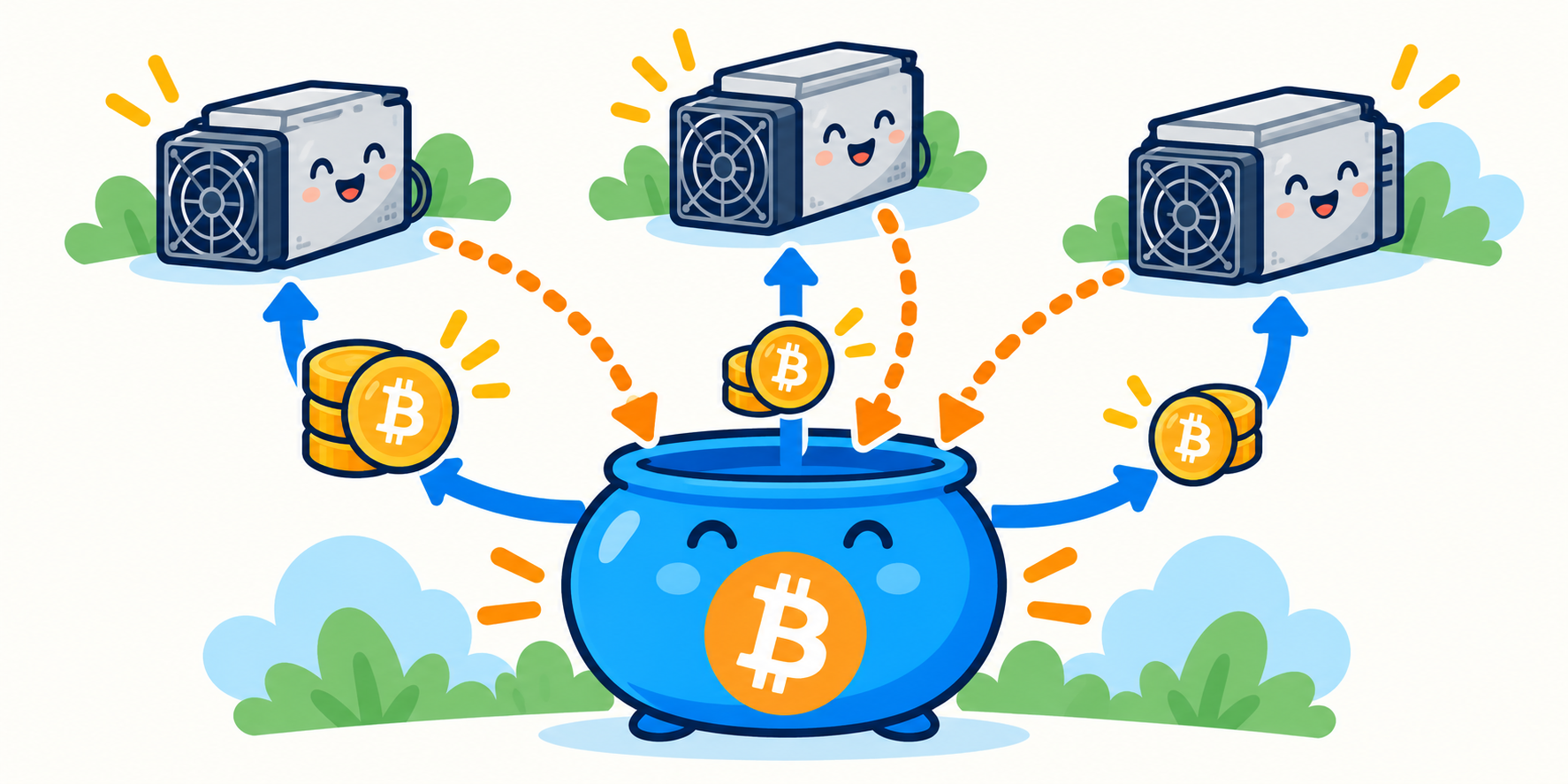
A pool combines everyone's guessing power and splits winnings by how much you added.
Picking a pool
- Well-known pools include Foundry, Antpool, ViaBTC, F2Pool, and others. Many beginners pick a large, reputable one.
- Pools take a small fee (often around 1 to 2.5 percent). Lower is better, but reliability matters more than a tiny fee difference.
- Check the minimum payout: the smallest amount before they send you Bitcoin. Too high and a small miner waits a long time to get paid.
How payouts work (two common styles)
- FPPS (full pay per share): steady, predictable pay for the work you do, including a share of fees. Easiest to understand. Most beginners like this.
- PPLNS (pay per last N shares): pay swings more with the pool's luck. Can pay a bit more over time, but it is bumpier.
If you want calm and predictable, choose FPPS.
Where the money lands
- In the pool account you set your payout wallet address (your own Bitcoin wallet from the Bitcoin for Dummies guide).
- When your earnings pass the minimum payout, the pool sends Bitcoin to that address, usually once a day.
- Use a wallet YOU control for payouts when you can. Remember the golden rule: not your keys, not your coins.
Double-check the payout address. If you paste the wrong Bitcoin address into the pool, your payouts go to a stranger and cannot be undone. Copy and paste, then check it, the first time.
Remember: join a reputable pool, pick FPPS for steady pay, set your own wallet as the payout address, and the pool drips Bitcoin to you as you earn it.
Step 5 of 8