Every project in this book is tagged with a skill: carpentry, masonry, a bit of wiring, a little forge work. This chapter is the 101 on each of those trades, the plain fundamentals a beginner needs to actually build what came before. You will not become a master from a few pages, and some of this (house wiring, pressure vessels) is worth a professional's eye. But learn the basics of these nine trades and you can make and mend instead of buy and replace, and that is what truly off the grid means.
Tradecraft · WoodCarpentry 101
Carpentry
Measure true, cut square, join tight: the trade that builds almost everything.
DifficultyBeginner
TimeA craft
CostLow-Med
Used inShelter, beds, coops
The 101
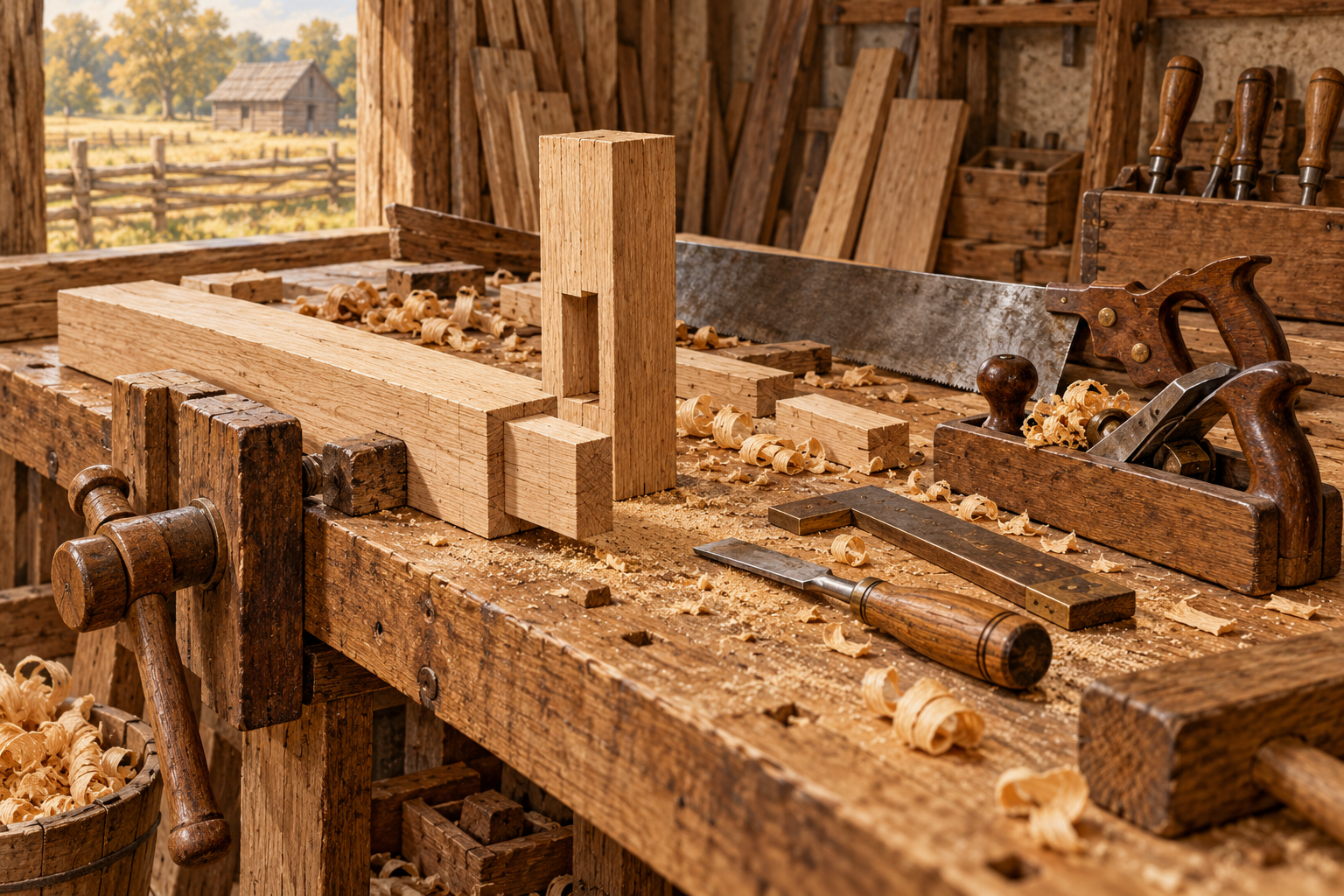
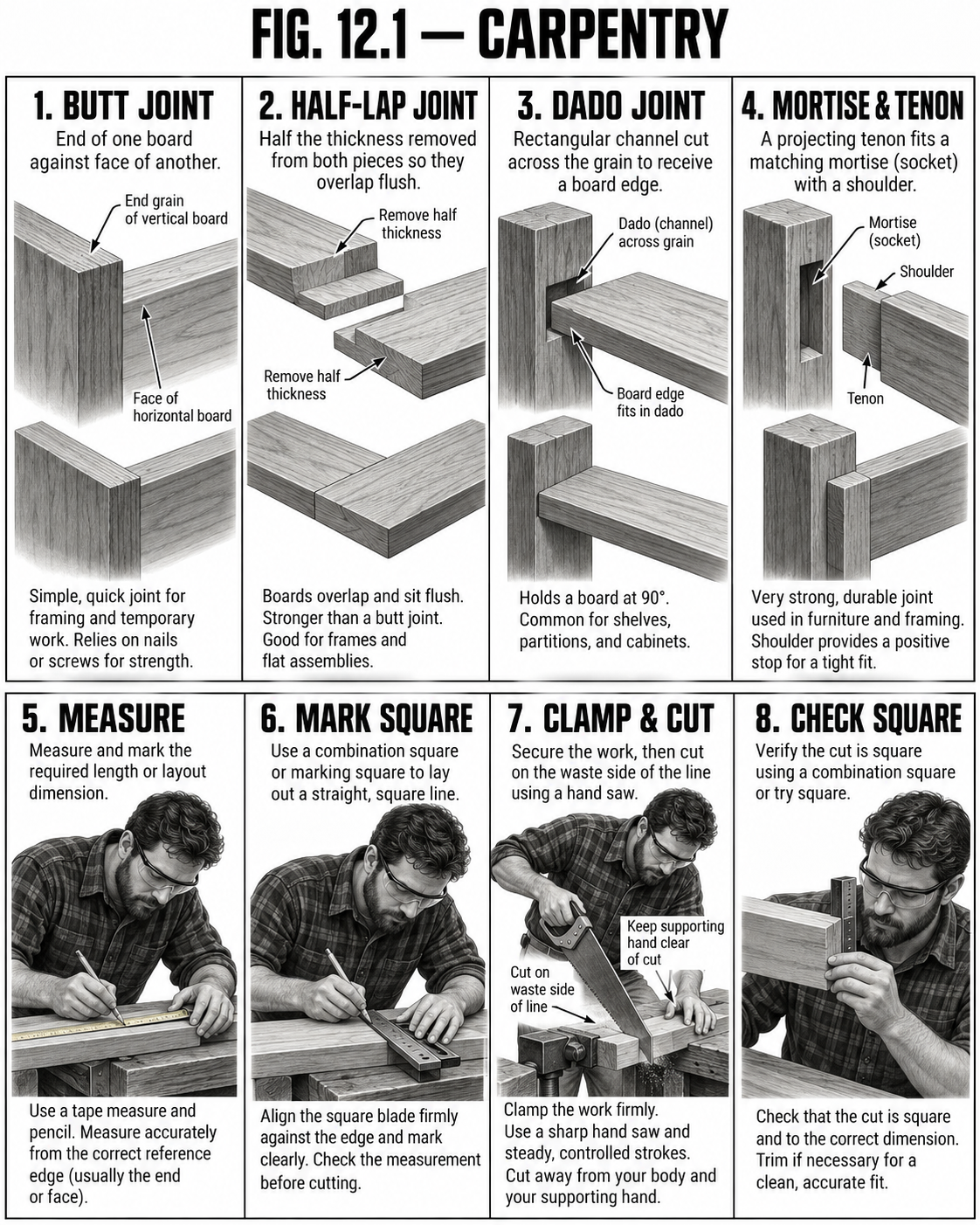
Carpentry is measuring, cutting, and joining wood. The whole trade rests on a few habits: measure twice and cut once, keep everything level, plumb, and square, and let the joint do the work before the fastener. Learn to cut a straight square line, drill a true hole, drive a nail and a screw without splitting the wood, and make the basic joints (butt, lap, dado, and the mortise and tenon) and you can frame a wall, build a bed, or hang a door.
The kit
Tape measure, pencil, a framing and a combination square, a level, a handsaw and a circular saw, hammer, a drill-driver, a set of chisels, a block plane, and clamps. Keep edges sharp: a dull tool is a dangerous one.
Safety Eye protection always. Cut and chisel away from your body, clamp the work, and respect a circular saw's kickback: let the blade reach speed, support both sides of the cut, and keep the guard working.
Tradecraft · Stone & EarthMasonry 101
Masonry & Earth Building
Mud, stone, and fire-proof walls: the oldest building trade there is.
DifficultyIntermediate
TimeA craft
CostLow
Used inFoundations, cellar, hearth, hempcrete
The 101
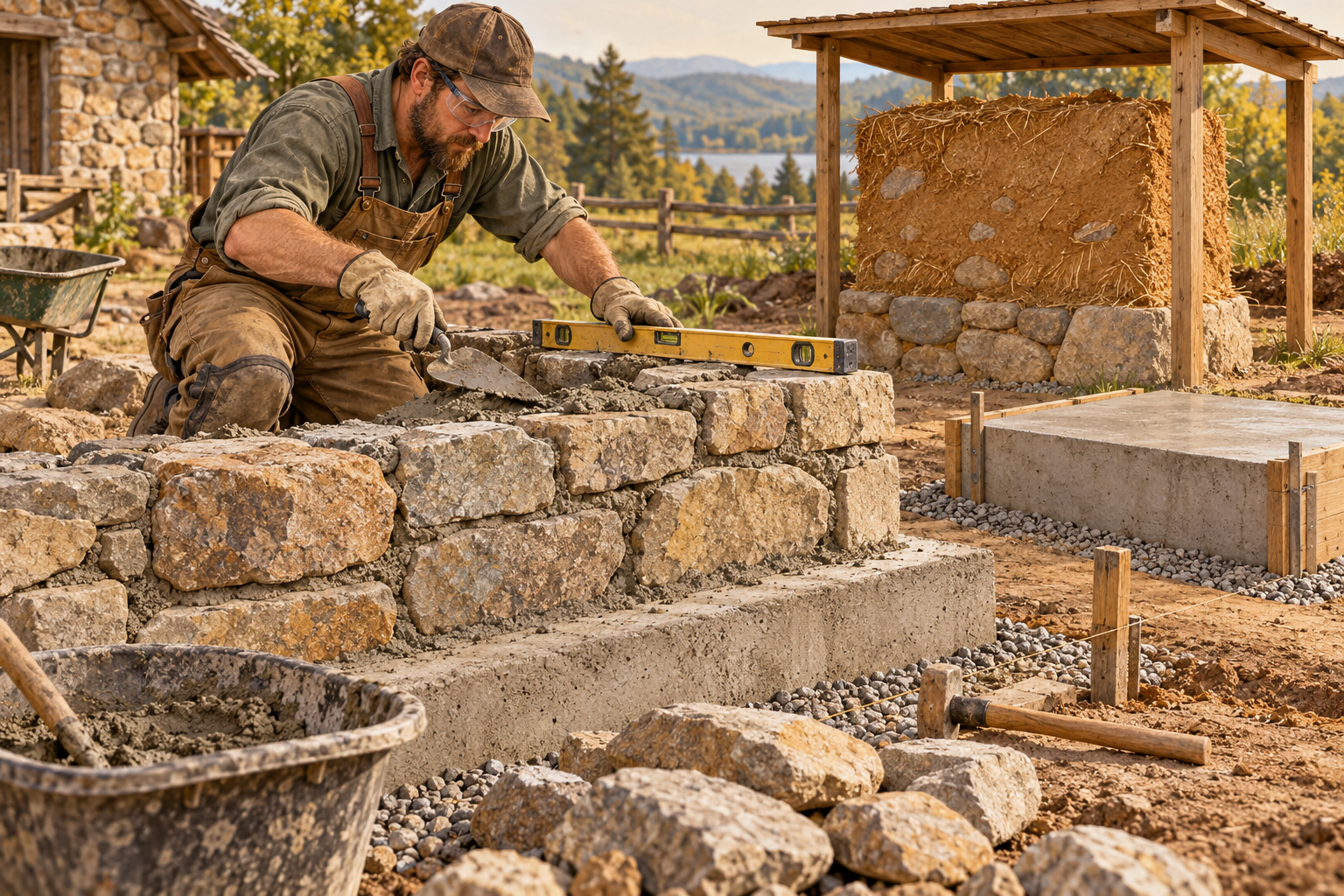
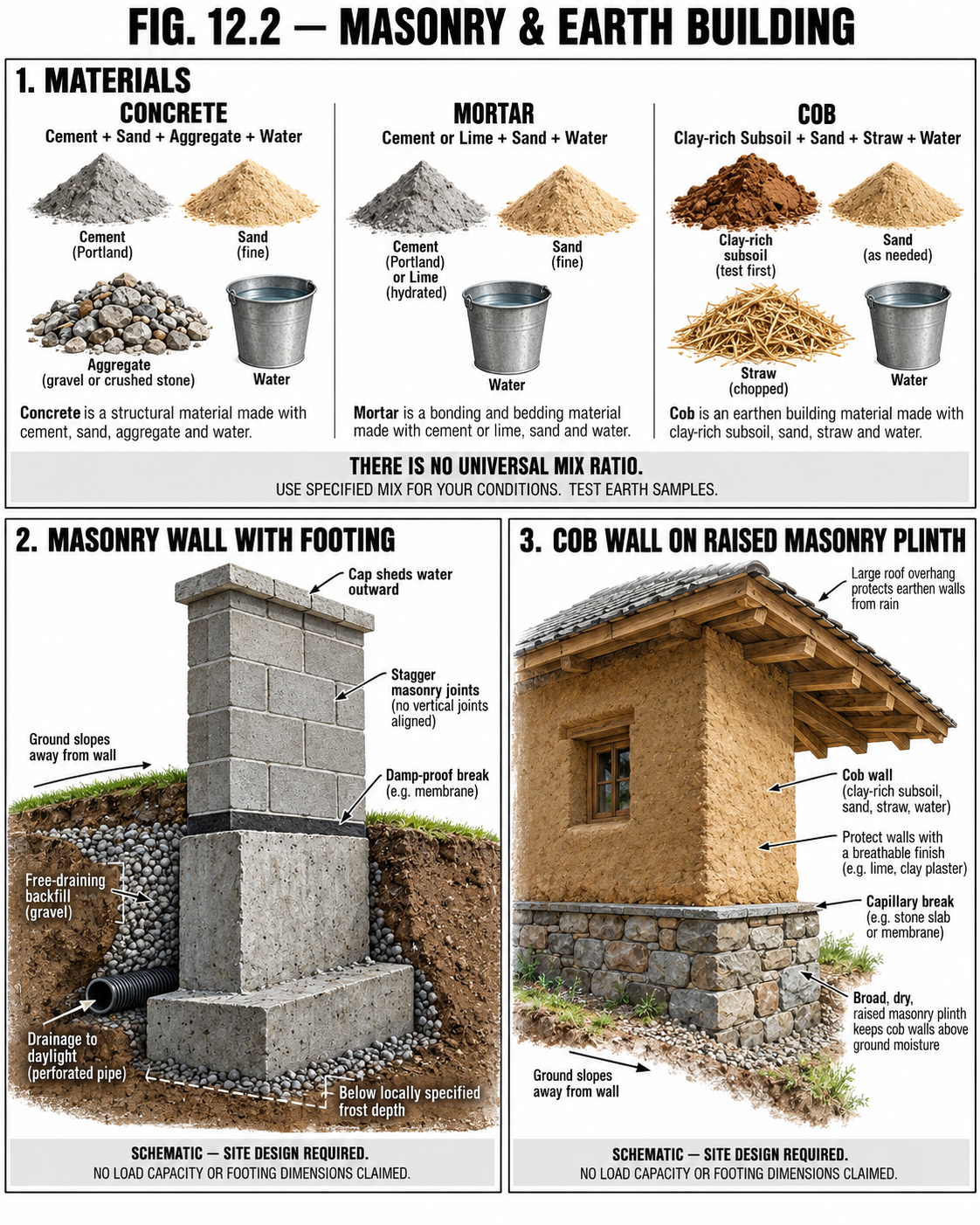
Masonry is building with stone, brick, block, and the mixes that bind them, plus the earthen cousins (cob, adobe, rammed earth, hempcrete). The core skills: mix mortar and concrete to the right ratio, lay level courses on a true footing, keep the wall plumb with a line, point and tool the joints, and build forms to pour into. Earth building trades the mortar for mud and straw but reads the same: a good base, level courses, and time to cure.
The kit
Trowel, pointing tool, level, mason's line, a float, a mixing tub and hoe, a brick hammer and cold chisel, and forms for poured work.
Safety Lime and cement are caustic: wear gloves and eye protection and rinse off splashes. Lift with your legs, and give every mix its full cure time before you load it.
Tradecraft · MetalBlacksmithing 101
Blacksmithing & Metalwork
Heat it, hammer it, harden it: make and mend your own iron.
DifficultyIntermediate
TimeA craft
CostMed
Used inTools, hardware, blades
The 101
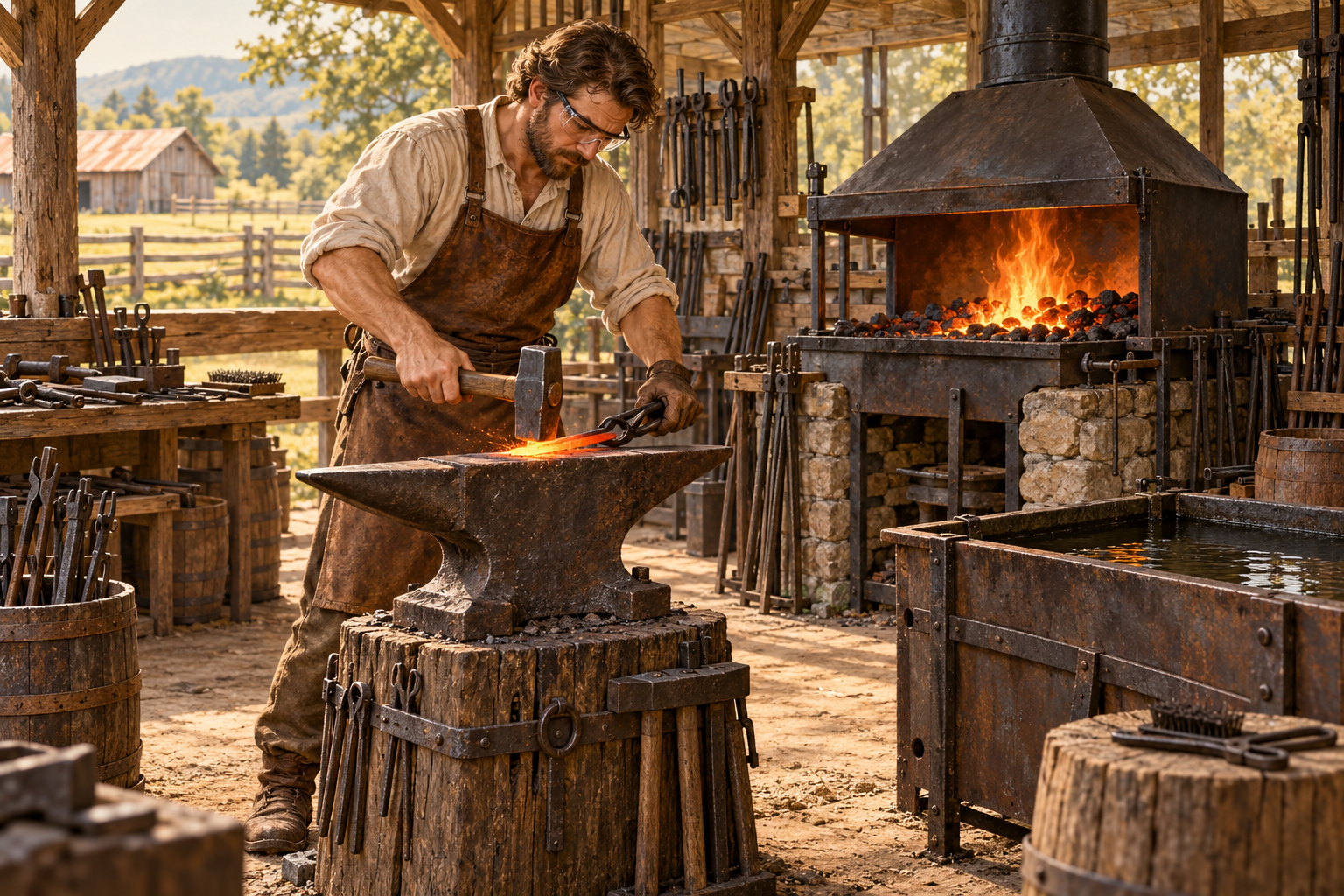
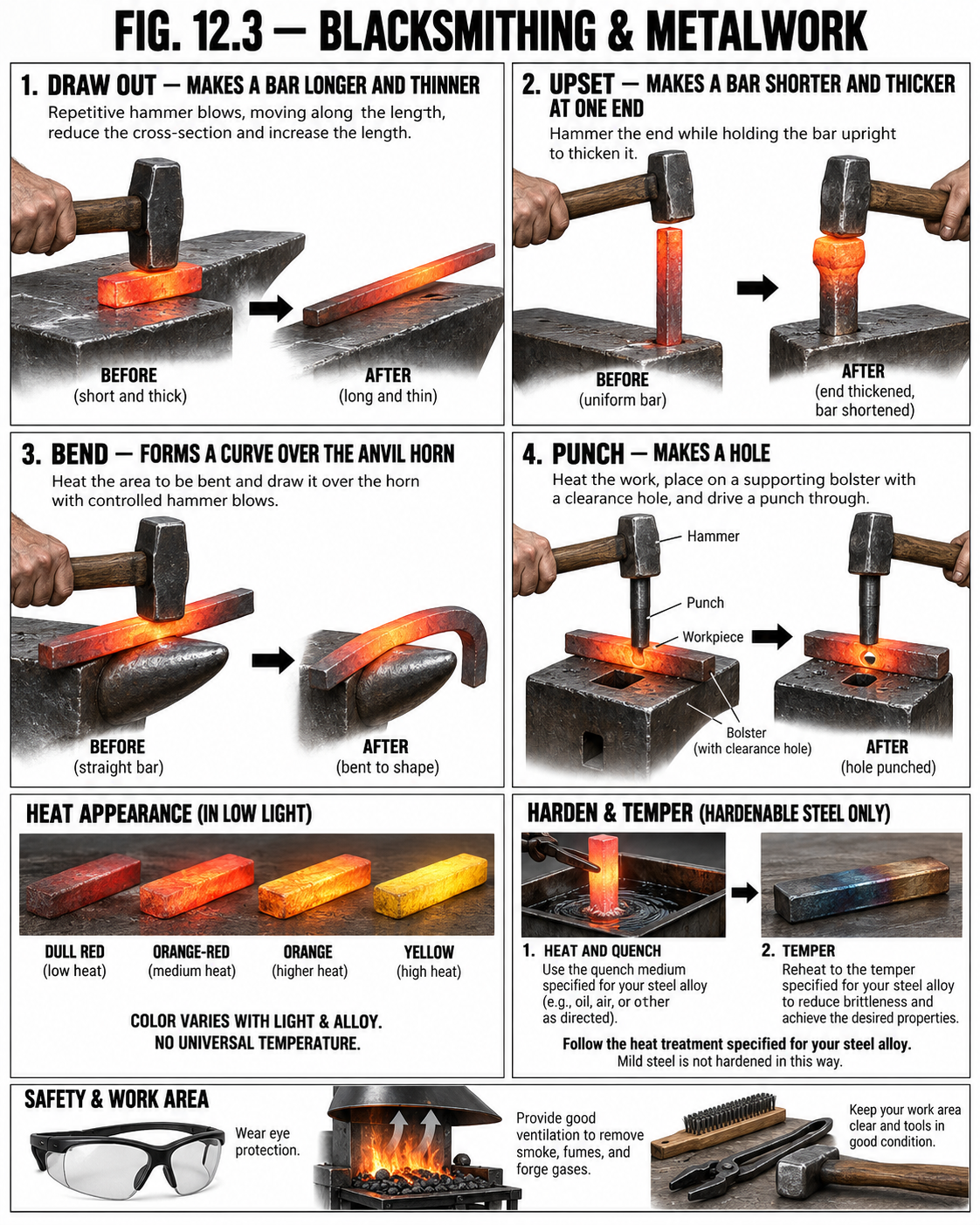
Blacksmithing is shaping metal, mostly hot, with a hammer. Learn to run a clean fire and read the heat by color (a glowing orange-yellow forges, bright white burns the steel), and the basic moves: draw out (lengthen), upset (shorten and thicken), bend, punch, and taper. For an edge tool, learn to harden (quench hot steel) and then temper (a gentle reheat) so it holds an edge without shattering. A hook, a hinge, a knife, and a chisel teach the whole trade.
The kit
A forge (coal, charcoal, or propane), an anvil or a hard steel face, a cross-pein hammer, tongs that fit your stock, a vise, a quench bucket, and files.
Safety Everything is hot and looks cold: never grab unmarked steel. Eye protection, a clear fireproof floor, good ventilation (forge fumes and coal gas), and stand clear of quench steam. Keep water away from molten anything.
Tradecraft · MetalWelding 101
Welding & Fabrication
Join and cut steel: the fastest way to build and fix heavy things.
DifficultyIntermediate
TimeA craft
CostMed
Used inRepairs, frames, trailers, stoves
The 101
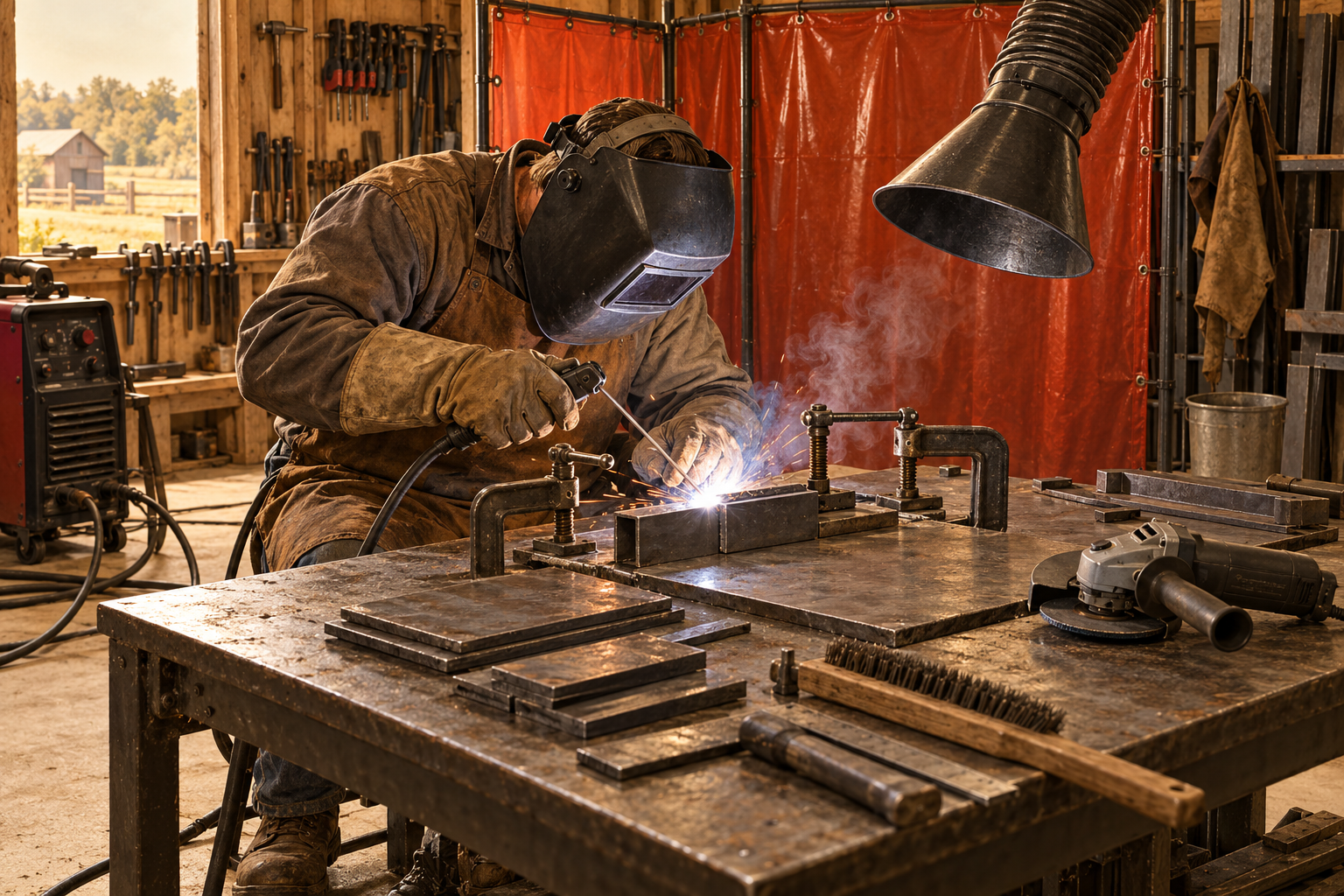
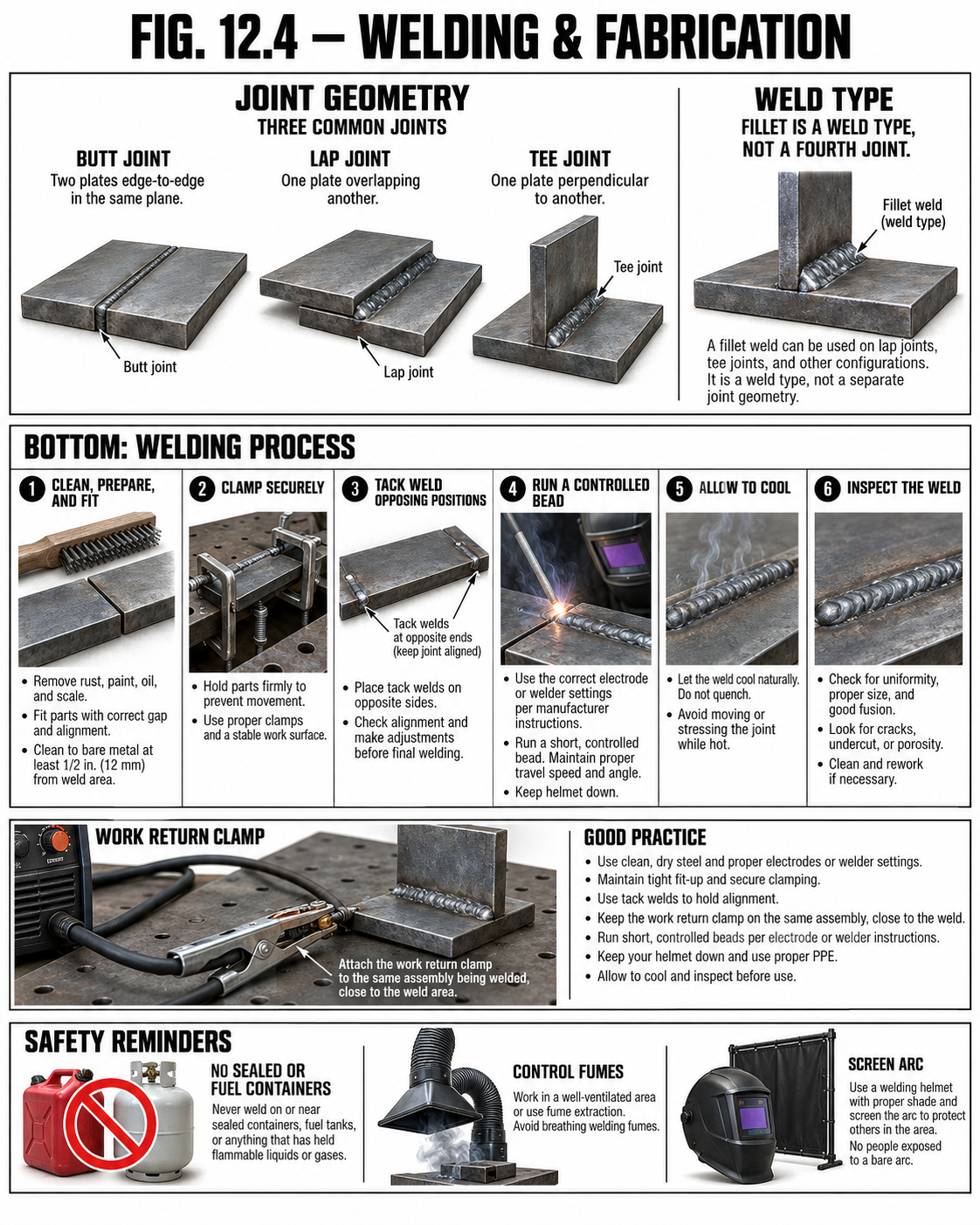
Welding fuses metal by melting it together. For the homestead, stick (arc) welding is the workhorse: cheap, simple, and it runs off a generator and works outdoors and on rusty steel. Learn to clean the joint, strike and hold an arc, run a steady bead, and tack before you weld a long seam. Pair it with an angle grinder to cut, clean, and dress the welds, and you can build or repair almost any steel thing.
The kit
A stick welder and rods, an auto-darkening helmet, leather gloves and sleeves, an angle grinder with cut and flap discs, clamps, a wire brush, and a chipping hammer.
Safety The arc is blinding: never look at it without the helmet, and shield others. Weld only on clear, fireproof ground with an extinguisher close (sparks travel far and smolder). Ventilate: weld fumes are poison, and never weld on sealed, painted, galvanized, or fuel-holding containers.
Tradecraft · MachinesMechanics 101
Mechanics & Small Engines
Keep the engines, pumps, and gear running, and fix them when they stop.
DifficultyBeginner-Intermediate
TimeA craft
CostLow-Med
Used inGenerators, pumps, saws, tillers
The 101
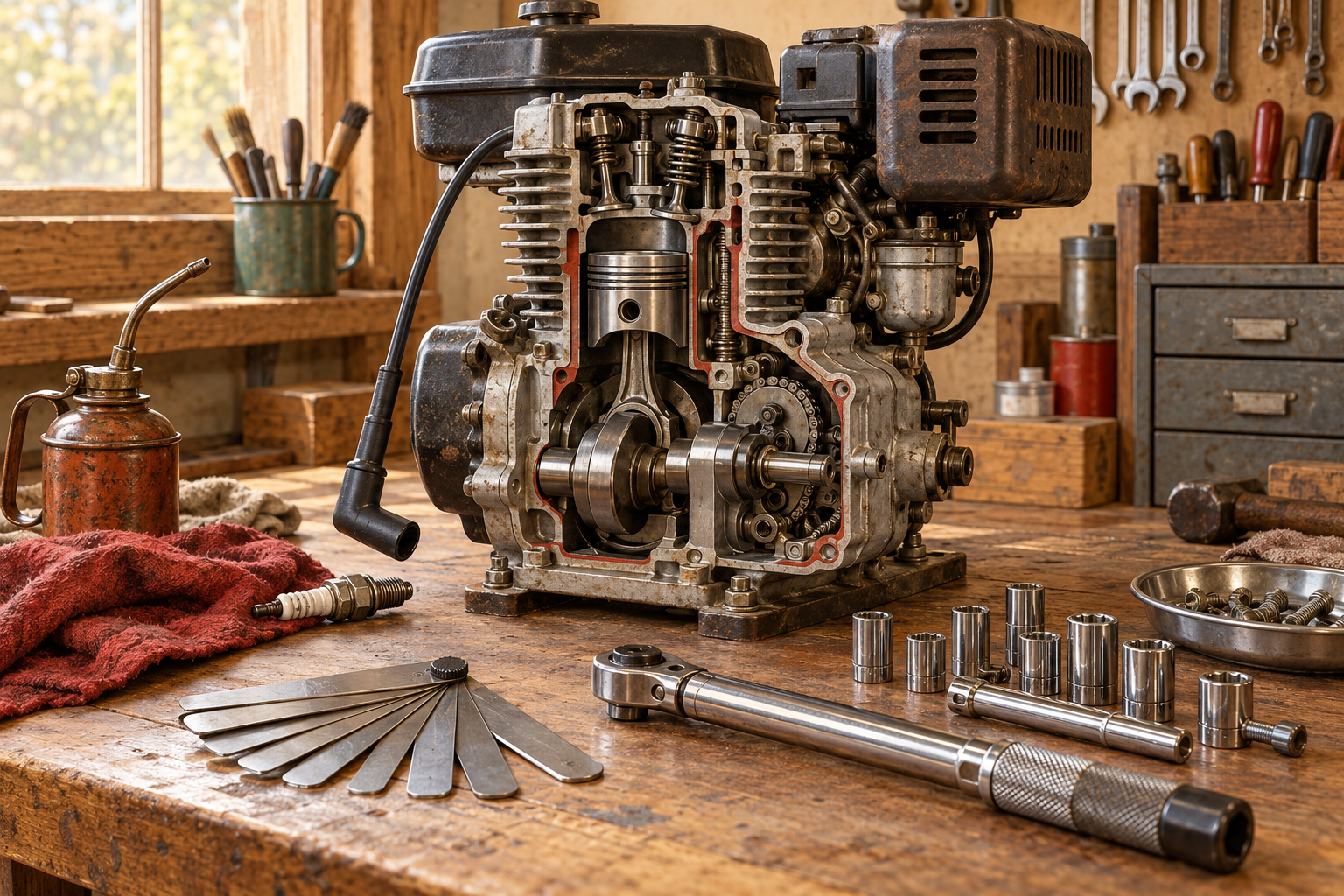
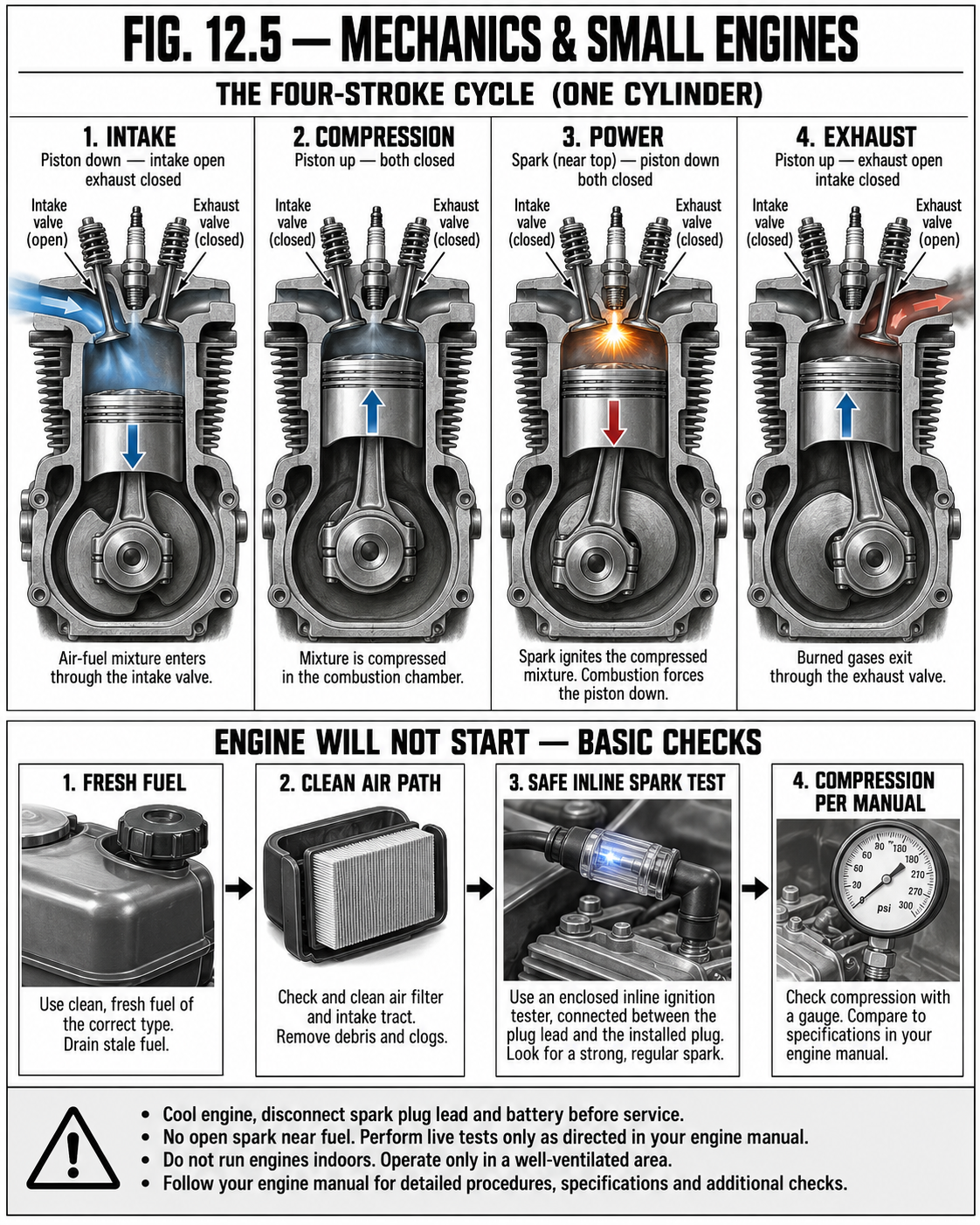
An engine needs four things to run: fuel, air, spark, and compression. Lose one and it quits, so troubleshooting is just checking those four in turn. The rest is upkeep: change the oil, clean or replace the air and fuel filters, keep a fresh spark plug gapped right, and use clean fuel. Learn that, plus how to read a bearing, a belt, and a torque spec, and most of what breaks on a homestead you can fix yourself.
The kit
A socket and wrench set, screwdrivers, pliers, a feeler gauge, a spark tester, a multimeter, grease and oil, and the manual for each machine.
Safety Pull the spark-plug wire before you work on anything with a blade or a pull-start. Fuel is a fire: no sparks, no smoking, work in the open. Mind hot exhaust, pinch points, and never run an engine indoors (carbon monoxide, see Heat).
Tradecraft · PowerElectrical 101
Off-Grid Electrical
Wire your own power safely: volts, amps, fuses, and a solar chain.
DifficultyIntermediate
TimeA craft
CostMed
Used inPower, lighting, pumps
The 101
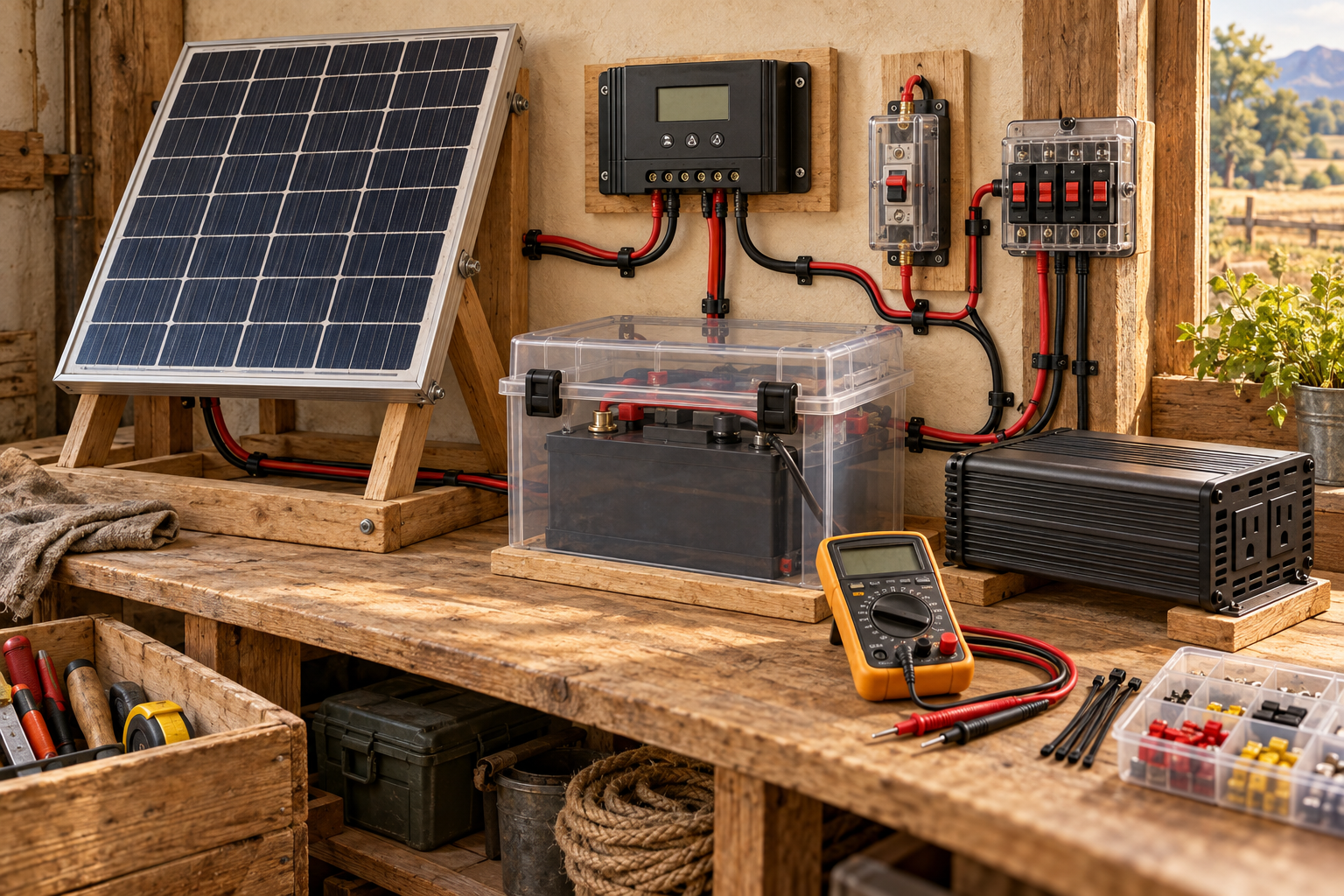
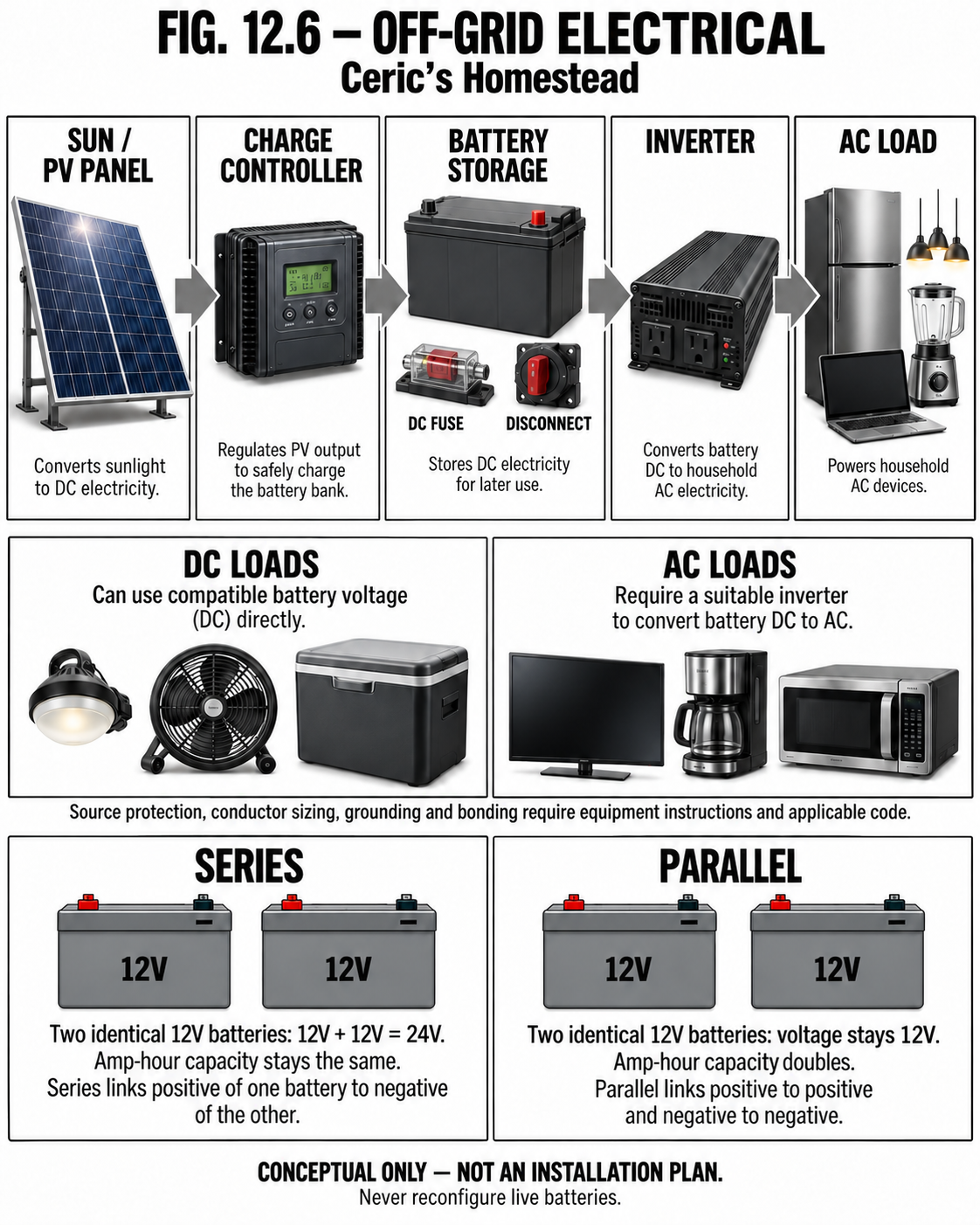
Electricity is volts (pressure), amps (flow), and watts (volts times amps, the work done). Off grid you mostly run DC: a solar panel charges a battery through a charge controller, and an inverter turns the battery's DC into household AC. Learn to size your wire and fuse to the amps it will carry, wire in series (adds volts) or parallel (adds amps), ground the system, and read it all with a multimeter.
The kit
A multimeter, wire strippers and crimpers, an assortment of fuses and breakers, lugs, and insulated drivers.
Safety Low-voltage DC still starts fires: fuse every circuit close to the battery. Batteries hold huge current and vent explosive gas, so no sparks and give them air. Household AC can kill: treat every wire as live, work with the main off, and get a licensed electrician and an inspection for any permanent AC wiring in a dwelling.
Tradecraft · WaterPlumbing 101
Plumbing & Water Lines
Move water where you want it, by gravity or pump, and keep it clean.
DifficultyBeginner-Intermediate
TimeA craft
CostLow-Med
Used inWater, troughs, greywater, aquaponics
The 101
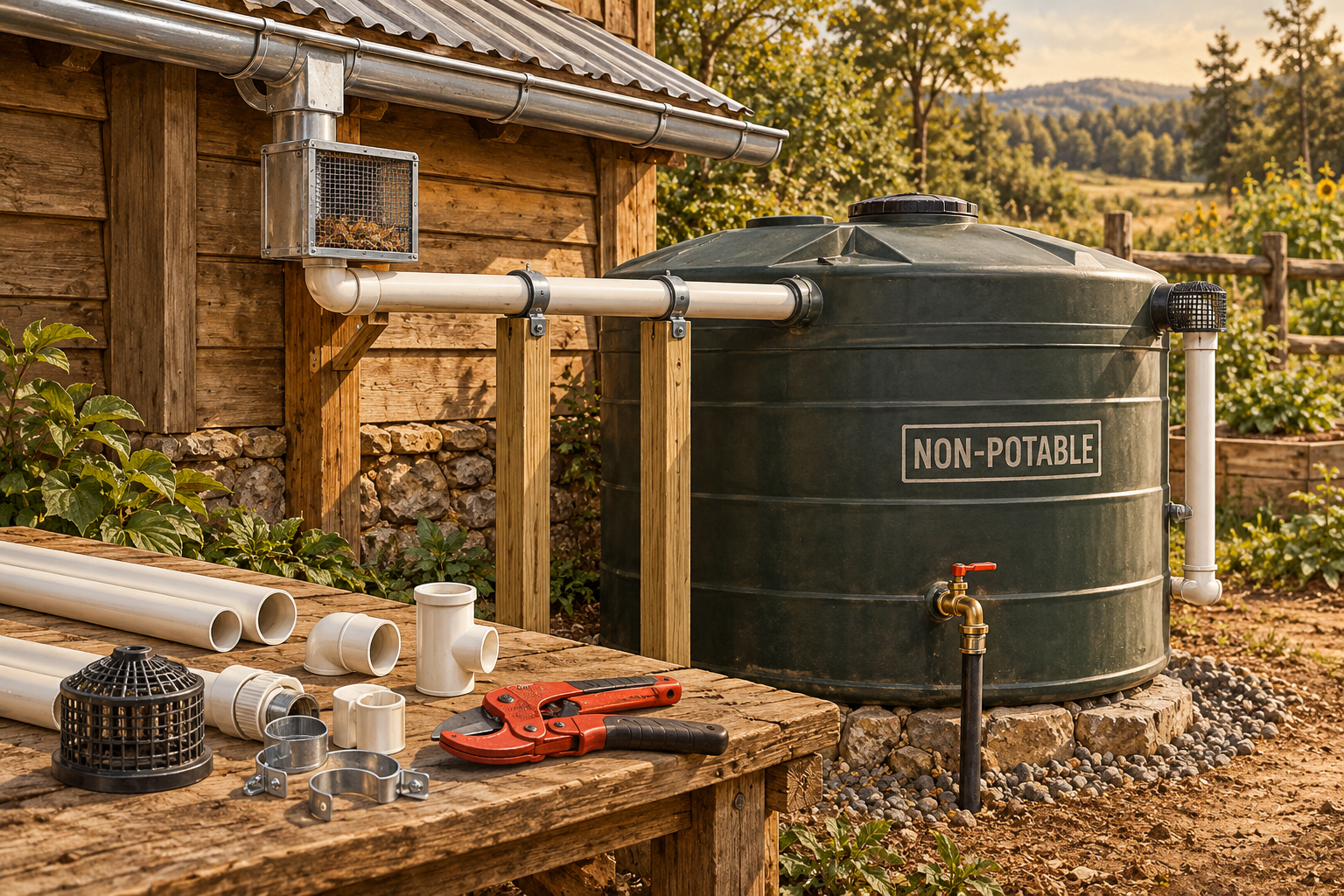
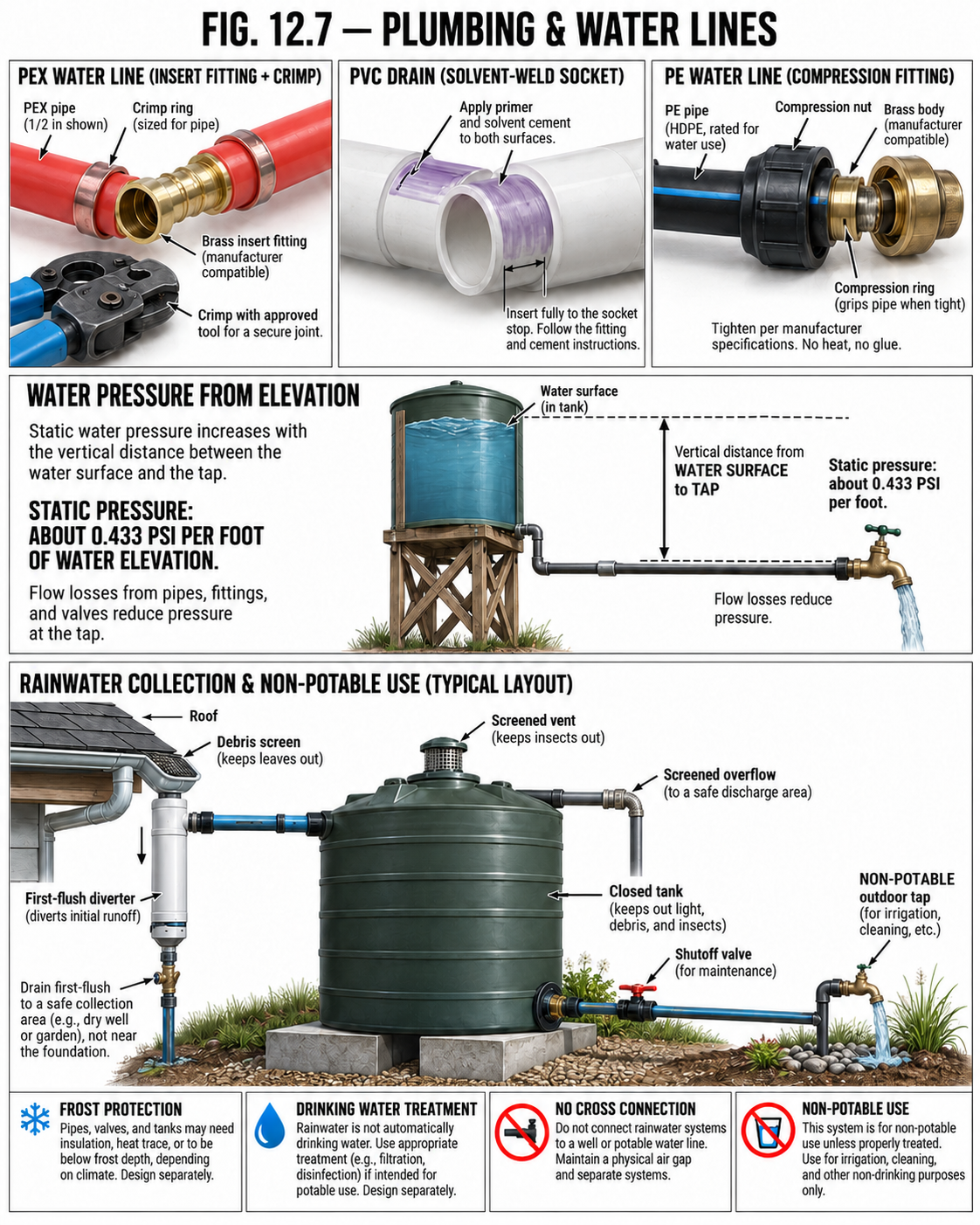
Plumbing is moving water through pipe. Water runs downhill and finds its level, so gravity does the work when you let it: every foot of height is pressure (head). Learn the common pipes (PEX for most runs, PVC for drains, poly for buried line) and how to join each (push-fit, crimp, or solvent-glue), how to slope a drain so it clears, where to put valves, and how to keep lines from freezing. Then a roof catch to a tank to a tap is just one sloped, fused-together run.
The kit
A pipe cutter, the crimp tool or glue for your pipe, an adjustable wrench, thread-seal tape, and assorted fittings and valves.
Safety Keep drinking water and greywater or any non-potable line completely separate, with no cross-connection to the well (see Water, Waste). Protect pipes from freezing (bury below frost, slope to drain), or a burst line floods the place.
Tradecraft · FiberFiber & Textile 101
Fiber, Cordage & Textile
Twist a cord, spin a yarn, weave a cloth, and mend what tears.
DifficultyBeginner
TimeA craft
CostLow
Used inHemp rope/cloth, nets, snares, repairs
The 101
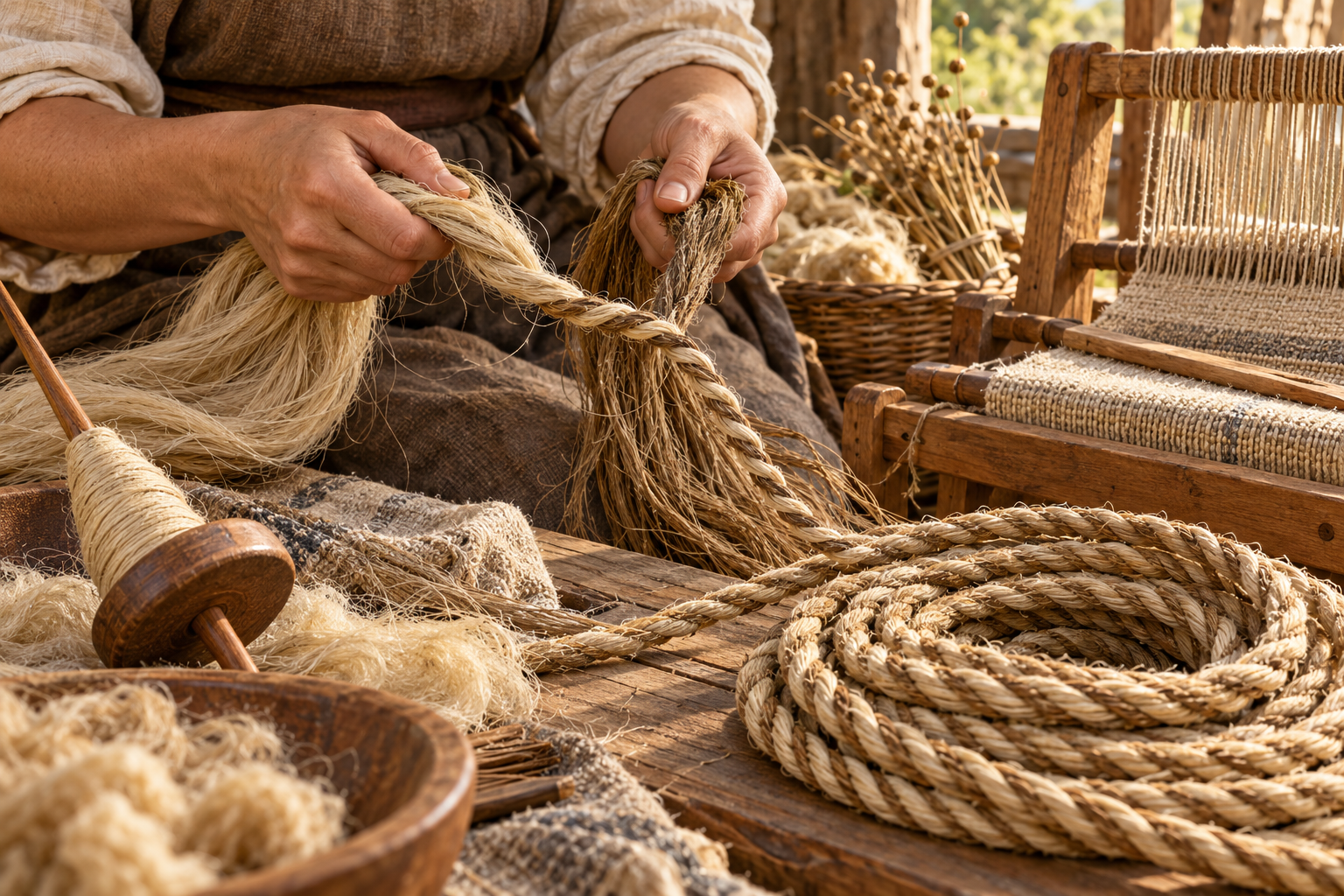
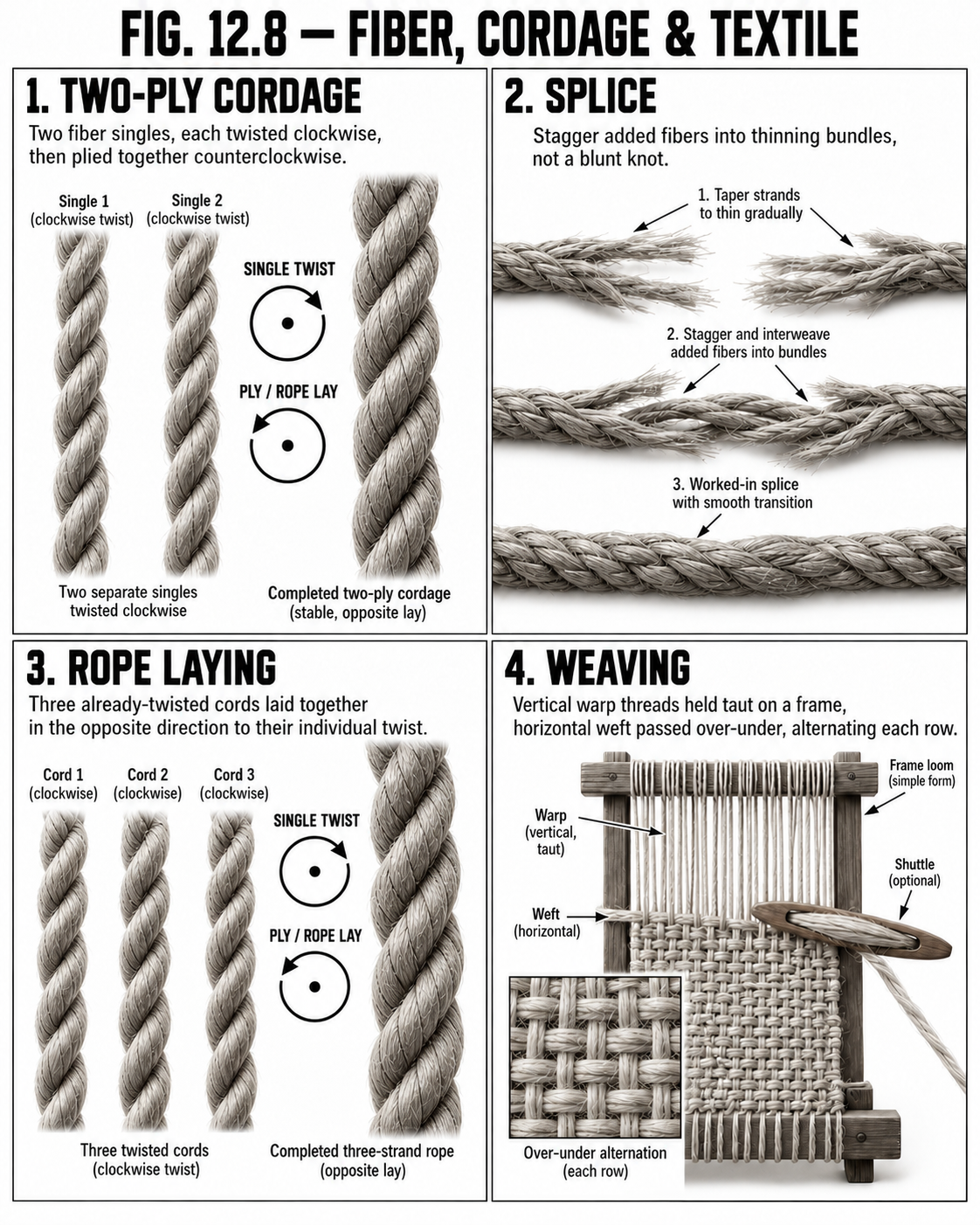
Fiber work turns plant and animal fiber into cord, rope, and cloth. It all starts with twist: reverse-wrap two bundles of fiber against each other and they lock into cordage that will not come undone. Spin that finer on a spindle or wheel into yarn, lay cords together into rope (see Hemp), and interlace warp and weft on a frame or loom into cloth. Add a handful of knots and a saddle stitch and you can make and mend nets, bags, snares, and clothes.
The kit
A drop spindle or spinning wheel, a frame or loom, strong needles and an awl, and a few core knots.
Tips & variations Almost any strong plant fiber (hemp, nettle, dogbane, basswood bark, yucca) makes cordage the same way; test a plant by twisting a bit before you harvest a lot.
Tradecraft · HideLeatherwork 101
Leather & Hide Work
Turn a hide into leather, rawhide, and sinew, and stitch it into gear.
DifficultyIntermediate
TimeA craft
CostLow
Used inHunting (whole animal), straps, bags, repairs
The 101
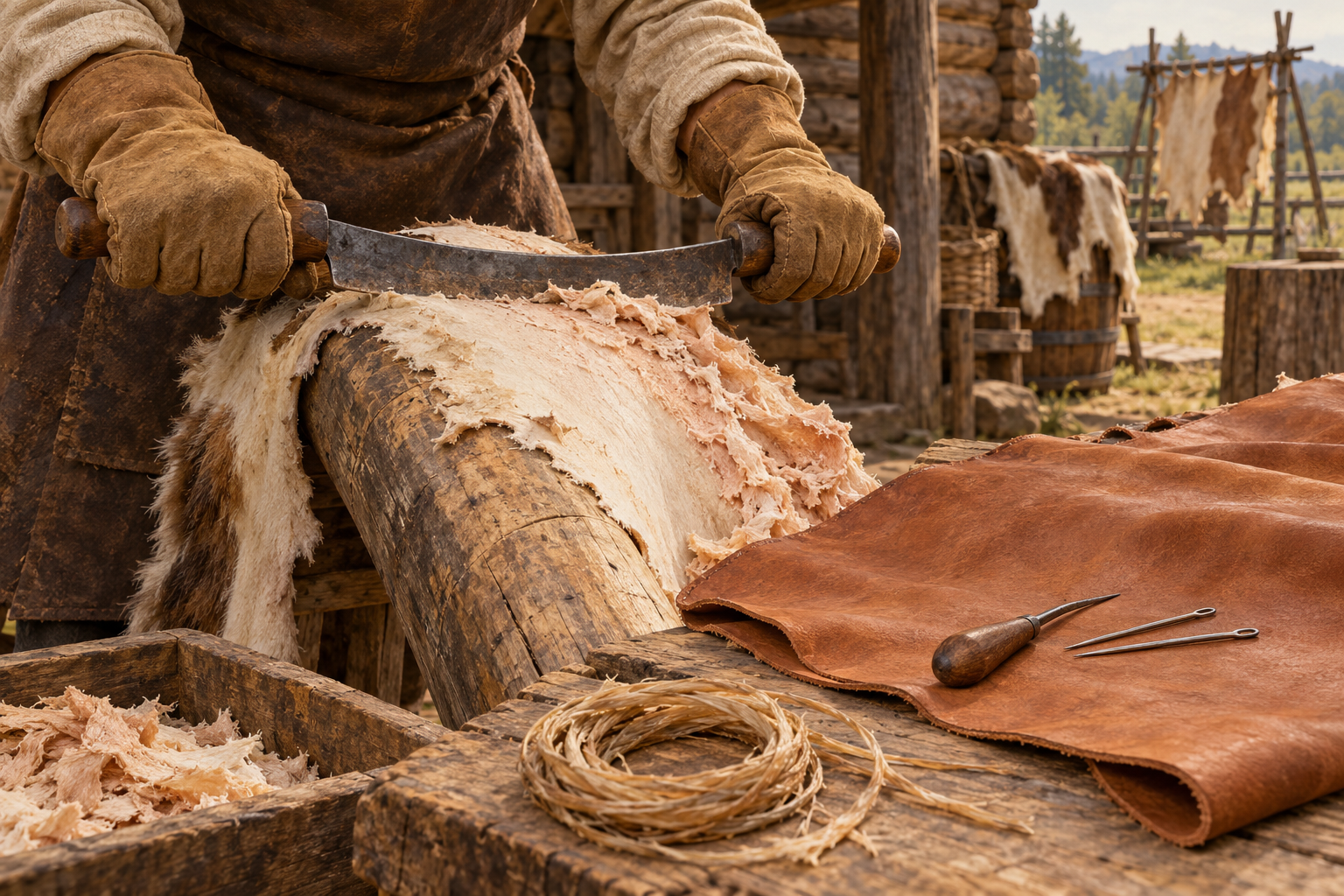
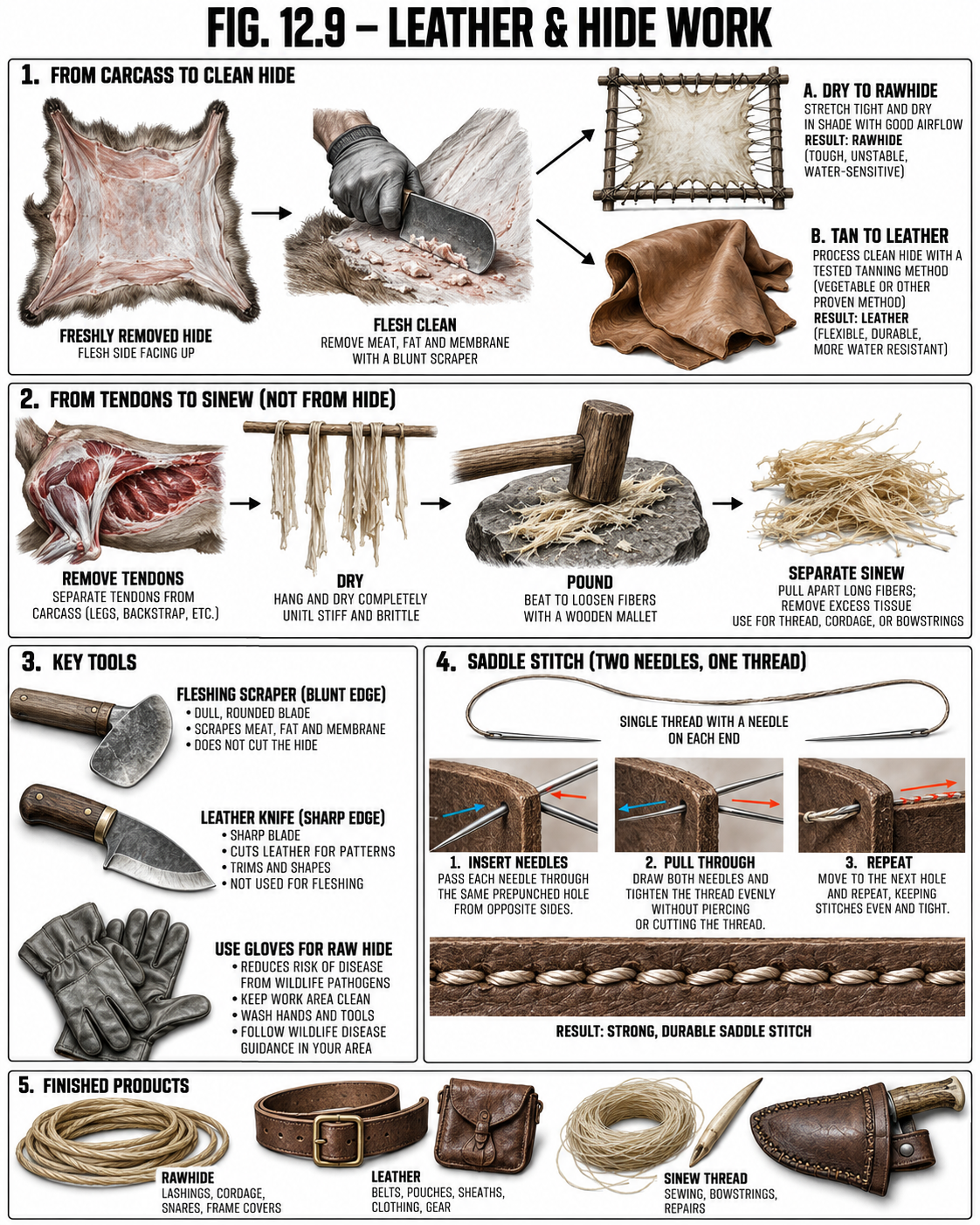
Nothing off a butchered animal need be wasted, and the hide is a whole trade on its own (see Hunting). Learn to skin clean, flesh the hide (scrape off fat and membrane), and then choose: rawhide (just dried, hard and strong for lashings and drum heads), brain-tan or bark-tan (worked soft into leather), and sinew (dried back and leg tendon, pounded into the strongest natural thread there is). Cut leather with a sharp knife and join it with a saddle stitch (two needles, one seam) and it will outlast its maker.
The kit
A fleshing beam and a dull scraper, a sharp knife, stitching needles and an awl, and thread or sinew.
Safety Wear gloves dressing a carcass (disease), keep blades sharp and cut away from yourself, and handle any tanning chemicals (lye, acids, some bark liquors) with gloves and good air.