Being far from help means being your own first responder. This chapter is lawful, non-lethal security: how to see trouble coming, slow it down, keep your people and supplies safe, and stay in contact. It is about awareness, deterrence, and readiness, never about traps or devices meant to harm a person. The best defense is to never be surprised.
Security · LayoutDefensive Siting
Defensive Siting & Layout
Half your security is decided before you build, by where things sit.
DifficultyPlanning
TimeUp front
CostLow
SkillsObservation
Why it is worth it
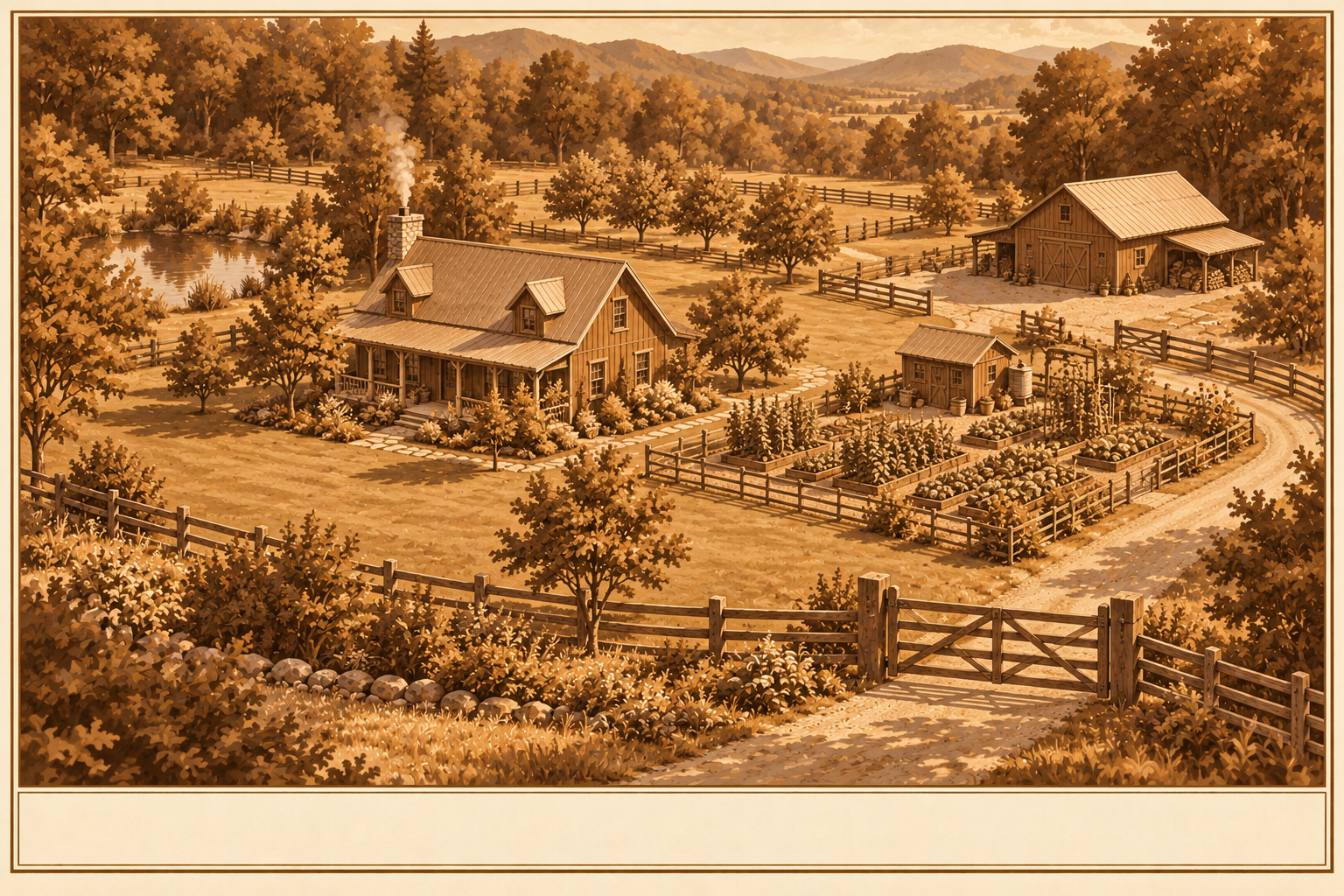
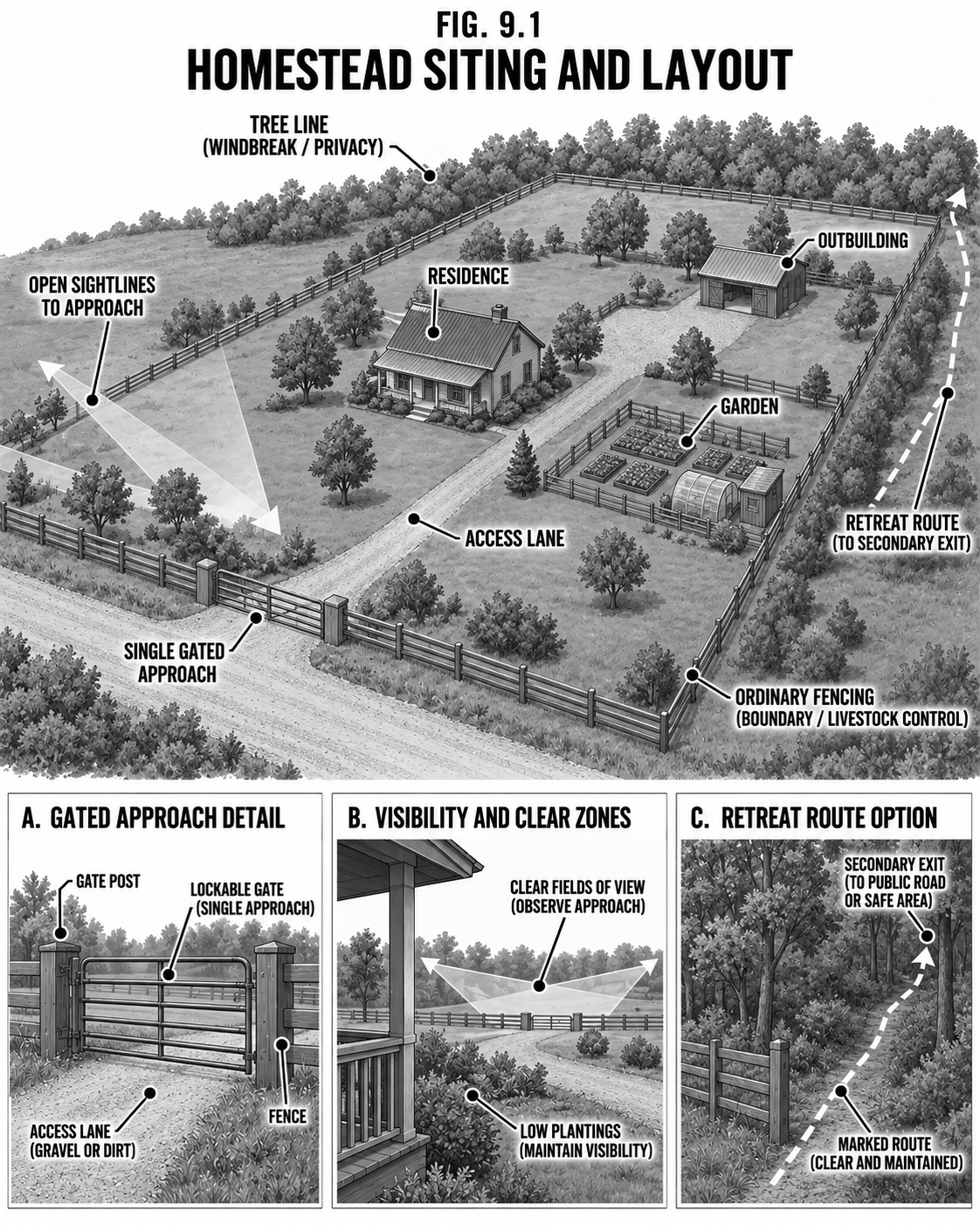
A well-laid-out homestead sees who is coming, controls how they approach, and keeps the family and the stores in the most protected spot. You design that in: clear sightlines from the house, a single controlled entry/driveway, natural barriers (water, slope, thick brush), and layered zones from public at the edge to private at the core.
Step by step
Keep clear sightlines from the home over the approaches; trim blind spots.
Funnel access to one driveway/gate you can see and control.
Use the land itself (slope, water, hedgerow) as the first barrier.
Place the most valuable things (people, stores, animals) in the protected core, not at the edge.
Safety & law Everything in this chapter is lawful deterrence and awareness. Do NOT build traps, booby traps, or anything designed to injure a person; that is illegal and can kill the innocent. Security here means seeing, slowing, and avoiding trouble, not ambushing it.
Tips & variations Good siting also helps with fire, wind, and sun; the same thinking that keeps you safe keeps you comfortable.
Security · PerimeterFencing & Early Warning
Perimeter, Fencing & Early Warning
Slow them down and know they are there, long before they reach the door.
DifficultyBeginner-Intermediate
TimeDays
CostLow-Med
SkillsBasic
Why it is worth it
A perimeter does two jobs: it slows an intruder (fences, gates, thorny hedges, chokepoints) and it warns you they are coming. Early warning is the single most valuable security tool on a remote place, because surprise is what gets people hurt.
Early warning (non-injurious only)
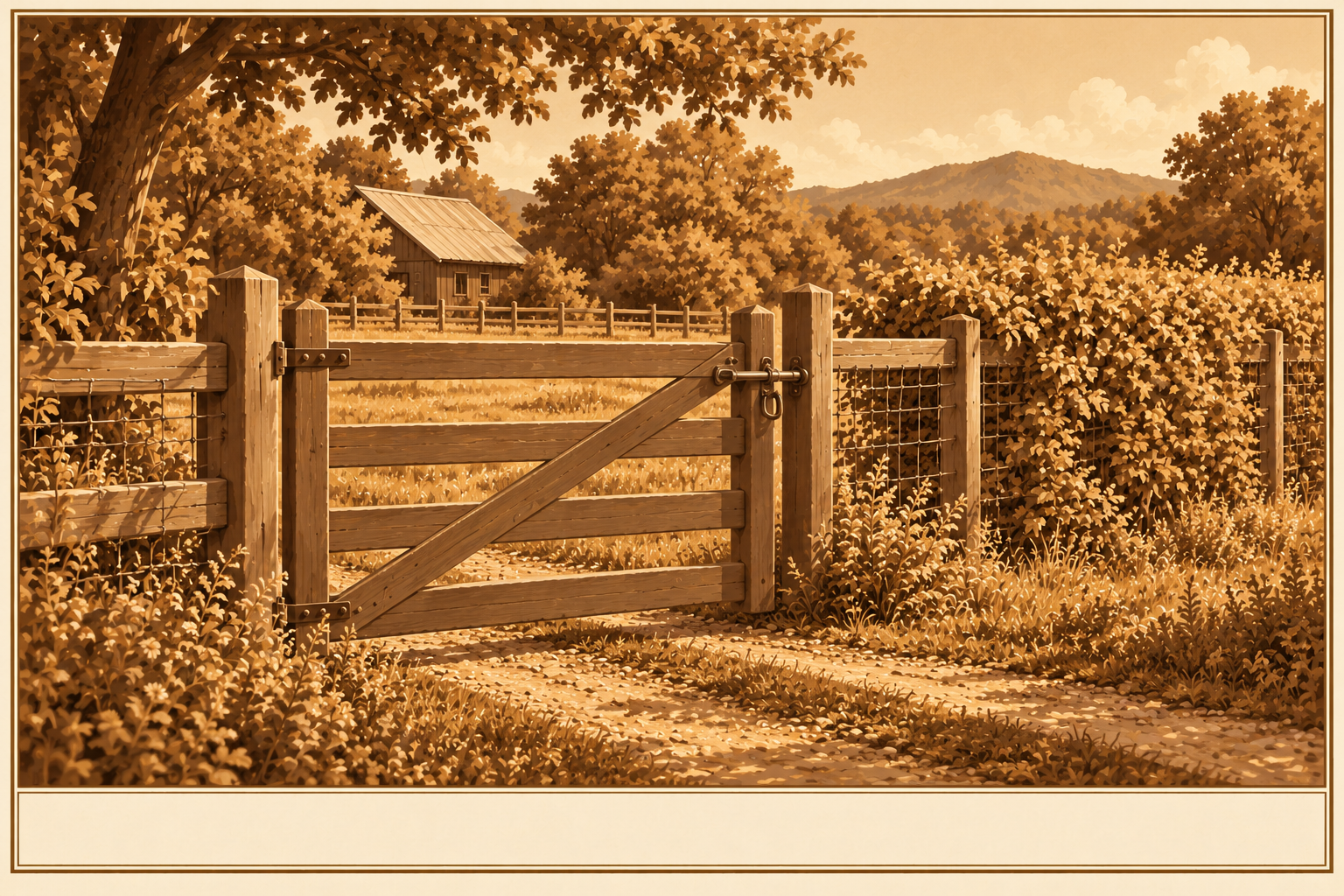
Fence and gate the controlled approaches; a thorny hedgerow is a living barrier.
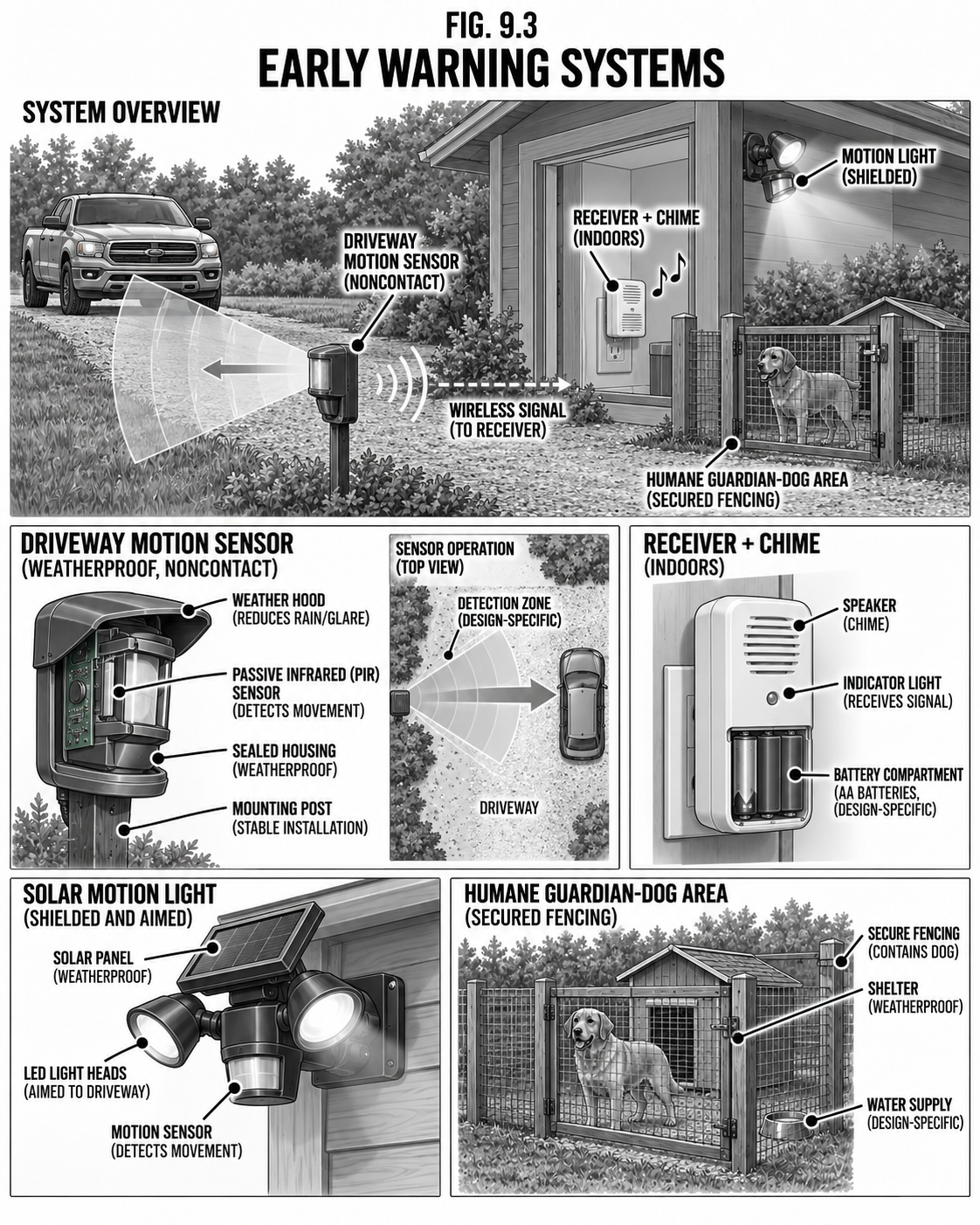
Rig simple alerts: a tripline to a bell or can-rattle, a driveway alarm, motion-sensor lights.
Let dogs and geese (next page) cover what sensors miss.
Post the land; clear signage deters and establishes trespass.
Safety & law Early-warning devices must ALERT, never injure. A tripline may ring a bell; it may never trigger anything that hurts a person. Anti-personnel traps are felonies and hit the innocent (kids, neighbors, first responders) as easily as anyone. Keep it to noise, light, and notice.
Tips & variations A gravel driveway is its own alarm; you hear every vehicle. Motion lights that just turn on deter most trouble by themselves.
Security · DeterrenceLighting & Guard Animals
Lighting, Visibility & Guard Animals
Light and a good dog do more honest security work than almost anything you can buy.
DifficultyBeginner
TimeOngoing
CostLow-Med
SkillsAnimal care
Lighting & visibility
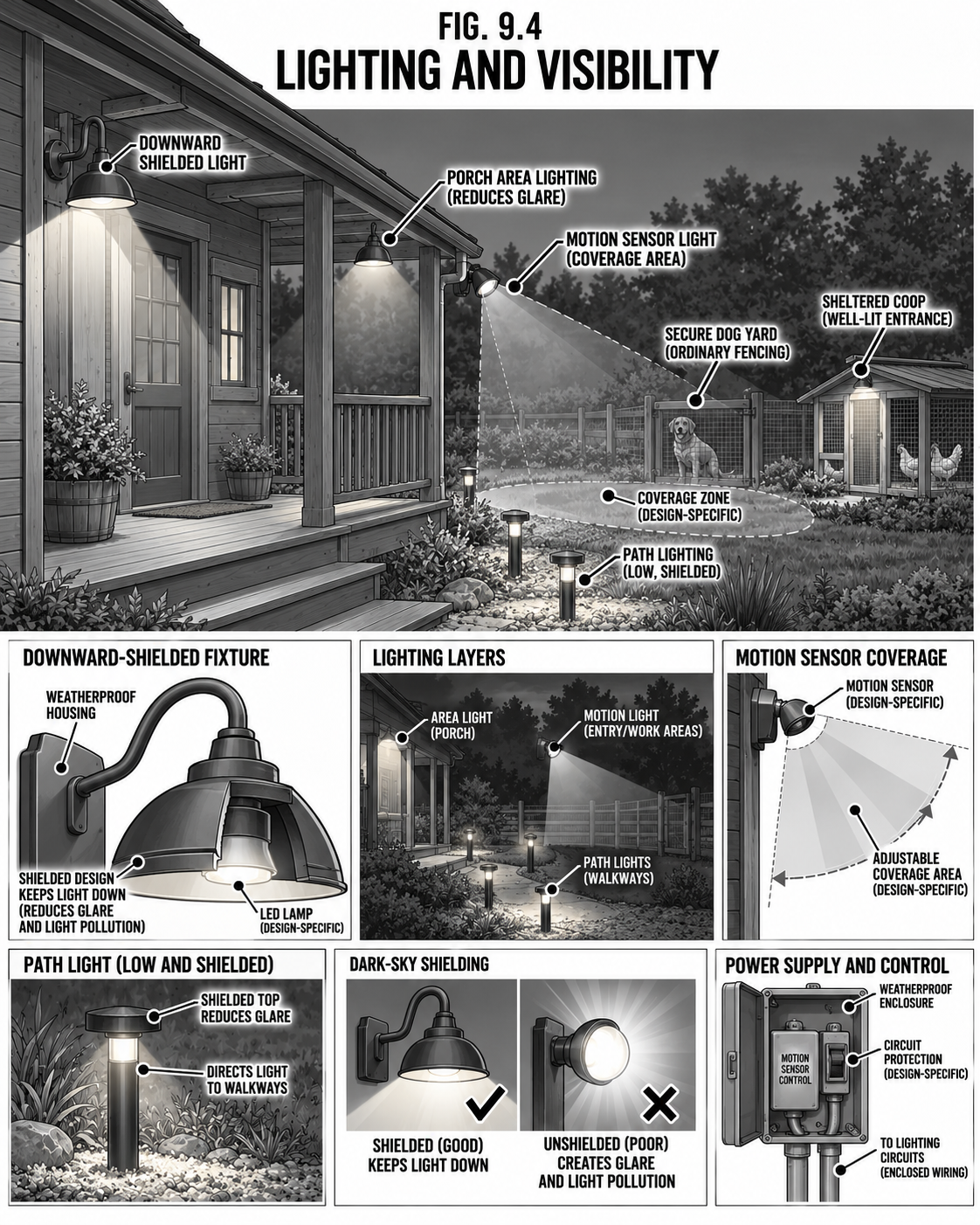
Solar-powered security lights at the approaches remove the hiding shadows that trouble needs. Keep your own silhouette dark (don't stand lit in a window at night), and light the ground an intruder must cross, not your own eyes.
Guard & alarm animals
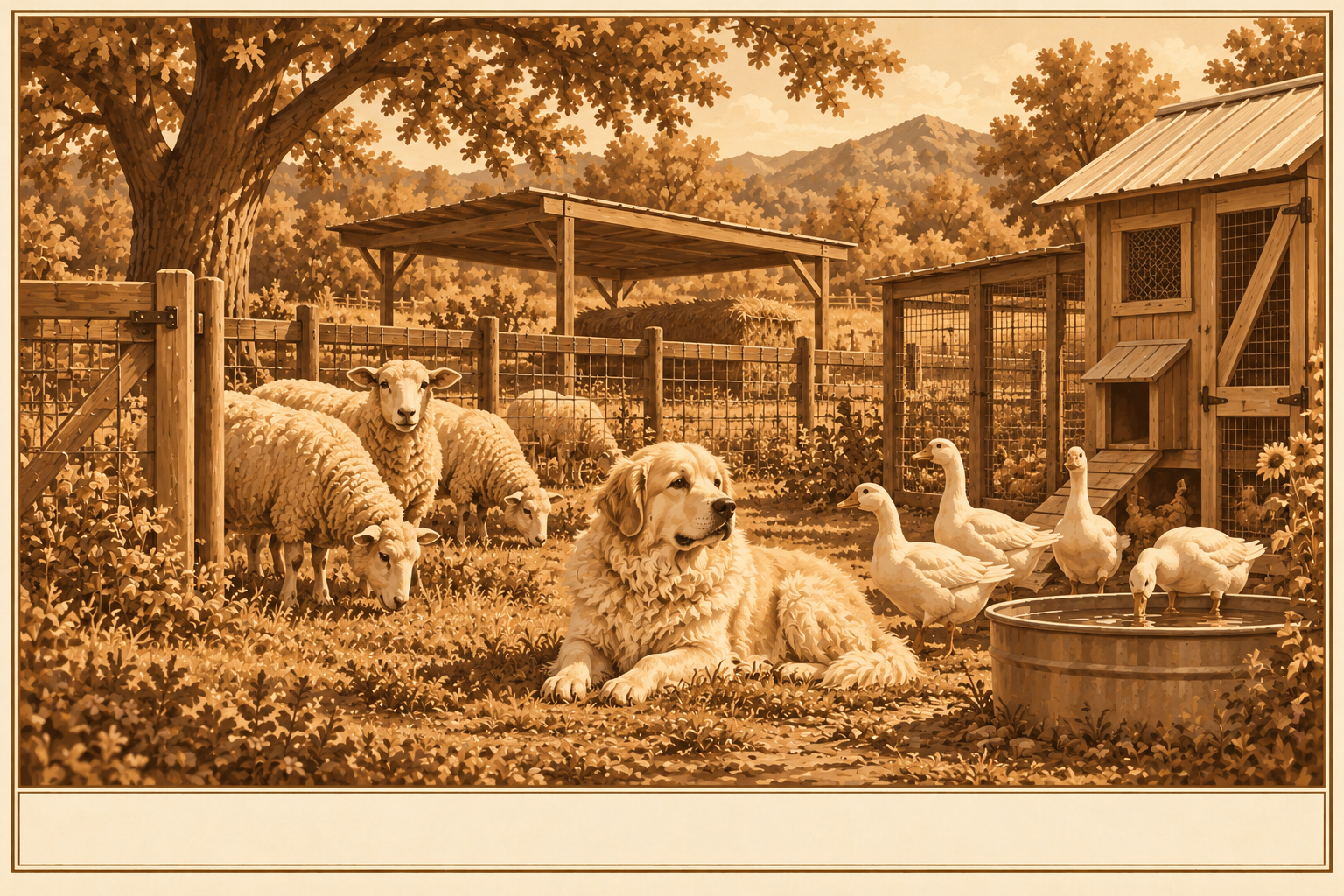
A livestock-guardian dog is the oldest and best early-warning and deterrent there is: it hears and smells what no sensor can and it never needs batteries. Geese are loud, fearless alarm birds. Both protect your stock from predators too.
Safety & law A guard dog must be controlled and contained on your property; a dog that bites off your land is a legal and moral problem. Light for deterrence, not to blind drivers on the road. Keep animals cared for; a neglected guard animal is cruelty, not security.
Tips & variations Dogs plus geese cover each other: the geese sound off, the dog responds. Few intruders push past both.
Keep what matters hard to find and hard to reach, and don't advertise it.
DifficultyIntermediate
TimeVaries
CostLow-Med
SkillsBasic
Secure storage & safe room
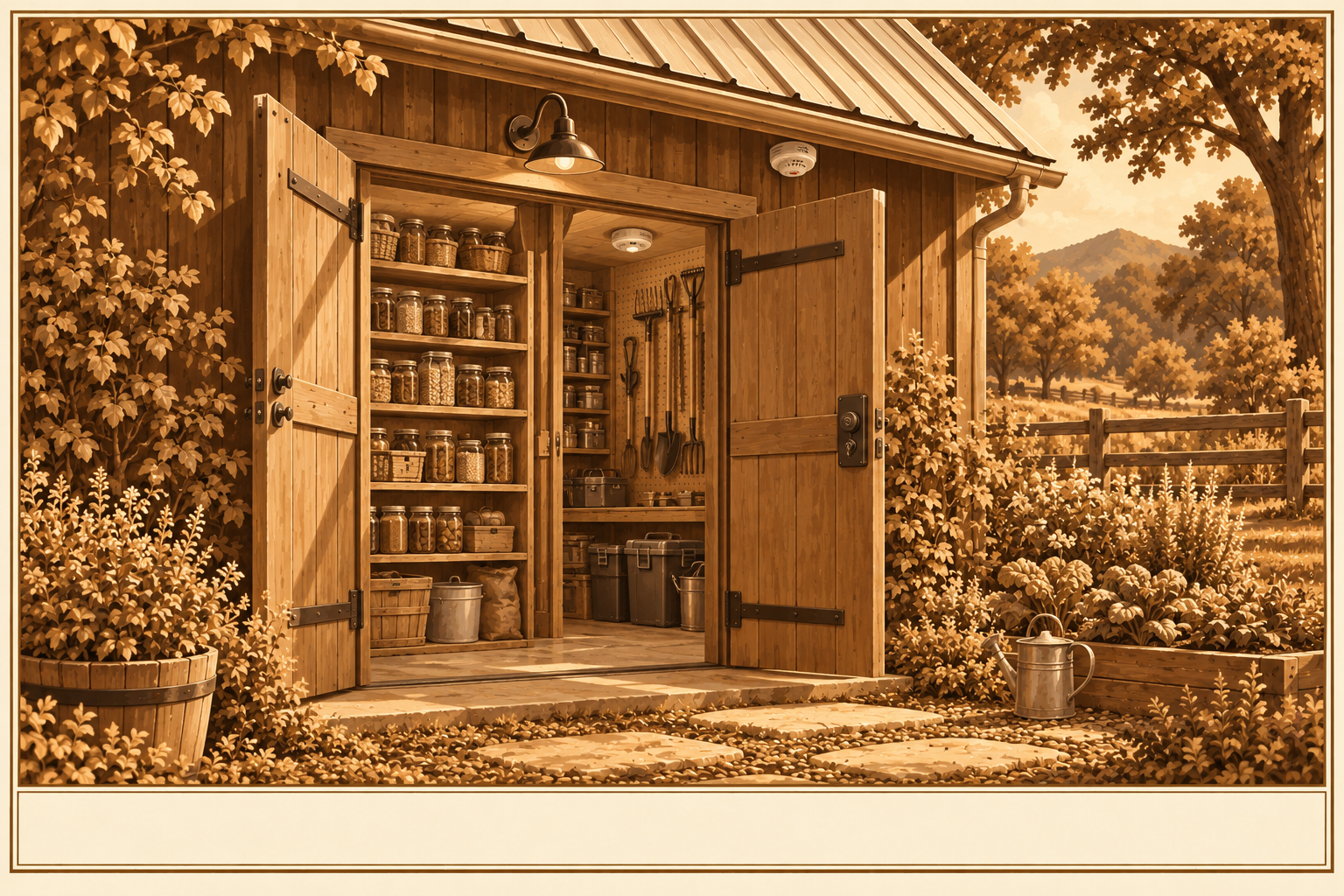
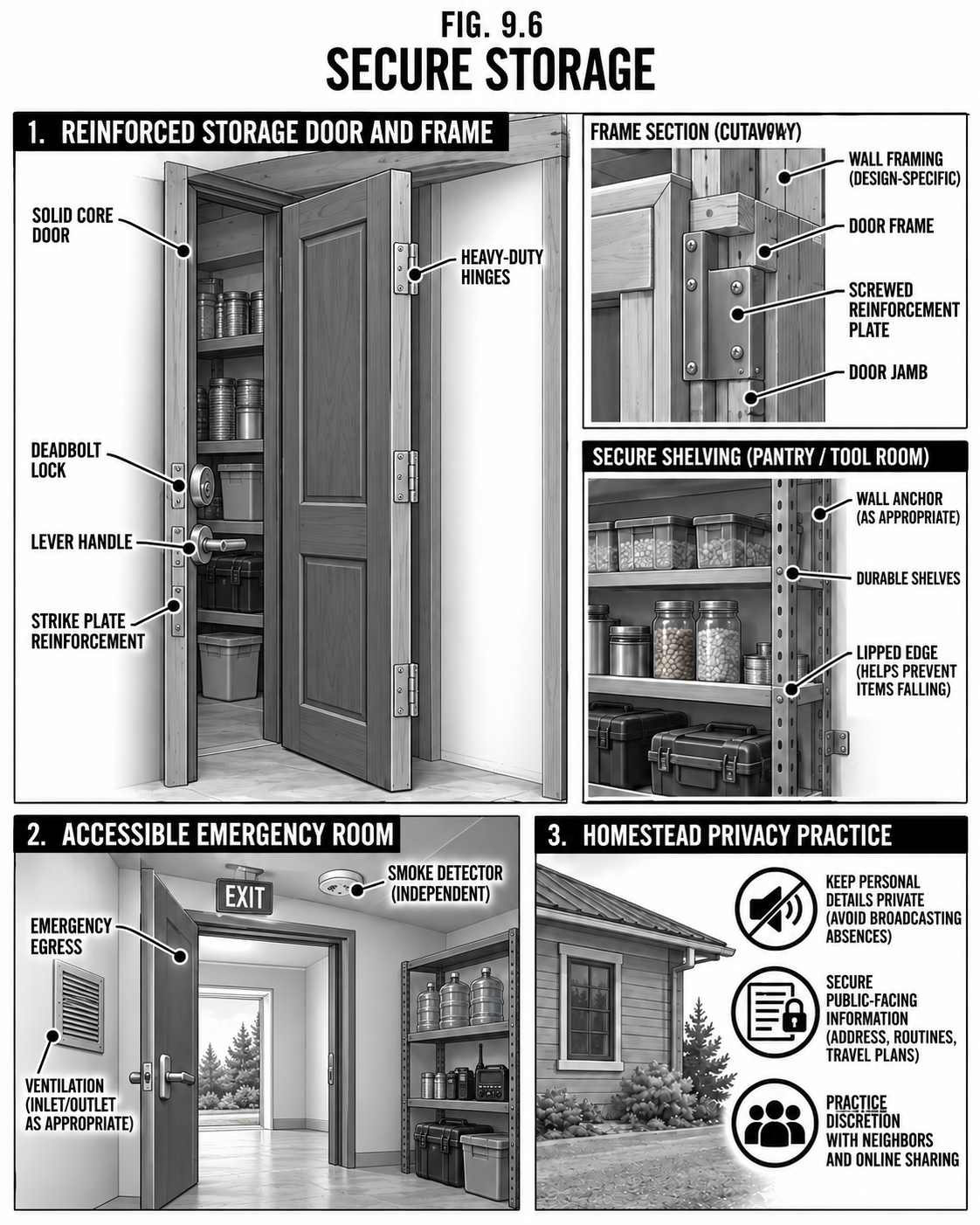
Keep food, tools, fuel, and valuables in a hardened, lockable store, with redundant hidden caches away from the house (Chapter 5). A simple interior safe-room (a solid-core door, a lock, a charged radio, water, and light) gives your family a place to wait out trouble while help is called.
OPSEC and low profile
Don't advertise your supplies, your absences, or your security to strangers or online.
Keep noise and light discipline at night.
Vary your patterns so they are not predictable.
A homestead that looks modest and unremarkable invites far less trouble than one that looks like a prize.
Safety & law A safe room is for retreat and calling help, not a fighting position. Store fuel and any firearms legally and safely (locked, away from children). The strongest, most lawful security is being unremarkable and unsurprised.
Tips & variations The quietest homestead on the road is usually the safest one. Let the flashy place down the way be the distraction.
Security · AwarenessSituational Awareness & Comms
Situational Awareness & Communications
Know what is normal so you notice what is not, and always be able to reach out.
DifficultyBeginner-Intermediate
TimeOngoing
CostLow-Med
SkillsAttention, radio
Situational awareness
Learn the baseline of your place: the normal sounds, the usual traffic, where the animals settle. Trouble shows up as a change from that baseline. A simple watch rotation during tense times, and the habit of noticing, catches most things early.
Communications (radio)
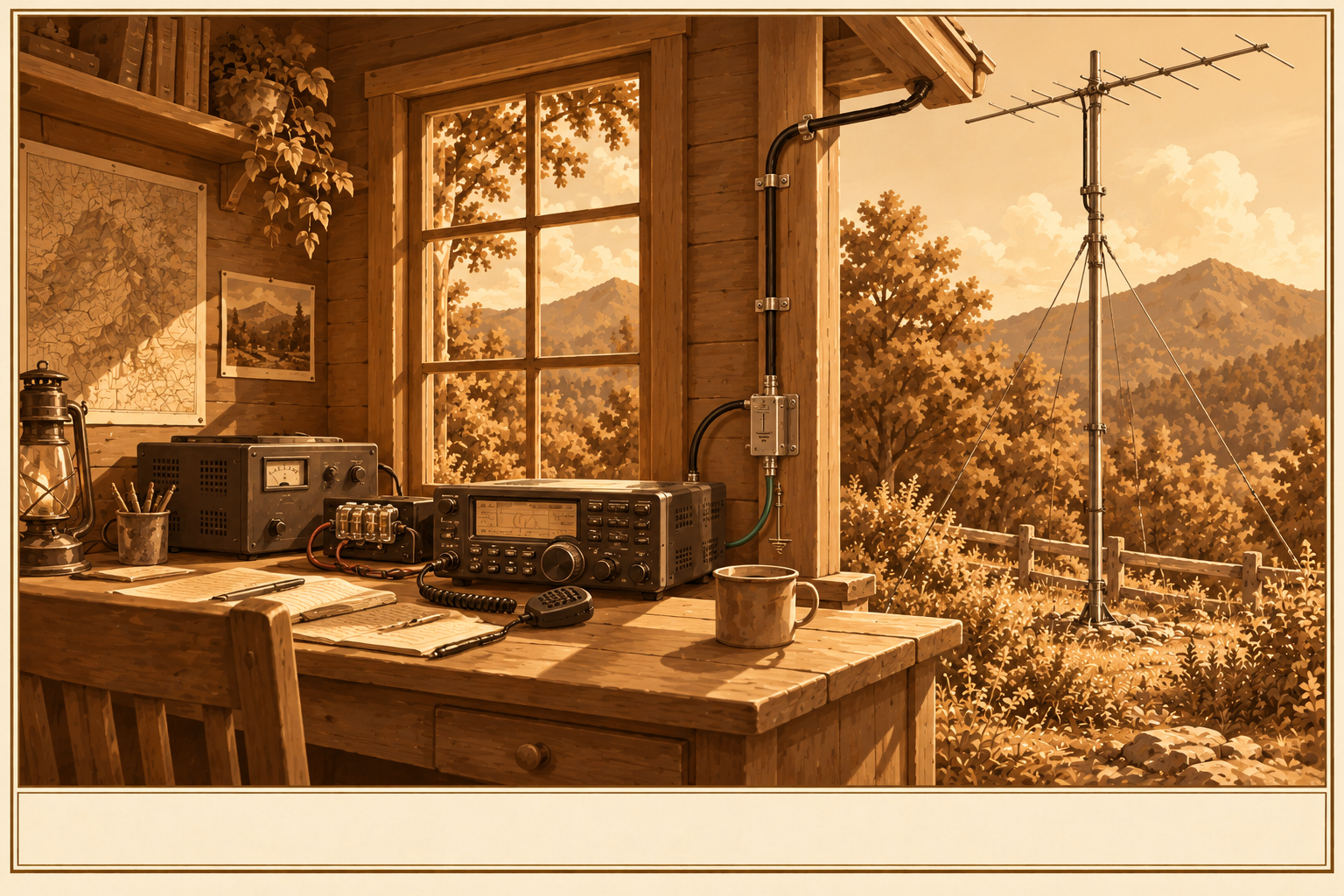
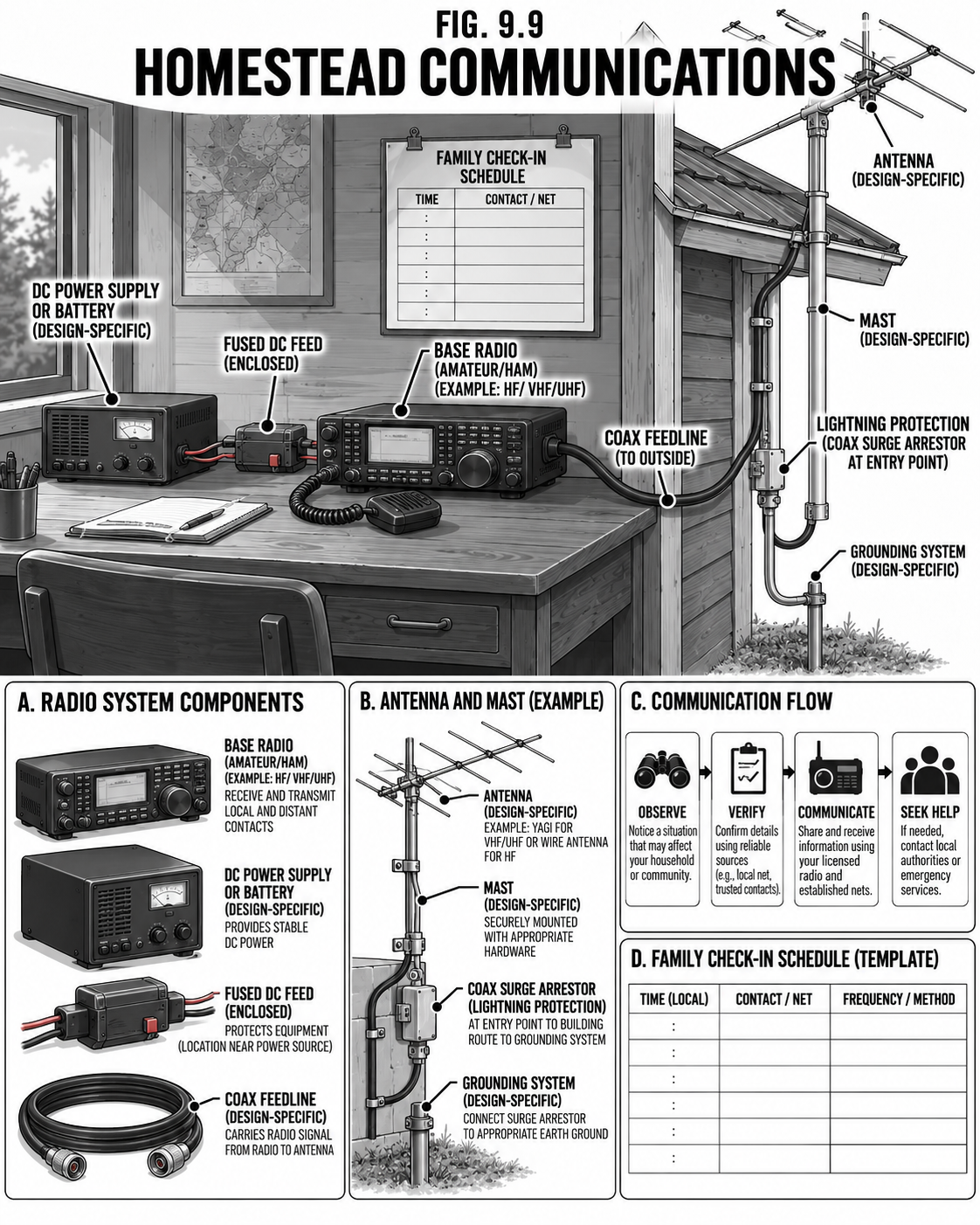
When the cell network and power are down, radio keeps you connected. GMRS or amateur (ham) radio reaches neighbors, family, and emergency nets over the hills where phones fail. A base station, a good antenna up high, and a family net schedule turn isolation into a network.
Safety & law GMRS requires an inexpensive FCC license (no test); ham requires a license and a test. Use radio legally and keep a weather radio for storms. Build a real neighbor network; in the U.P., neighbors who watch out for each other are the best security system there is.
Tips & variations Antenna height beats radio power; get the antenna up high and you will reach far over the ridges.