The land will feed you if you know how to take from it. This chapter is how to hunt, trap, fish, and forage for the table, cleanly and legally. The rule over everything here: know your licenses and seasons, kill quickly and humanely, take only what you will use, and waste nothing.
Wild Food · HuntingBasics & Safety
Hunting Basics & Safety
Meat for the freezer, and the four rules that keep everyone alive doing it.
DifficultyIntermediate
TimeSeasonal
CostLicense + gear
SkillsMarksmanship, woodcraft
Why it is worth it
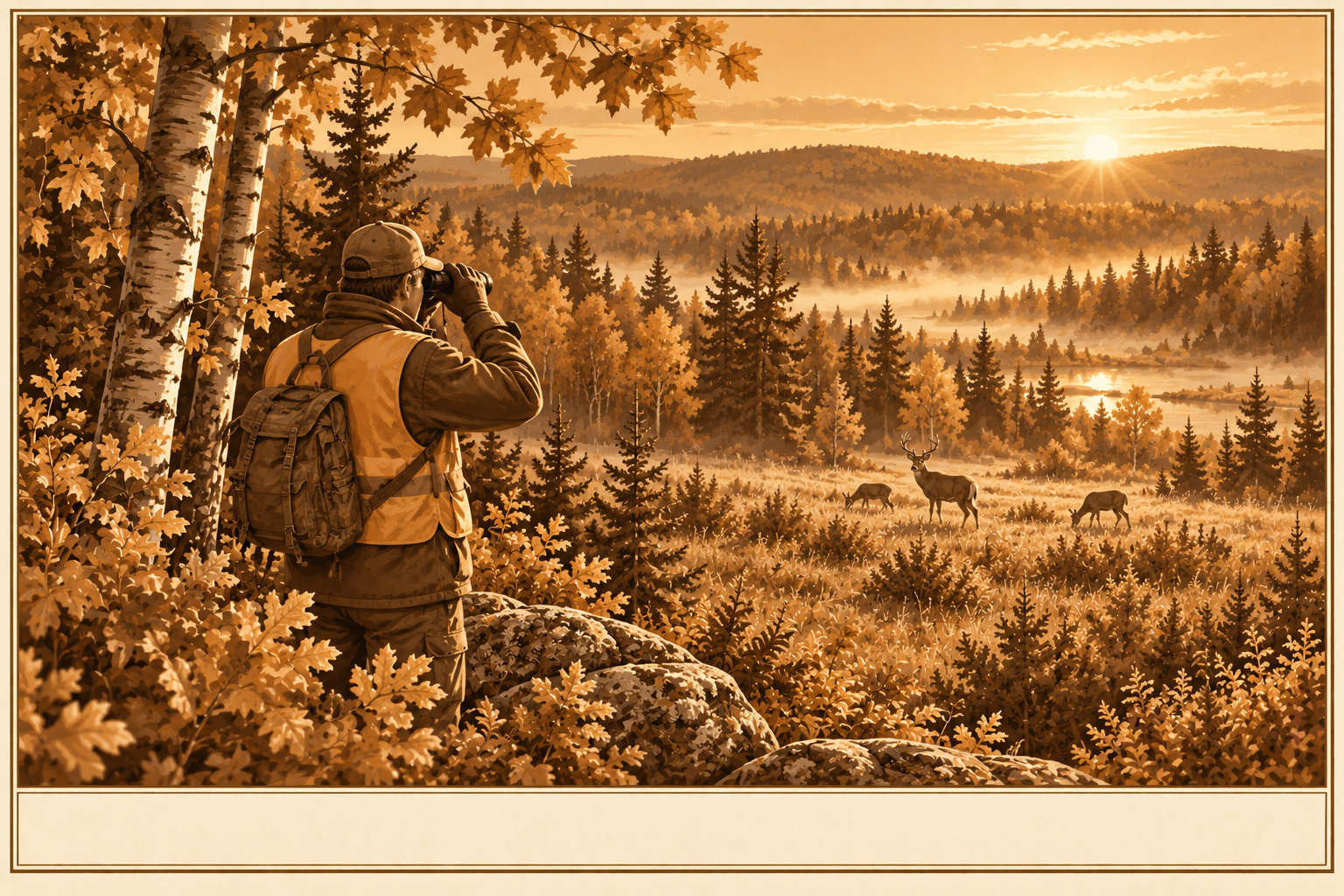
A single deer is a season of meat. Hunting turns the land around you into a renewable larder, and it is the most honest meat there is. The skill is patience, woodcraft, and a clean, ethical shot.
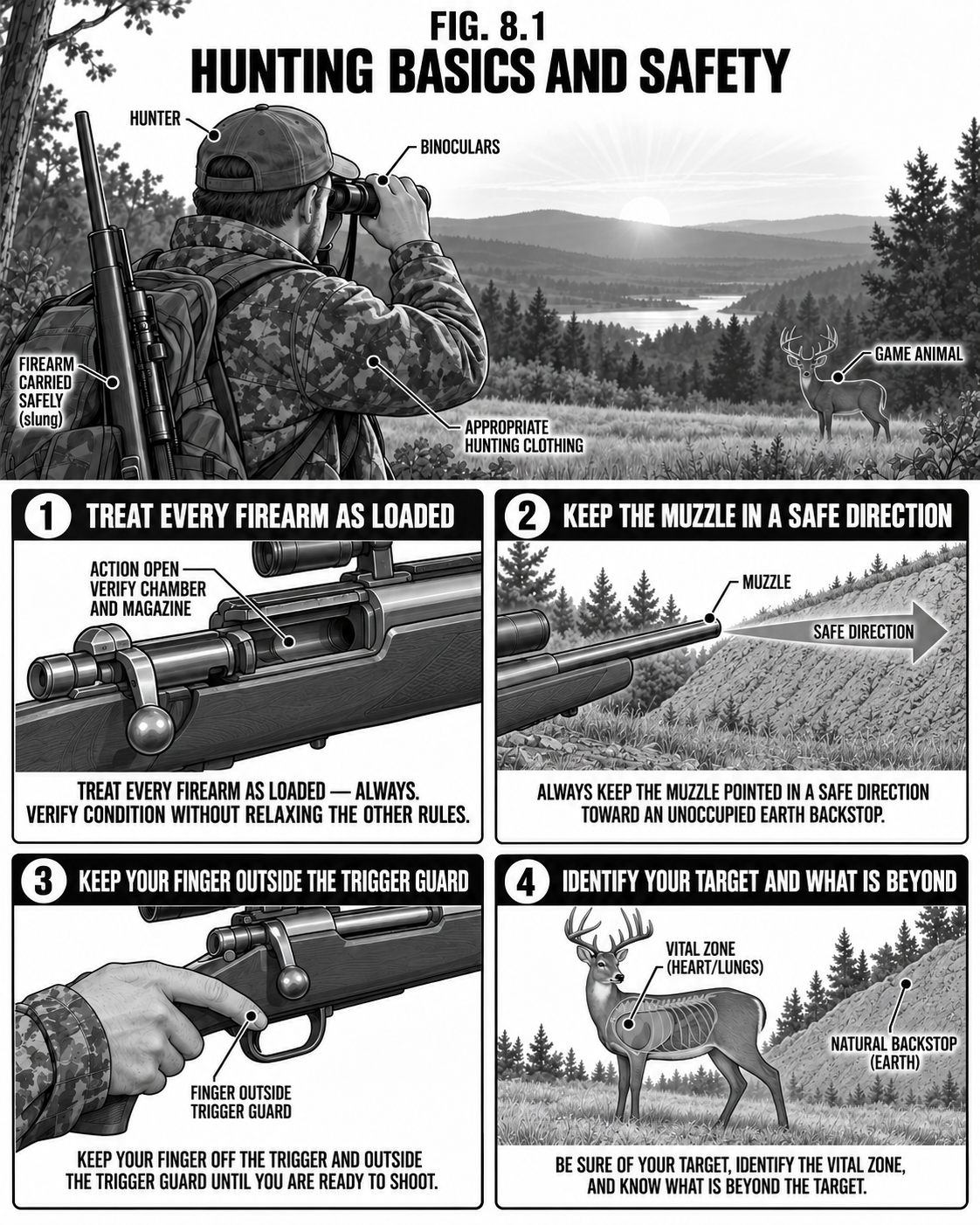
The four firearm rules (never broken)
Treat every gun as loaded.
Never point it at anything you are not willing to destroy.
Keep your finger off the trigger until your sights are on the target and you have decided to shoot.
Be sure of your target and what is beyond it.
Safety & code & law You MUST have the correct license and tags and hunt only in open season for the species, with legal methods. Wear hunter orange where required. Know your target and your backstop absolutely before you fire. Take only ethical shots within your range; a wounded animal that runs is a failure of the hunt.
Tips & variations Scout and pattern game before the season; a stand on a known trail beats wandering.
Wild Food · HuntingField Dressing
Field Dressing & Butchering
From animal to clean, cooled meat. Do it fast, do it clean.
DifficultyIntermediate
TimeHours
CostKnife
SkillsKnife work
Why it is worth it
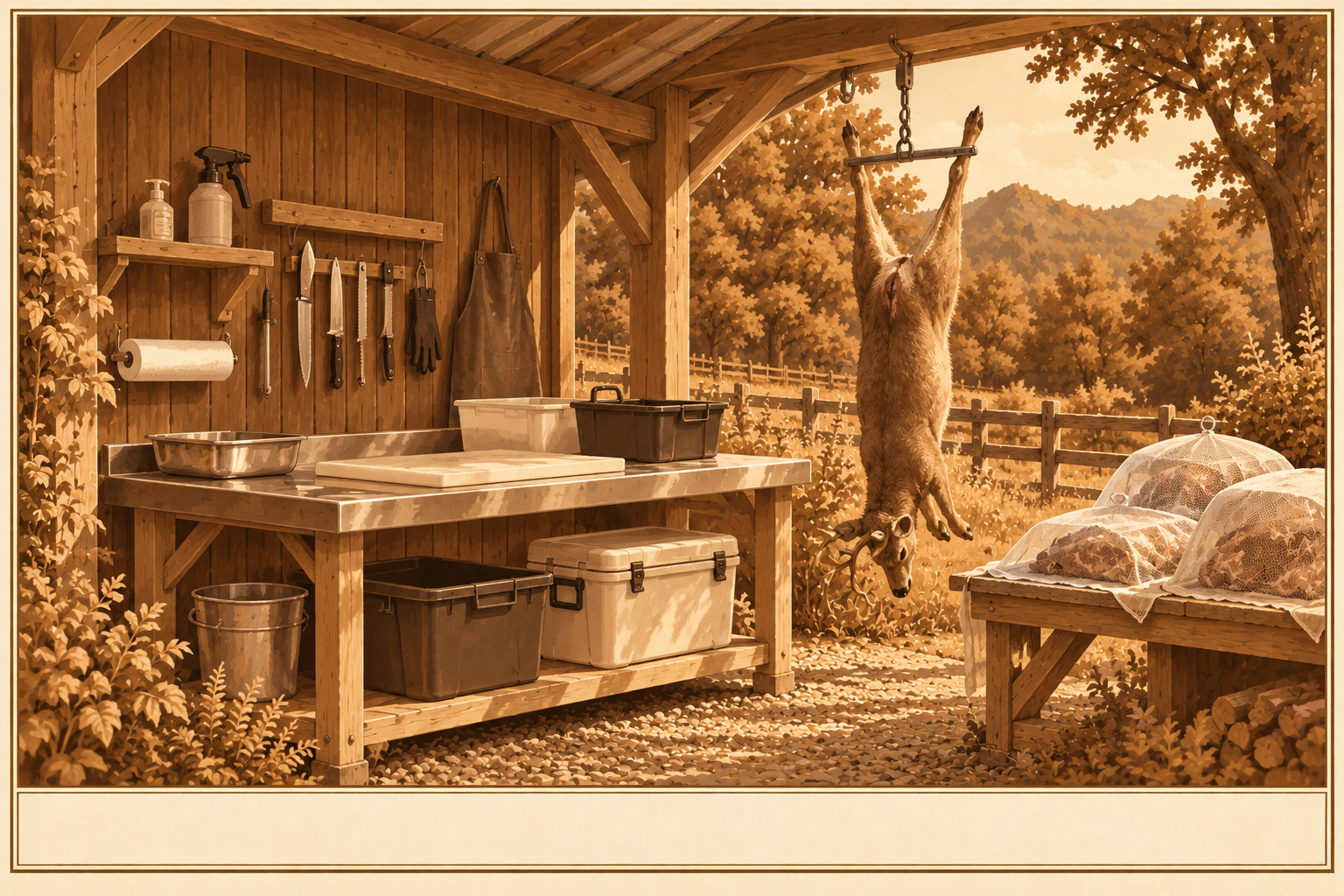
Meat spoils from heat and contamination. Field dressing (gutting) quickly, then skinning, cooling, and butchering, is what turns a kill into good food rather than waste. This is the other half of hunting, and the part that honors the animal.
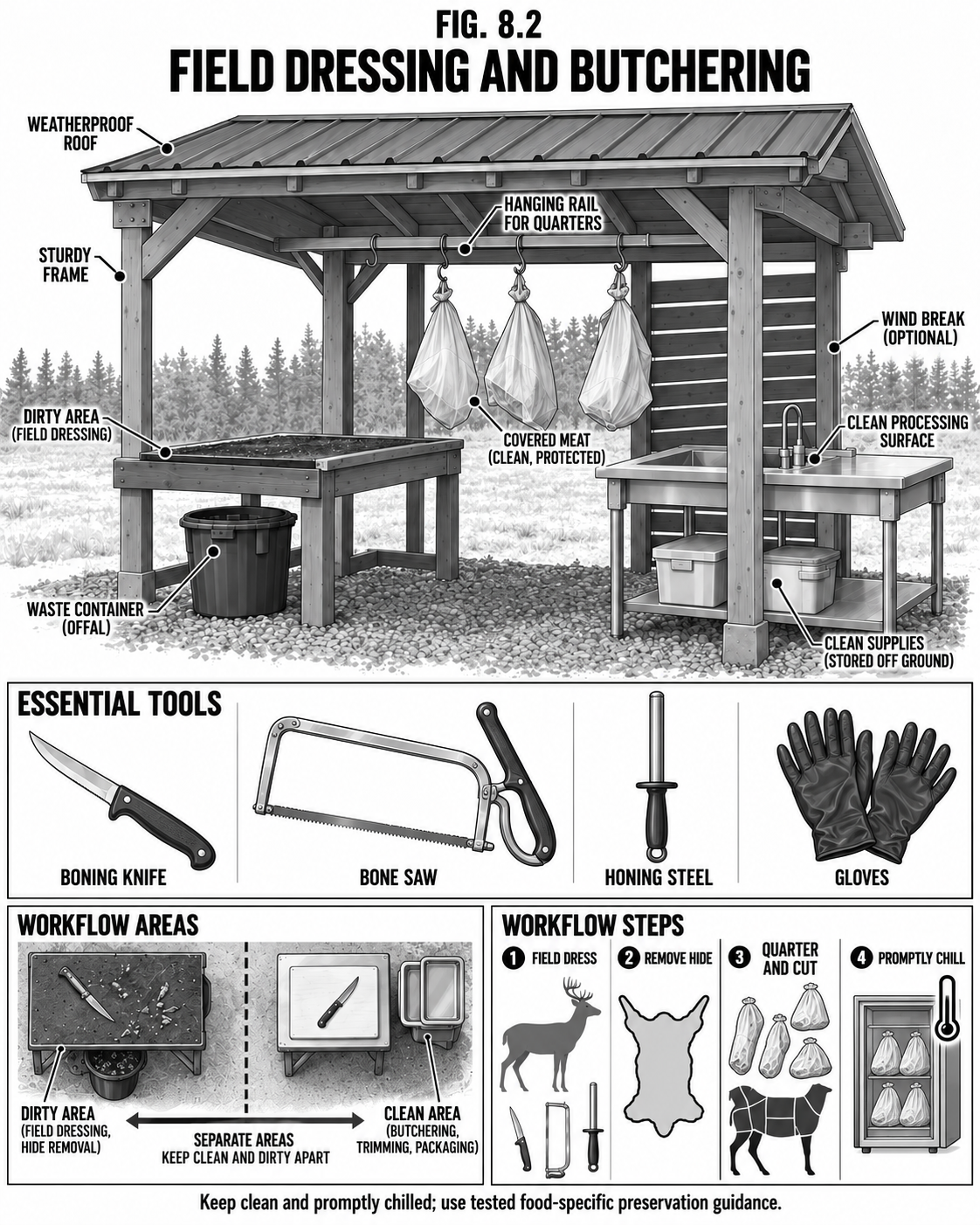
Step by step
Field-dress (remove the entrails) as soon as possible to let the carcass cool.
Keep the meat clean, cool, and dry; hang it to cool and, for deer, age it in the cold if you can.
Skin, then break it into quarters and primal cuts.
Trim, then wrap and freeze, or preserve it (smoke, cure, can, jerky; see Chapter 5).
Safety & code & law Wear gloves and work clean; some game carries disease. Cool the meat fast (above about 40 degrees F it spoils). Cook wild pork, bear, and small game thoroughly (trichinella and other parasites). Follow tagging and transport rules for your area.
Tips & variations A clean kill, fast gutting, and quick cooling matter more to the taste of the meat than anything you do in the kitchen.
Wild Food · TrappingSnares & Deadfalls
Snares & Deadfall Traps
Traps work while you sleep. The classic ways to take small game for the pot.
DifficultyIntermediate
TimeSet + check daily
CostLow
SkillsReading sign
Why it is worth it
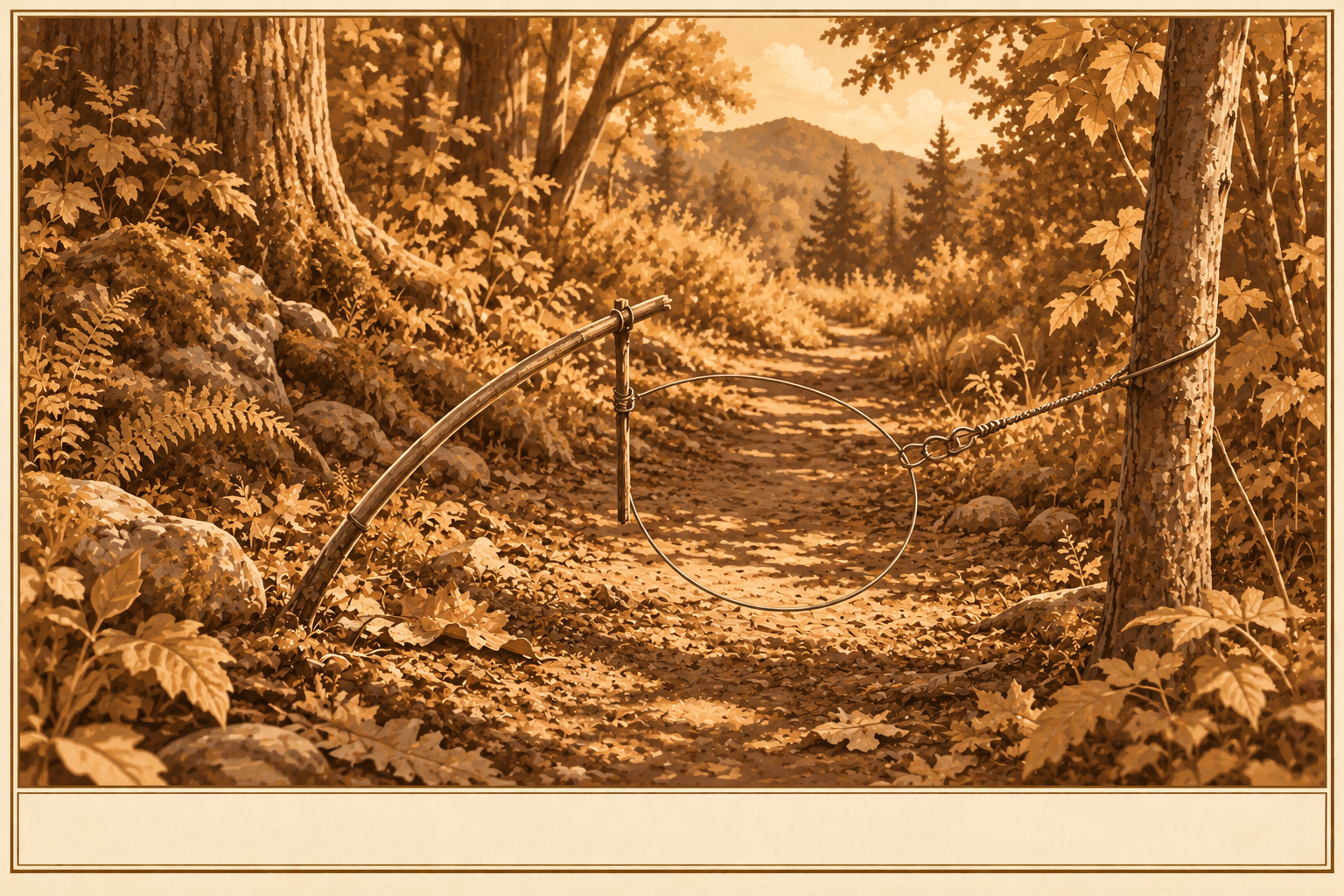
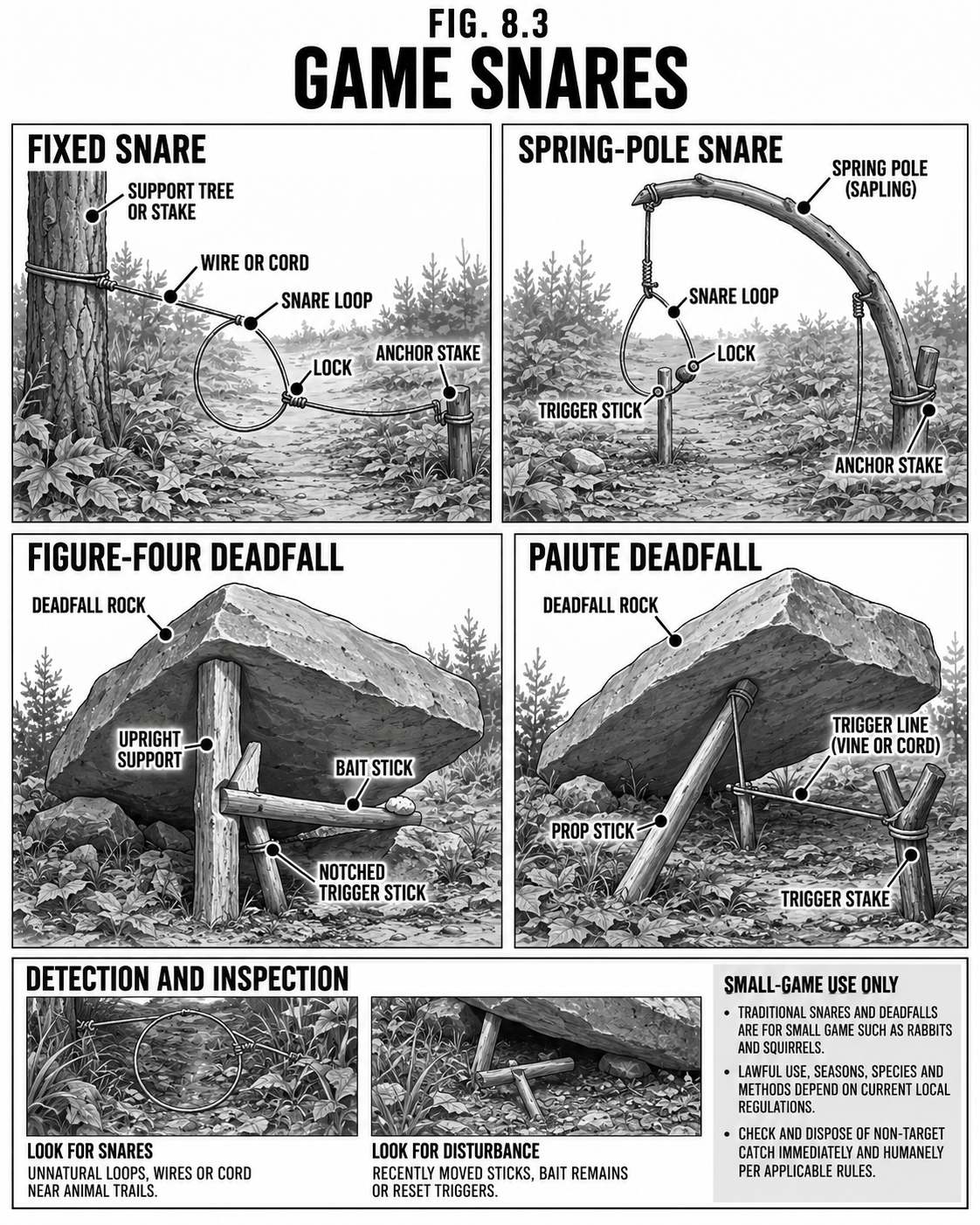
A trapline lets one person harvest small game (rabbit, hare) across a wide area without being there. A snare is a loop set on a game trail; a deadfall drops a weight on triggered bait. Both are cheap, light, and ancient.
Step by step
Read the sign: set on an active game trail, at the right height and loop size for the animal.
Snare: anchor a wire loop so the animal passes through it; set it where brush funnels the trail.
Deadfall: balance a weight on a figure-4 or Paiute trigger over bait.
Check every trap at least once a day.
Safety & code & law Trapping is tightly regulated: you need the right license, legal trap types, open season, and often registered sets. Many snares and body-grip traps are restricted or banned, and locations near trails/pets are controlled. Check every trap DAILY so nothing suffers, release non-target animals, and dispatch quickly and humanely. Never set anything that could catch a person or a pet.
Tips & variations A few well-placed traps on good sign beat many poor ones; let the terrain funnel the animal.
Wild Food · Water & Small GameFish & Bird Traps
Fish Traps, Lines & Small-Game Traps
The water and the brush will feed you too, with a funnel, a line, and a box.
DifficultyIntermediate
TimeSet + check
CostLow
SkillsWeaving, siting
The methods
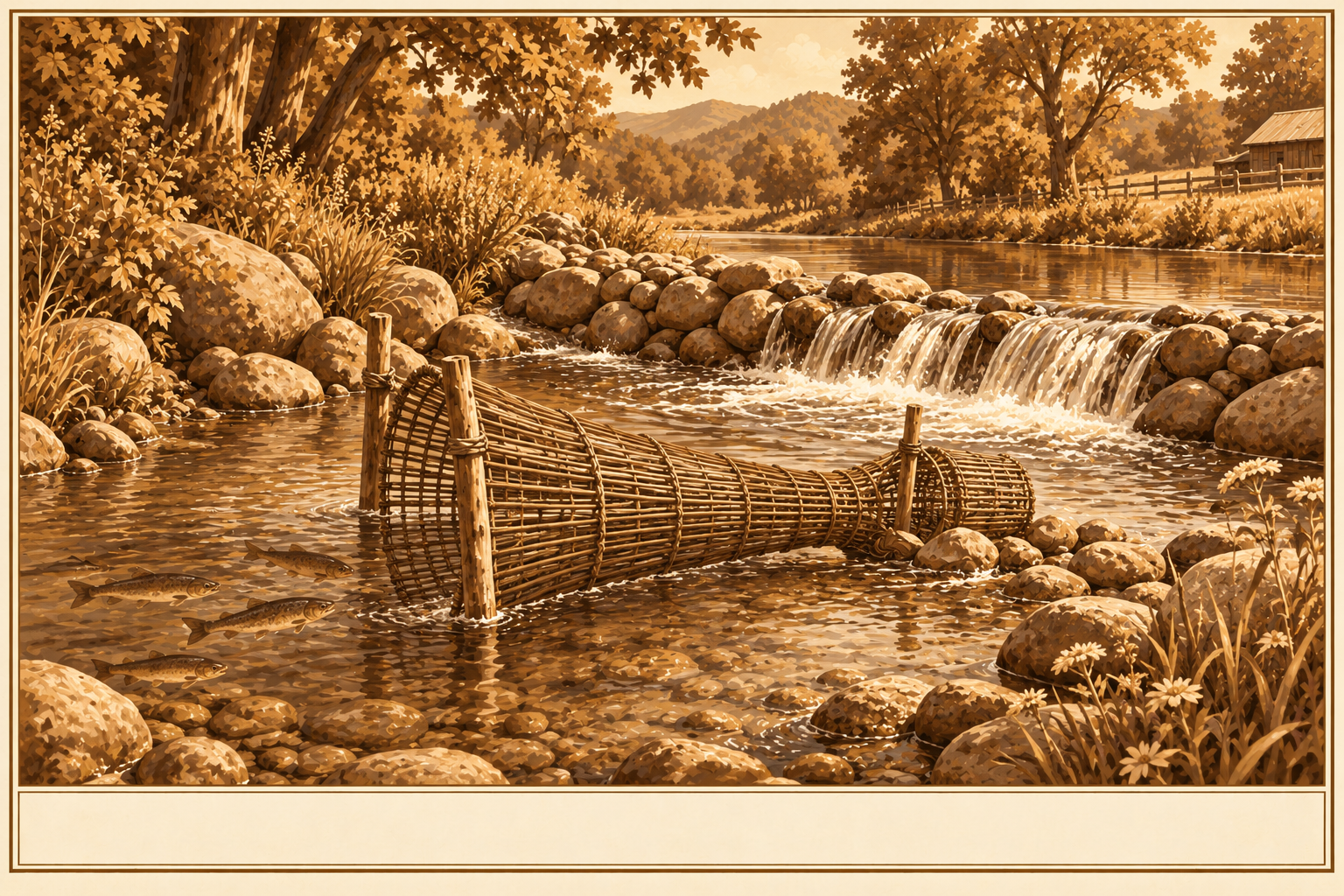
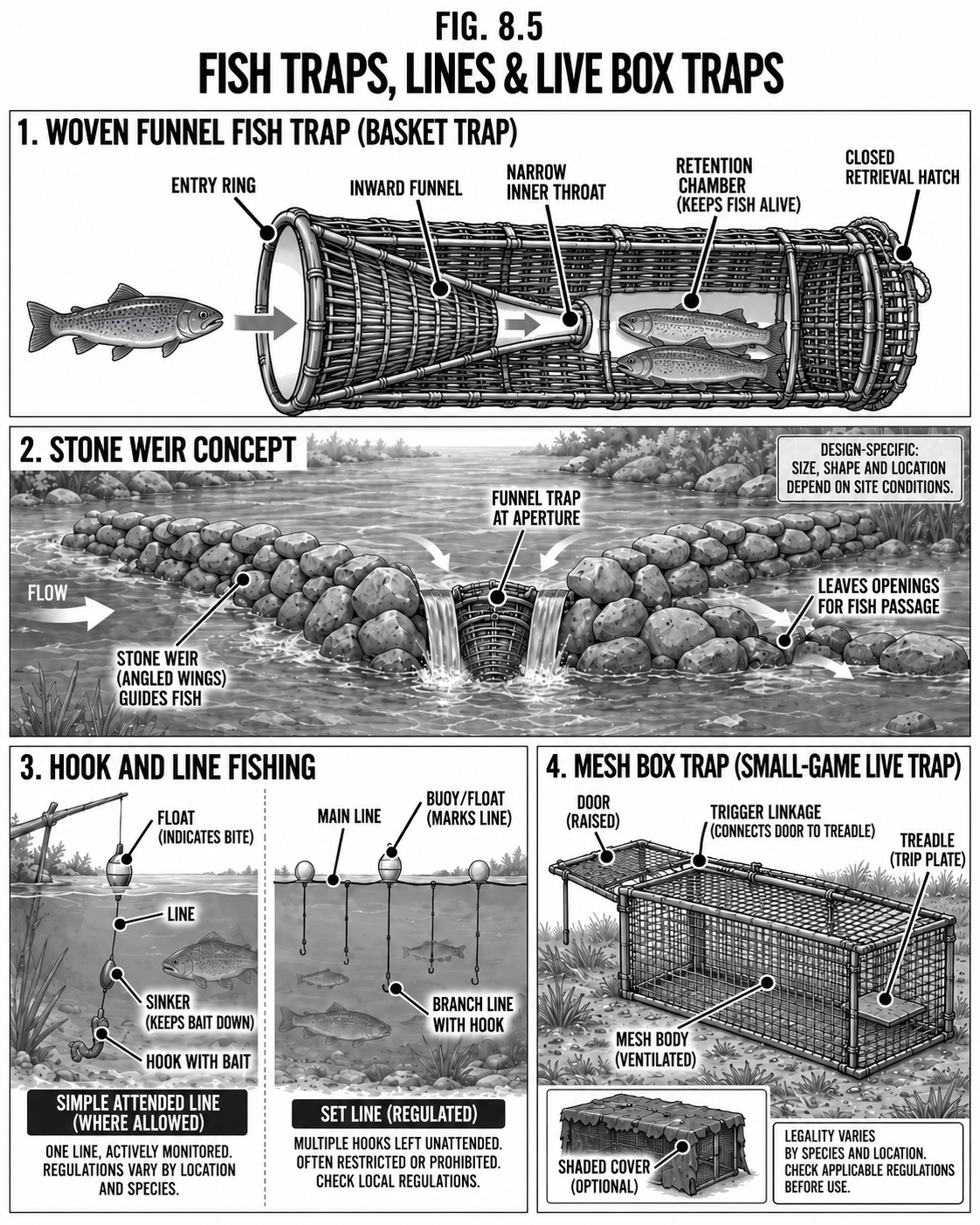
Funnel / weir fish trap: a woven basket or a stone weir with a funnel mouth; fish swim in and cannot find their way out. Check and empty regularly.
Set lines (trotline): a baited line of hooks left in the water, where legal.
Live box / cage trap: for small game and birds; lets you release non-target animals unharmed.
Safety & code & law Fishing methods are regulated: traps, weirs, nets, and set lines are legal only in some places and seasons, with limits. Check the rules before you set anything. Check traps often, keep only what you will eat, and release the rest alive.
Tips & variations A funnel trap baited and set overnight in a good spot is one of the most reliable wild-protein methods there is, where it is legal.
Wild Food · ForagingWild Edibles & Preserving
Wild Edible & Medicinal Foraging; Preserving the Kill
The forest is a pantry and a medicine chest, if you know it cold. Then put it all up.
DifficultyBeginner-Advanced
TimeSeasonal
CostFree
SkillsCertain ID
Foraging (companion to the Herbie reference)
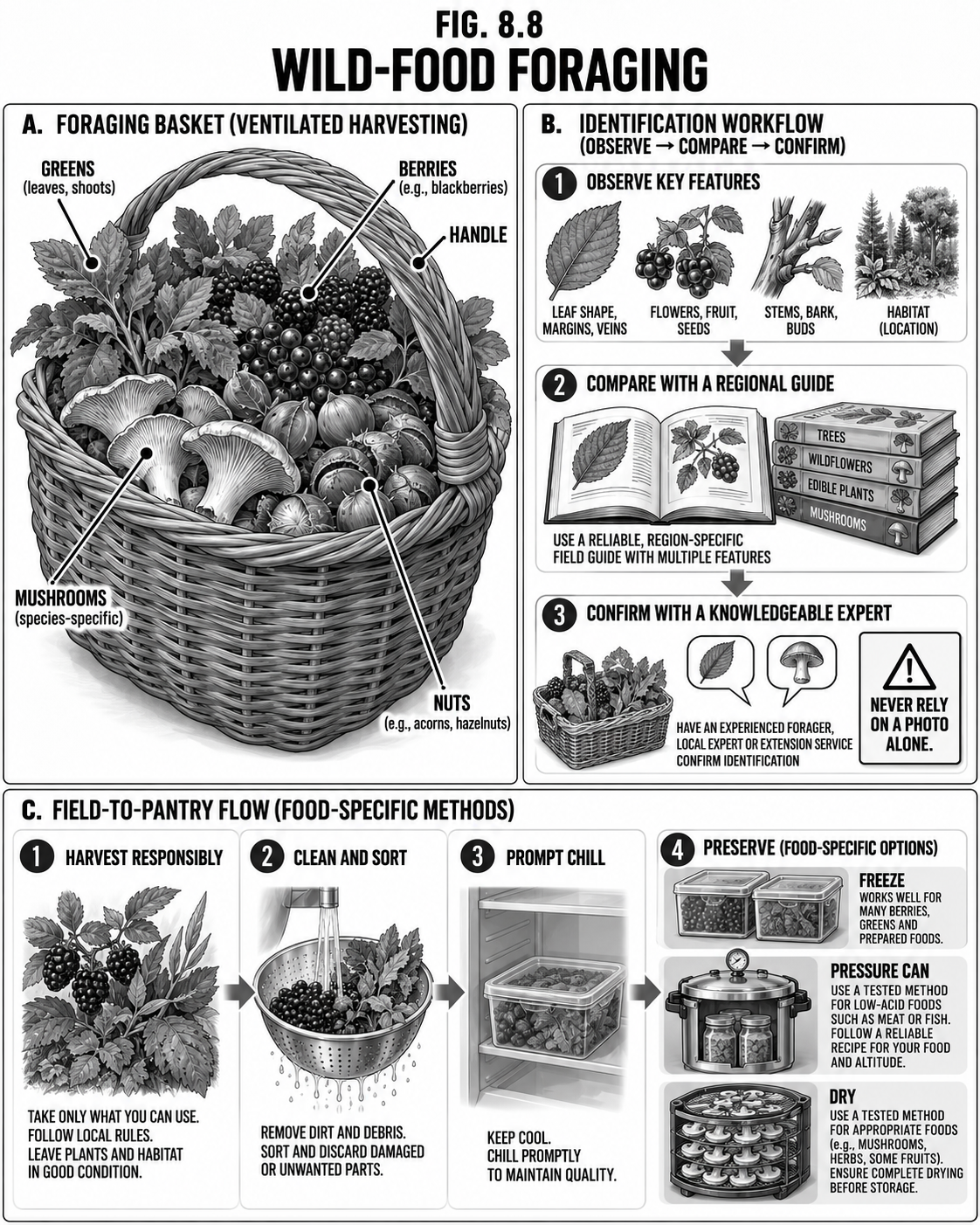
Wild foods fill the gaps and the lean months: berries, nuts, greens, cattail, wild leeks, and more. Learn a handful of unmistakable, safe plants first and expand slowly, always with certain identification.
Preserving the kill & the harvest
Everything you take, hunted or gathered, keeps longer if you put it up: cool and age meat, then jerky, smoke, cure, or can it (Chapter 5). Dry and store nuts, berries, and greens.
Safety & code & law NEVER eat a wild plant or mushroom you cannot identify with 100% certainty: many look-alikes are deadly, especially mushrooms. "When in doubt, throw it out" is a survival rule here. Harvest sustainably and legally (some areas restrict foraging). This book is a companion, not a substitute for a trusted regional field guide and a mentor.
Tips & variations Pair this chapter with the Herbie herbal reference; learn the plants on your own land in every season before you need them.