CHAPTER SIX
Waste & Sanitation
Handle your waste well and it becomes soil and fuel; handle it badly and it poisons your water and your family. This chapter is every honest way to deal with human waste, greywater, and garbage off the grid, done cleanly, legally, and without a sewer. Keep it far from your well, and give it time.
Waste · ToiletsComposting Toilets
Composting Toilets (Bucket, Diverting, Continuous)
No water, no sewer, no smell when it is done right, and finished compost at the end.
DifficultyBeginner-Intermediate
TimeHours to build
CostLow
SkillsBasic
The options
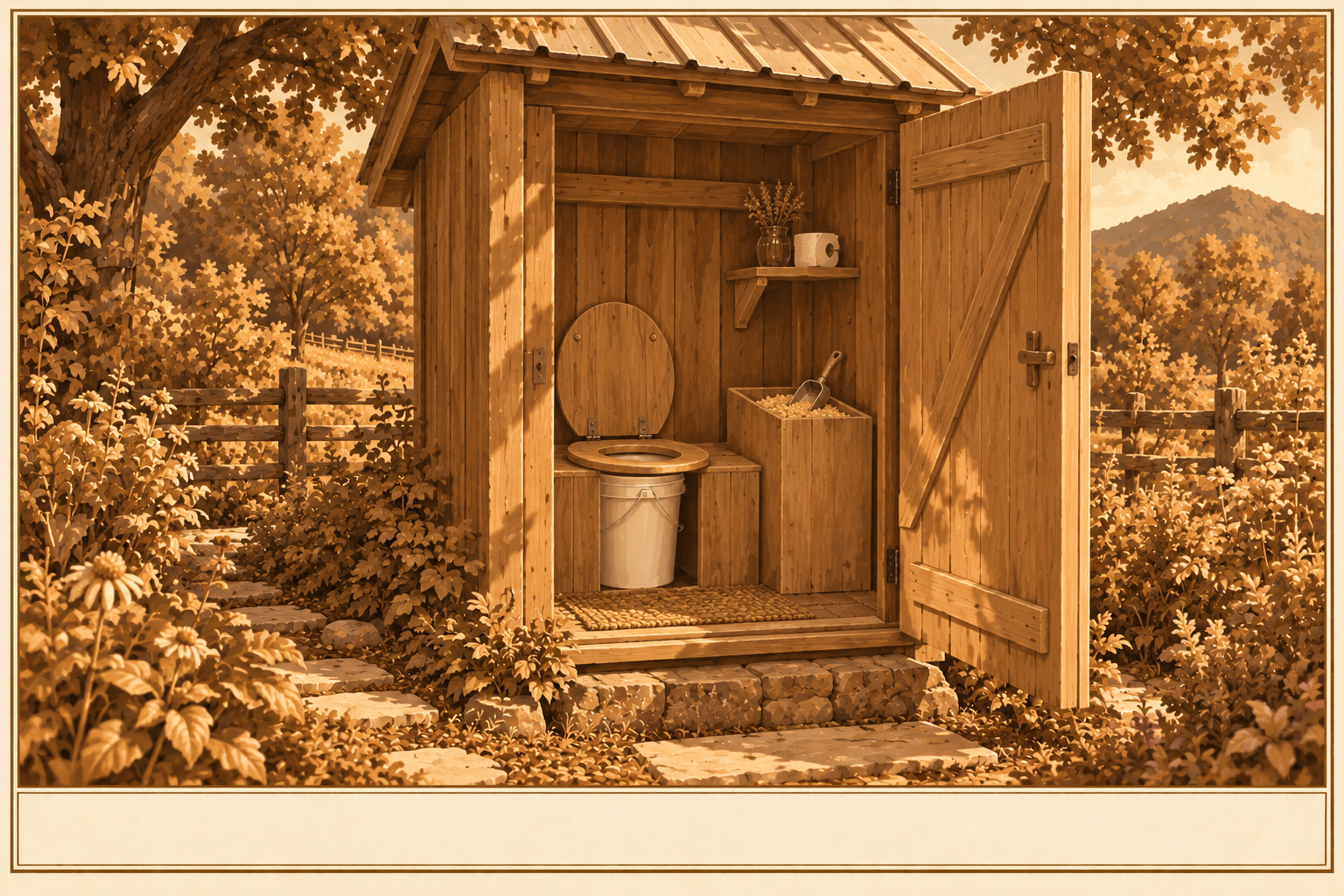
- Bucket (sawdust) toilet: the humanure classic. A seat over a bucket; every use is covered with sawdust or peat so there is no odor and no flies. Buckets go to a dedicated hot-compost bin.
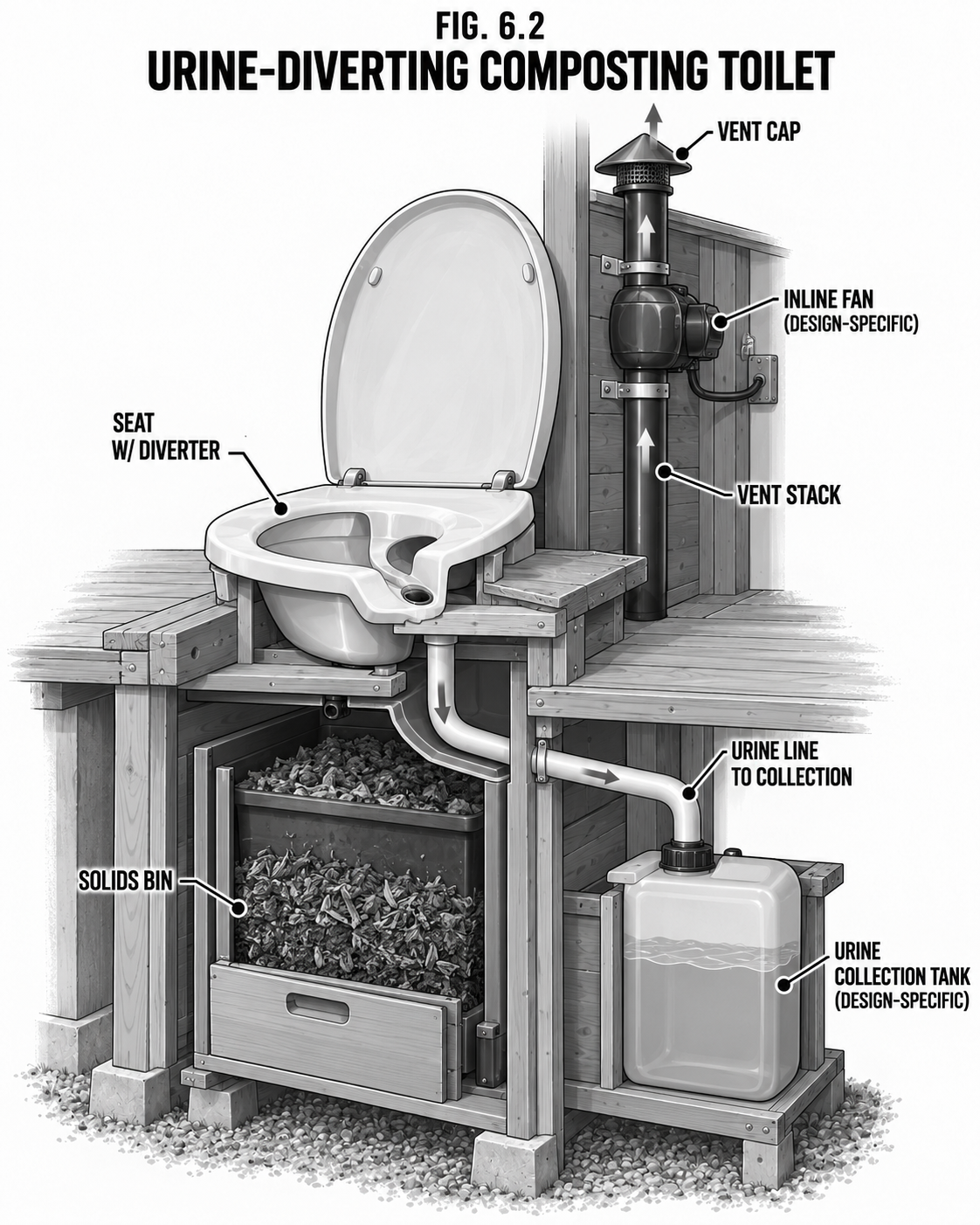
- Urine-diverting: a seat that separates urine (which is nearly sterile and great diluted on plants) from solids, which cuts smell and speeds composting.
- Continuous (clivus-style): a large sloped chamber where material composts as it moves down, and you harvest finished compost from the bottom.
Build notes
- Always keep a bucket of cover material (sawdust) at the seat; cover every deposit fully.
- Vent the unit with a stack (and a small fan if you have power) to keep air moving up and out.
- Empty solids into a dedicated, rodent-proof compost bin, never the garden pile.
Safety & code Human waste carries pathogens. The whole system is safe ONLY if the compost gets hot enough, long enough (see next page). Keep everything far from any water source. Composting toilets are legal in many places and restricted in others, so check your local rules.
Tips & variations Cover material is everything: enough sawdust and there is genuinely no smell; too little and it stinks. Keep a generous bin by the seat.
Waste · ToiletsOuthouse & Humanure Cycle
Outhouse & the Humanure Cycle
The old pit privy, and how to turn a year of buckets into safe, finished compost.
DifficultyBeginner
TimeA day / ongoing
CostLow
SkillsBasic
Outhouse
A pit privy is the simplest off-grid toilet: a deep pit, a vented structure over it, and a sprinkle of lime or ash to cut odor. Sited and dug right, it serves for years, then is capped and moved.
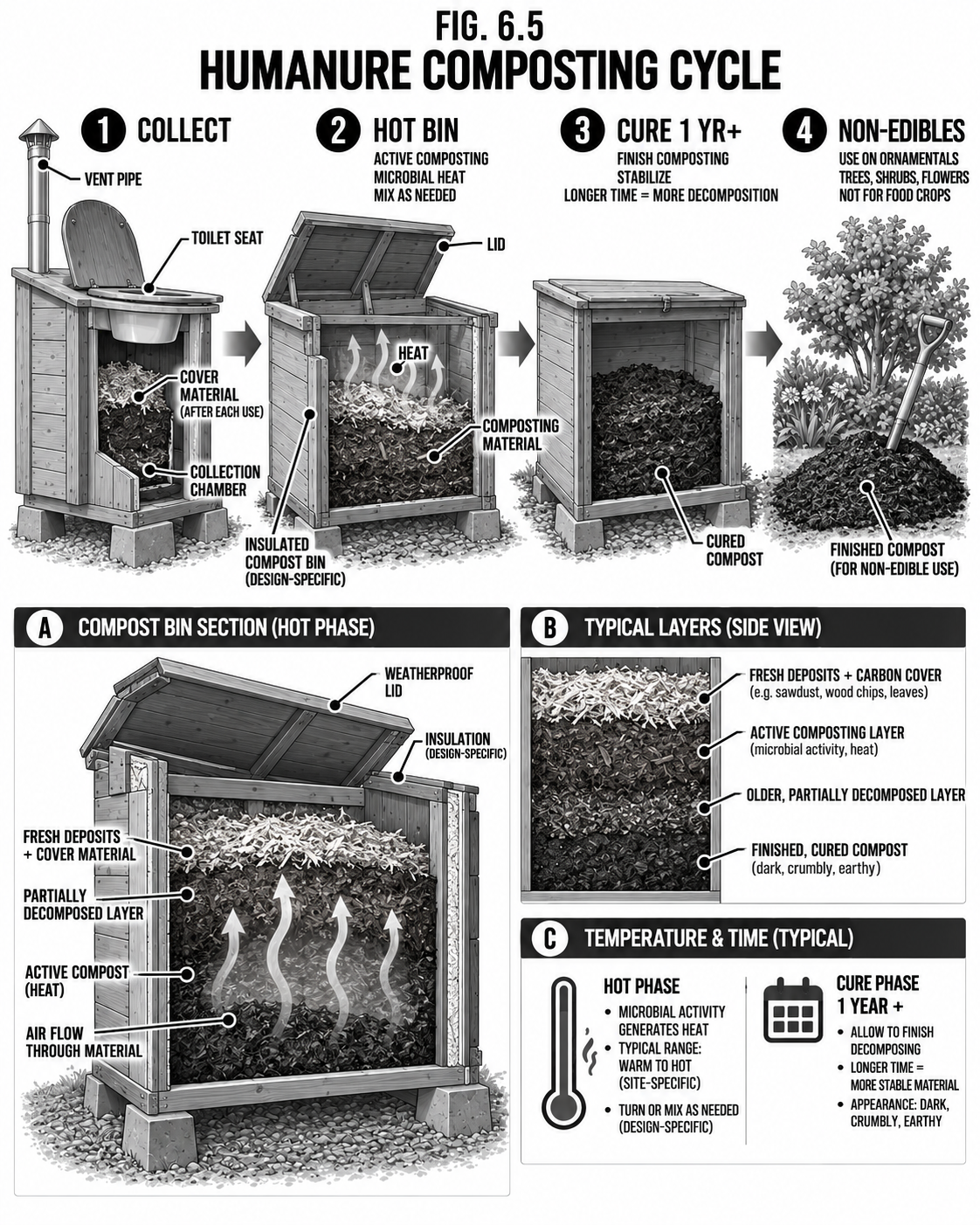
The humanure cycle (the safety heart of composting toilets)
- Collect: every deposit covered with sawdust (no smell, traps nitrogen).
- Hot-compost: add to a dedicated bin with plenty of carbon (straw, leaves); a working pile heats to 130 to 150 degrees F, which kills pathogens.
- Cure: let the finished pile sit a full year or more after the last addition.
- Use: the cured compost on orchards, trees, and non-food plants.
Safety & code This only works if the pile truly gets hot and then cures long enough; a cold pile does NOT kill pathogens. A thermometer in the pile is essential. Site an outhouse far downhill and well away (often 50 to 100+ ft) from any well or water, per local code. When in doubt about human-waste compost, keep it on non-food plants.
Tips & variations Two bins let one cure untouched while you fill the other.
Waste · WaterGreywater, Reed Bed & Septic
Greywater, Constructed Wetland & Septic
Where the used water and the blackwater go, cleanly.
DifficultyIntermediate
TimeDays
CostLow-Med
SkillsPlumbing + digging
The options
- Greywater, branched drain + mulch basins: sink/shower/laundry water piped by gravity to mulch basins at trees (see also Chapter 2). Irrigation, not drinking; keep it moving, never store it.
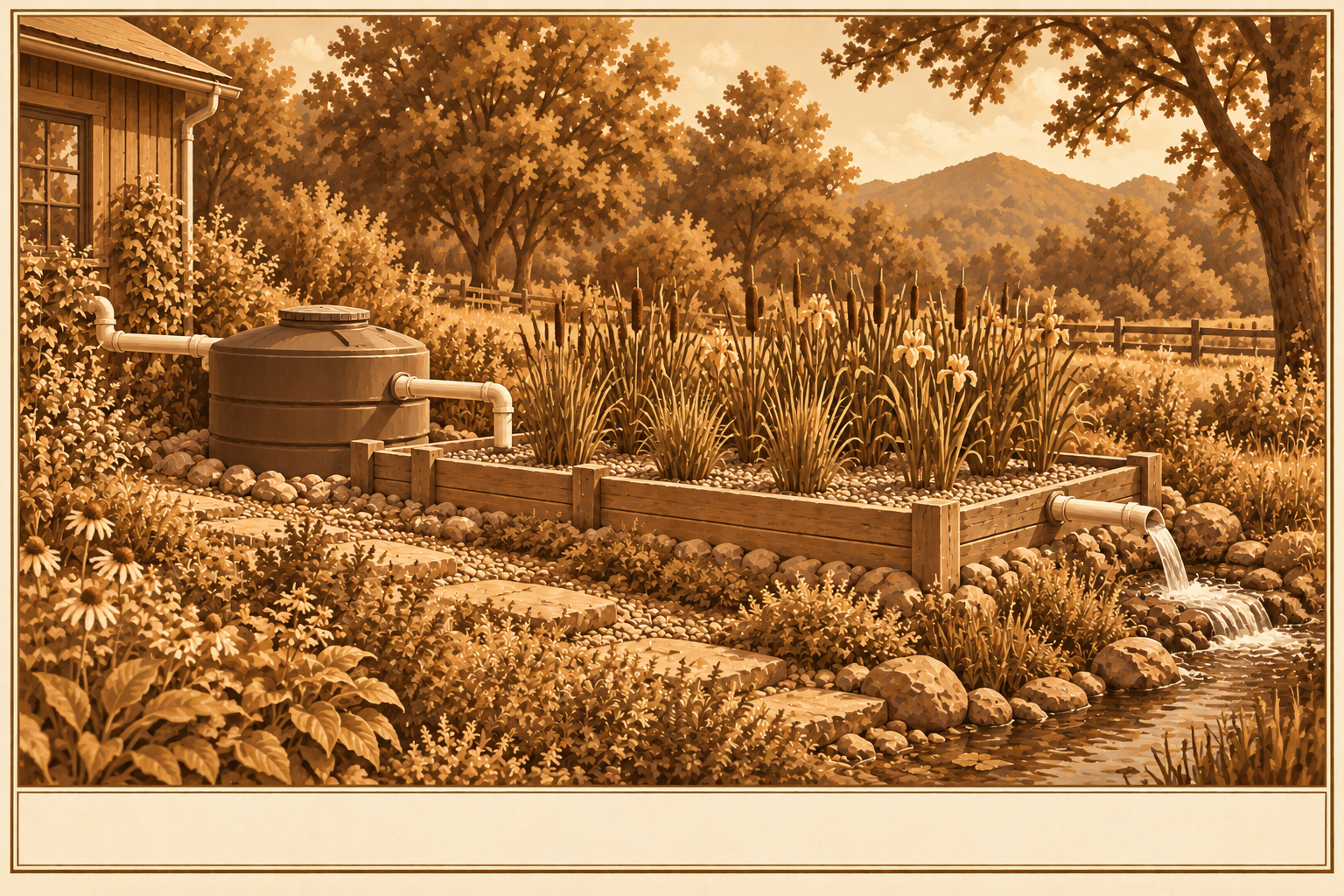
- Constructed wetland (reed bed): waste water flows through a gravel bed planted with reeds and cattails; the plants and microbes clean it before it discharges. A natural, quiet treatment plant.
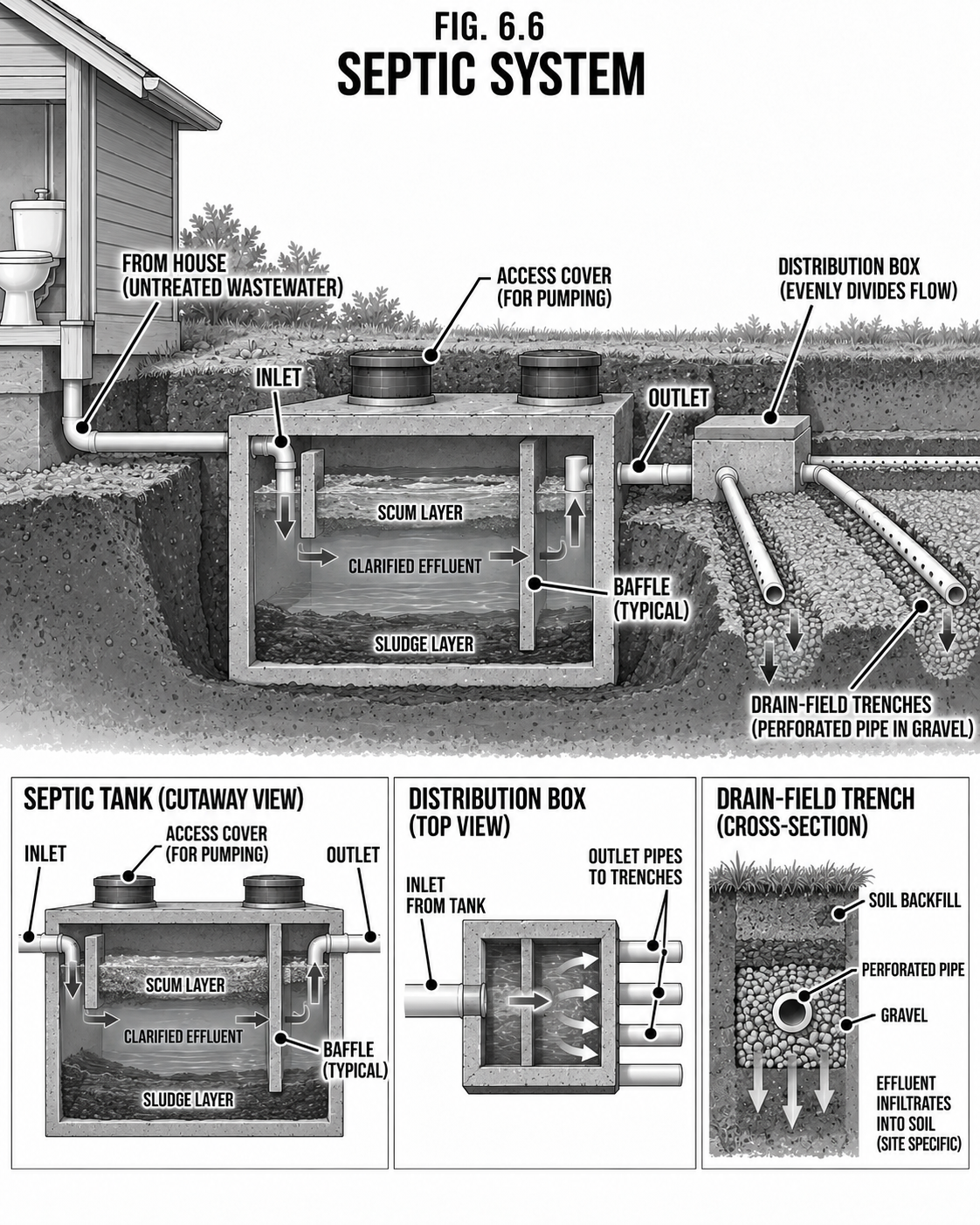
- Septic: the standard for blackwater: a tank where solids settle and break down, then liquid flows to a drain field that filters it through the soil.
Safety & code Septic and drain fields are heavily regulated and usually require a permit, a perc test, and setbacks from wells and water; do this by the book. Never put kitchen grease or toilet water into a greywater line. Keep all of it well away and downhill from your drinking water. A failed drain field surfaces sewage, so size and site it right.
Tips & variations A reed bed polishing septic or greywater output is a beautiful, low-maintenance final stage where space allows.
Waste · EnergyBiogas & Compost
Biogas Digester & Compost Systems
Turn manure and scraps into cooking gas, and everything else into black gold.
DifficultyAdvanced / Beginner
TimeVaries
CostLow-Med
SkillsPlumbing / basic
Biogas digester
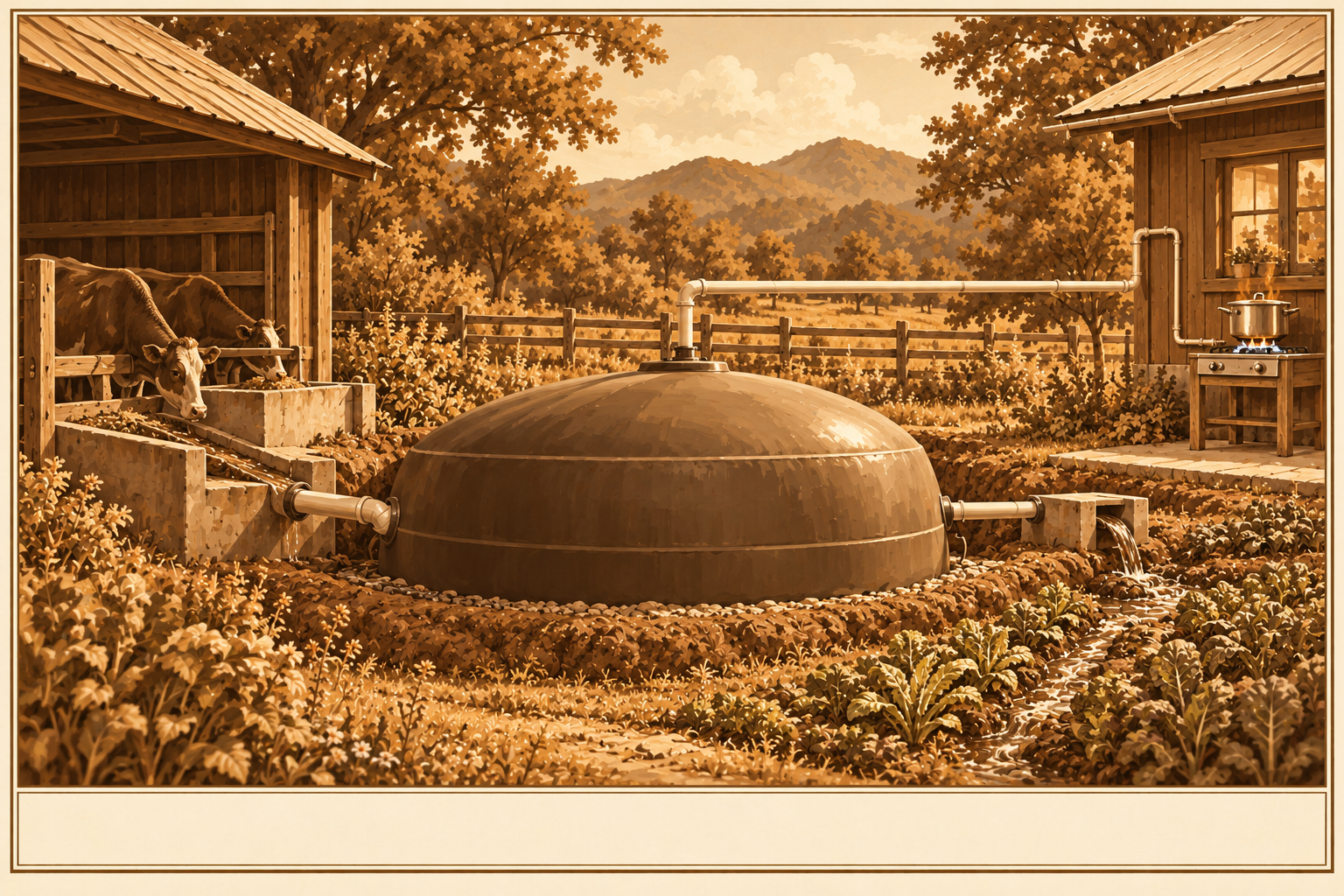
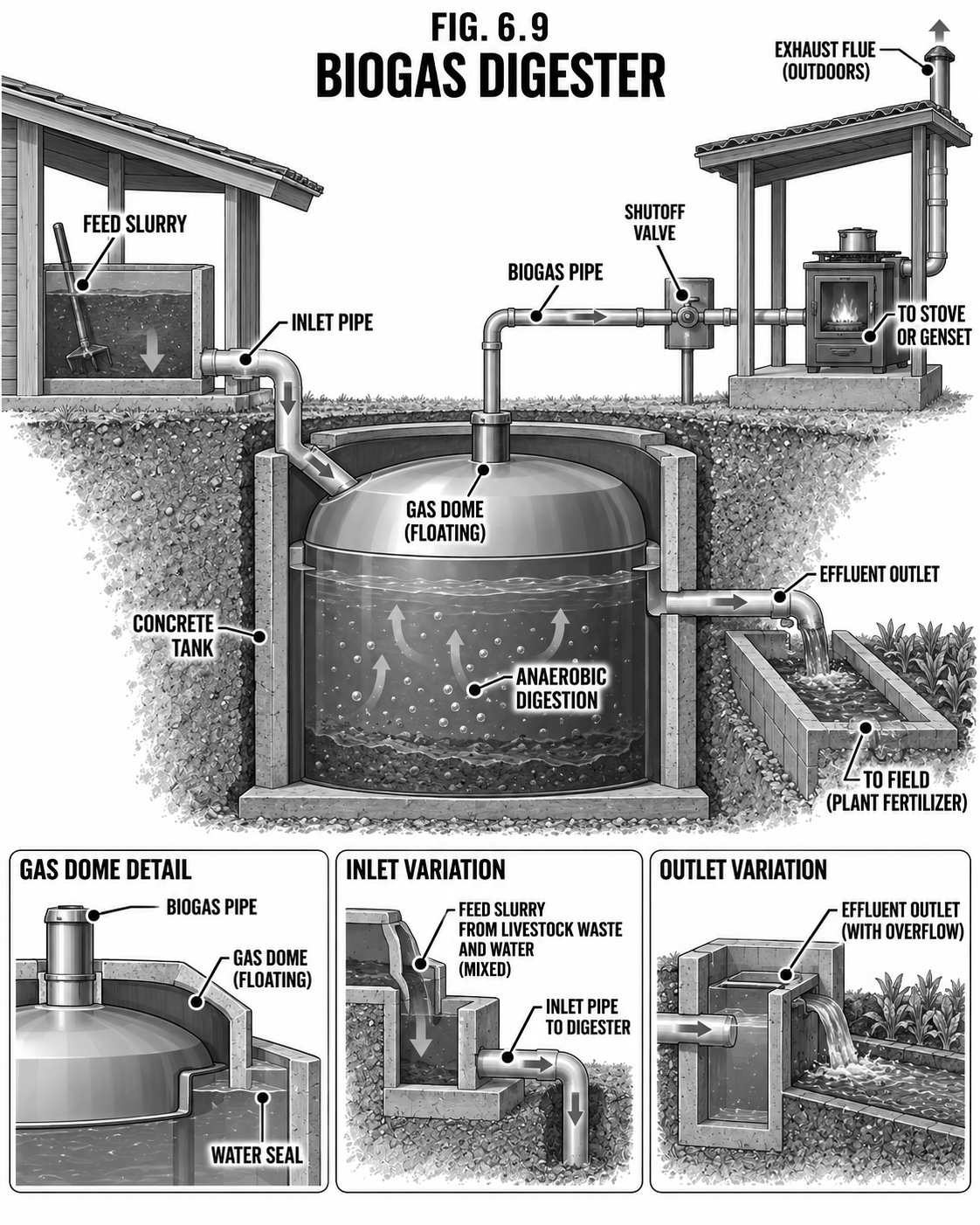
An anaerobic digester feeds on manure and food waste and gives off methane-rich biogas you can cook with or run an engine on (Chapter 1), plus a rich liquid fertilizer. It works best warm, so it shines in summer and in warmer climates.
Compost systems (every kind)
- Hot (3-bin): layered green and brown, turned, heats up and finishes fast; kills weed seeds and pathogens.
- Cold: just pile it and wait; slow but no work.
- Vermicompost (worms): red wigglers turn kitchen scraps into the richest castings; great indoors or in a bin.
- Bokashi: ferment scraps (even meat and dairy) in a sealed bucket, then bury; fast and odor-controlled.
Safety & code Biogas is flammable and raw gas contains toxic hydrogen sulfide; scrub it, store it safely, and never run an engine on it indoors (carbon monoxide). Keep hot compost moist and turned; never compost pet or human waste in the regular garden pile.
Tips & variations Worms under a rabbit hutch eat the droppings and give you castings with zero extra work.