In a Yooper winter, heat is not comfort, it is life. This chapter is how to warm your home, cook your food, and heat your water off the grid, and how to put up the firewood that feeds it all. Burn clean, vent right, and keep the carbon monoxide outside where it belongs.
Heat · SpaceWood Stove
Wood Stove & Chimney
The heart of the off-grid home. Install it right or it burns the house down.
DifficultyIntermediate
TimeA day
CostMed
SkillsCareful install
Why it is worth it
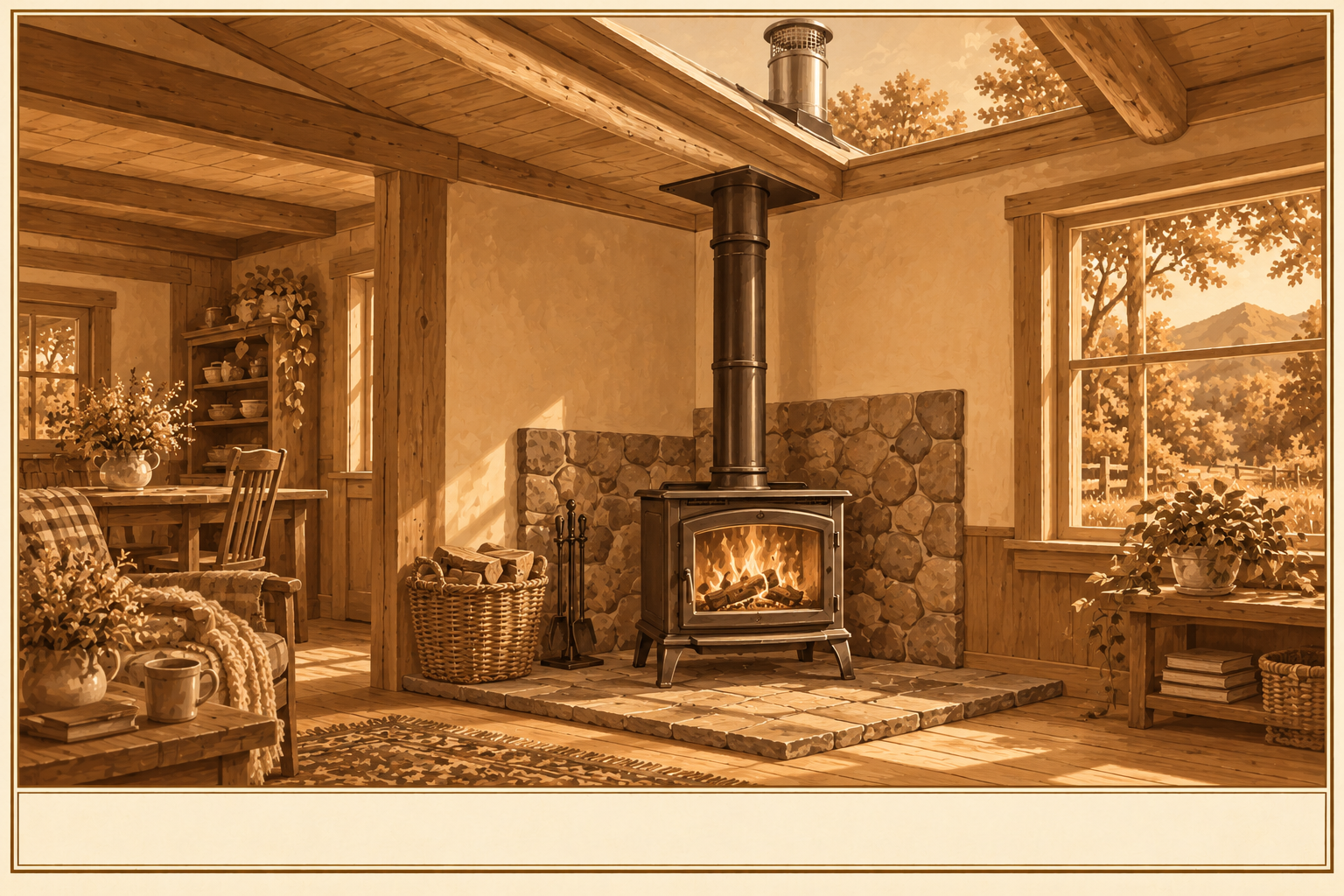
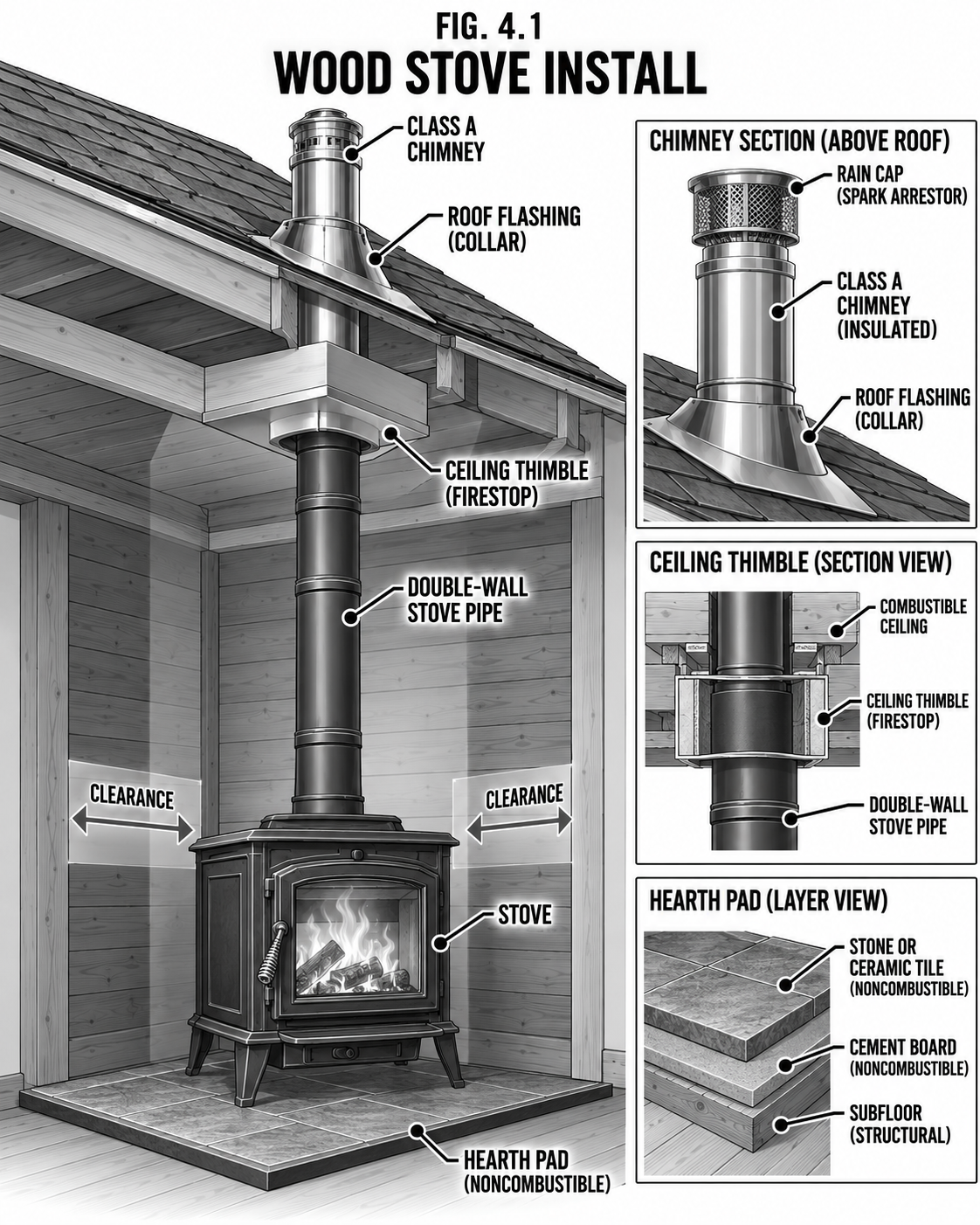
A good wood stove heats a home on fuel you can cut yourself, with no power and no bill. The stove is the easy part; the install is what matters: correct clearances to anything that burns, a proper double-wall pipe, a Class A insulated chimney through the roof, and a protected hearth.
Step by step
Set the stove on a non-combustible hearth pad, at the maker's clearances from walls.
Run double-wall connector pipe up to a ceiling support box (thimble).
Continue with insulated Class A chimney through the roof, above the roofline per code.
Keep the chimney as straight and vertical as possible for good draft.
Burn only seasoned wood and sweep the chimney every season.
Safety & code The three killers: too-close clearances (fire), a dirty chimney (creosote chimney fire), and poor venting (carbon monoxide). Follow the stove's listed clearances exactly, sweep yearly, and put a CO alarm and a smoke alarm in every sleeping area. Never burn green or painted/treated wood.
Tips & variations A stove with a cooktop doubles as your range when the power is out; size the stove to the space so you are not roasted or chilled.
Heat · SpaceRocket Mass Heater
Rocket Mass Heater
Burn a small, fierce fire, then soak the heat into a bench you sit on for a day.
DifficultyAdvanced
TimeDays
CostLow
SkillsCob + ducting
Why it is worth it
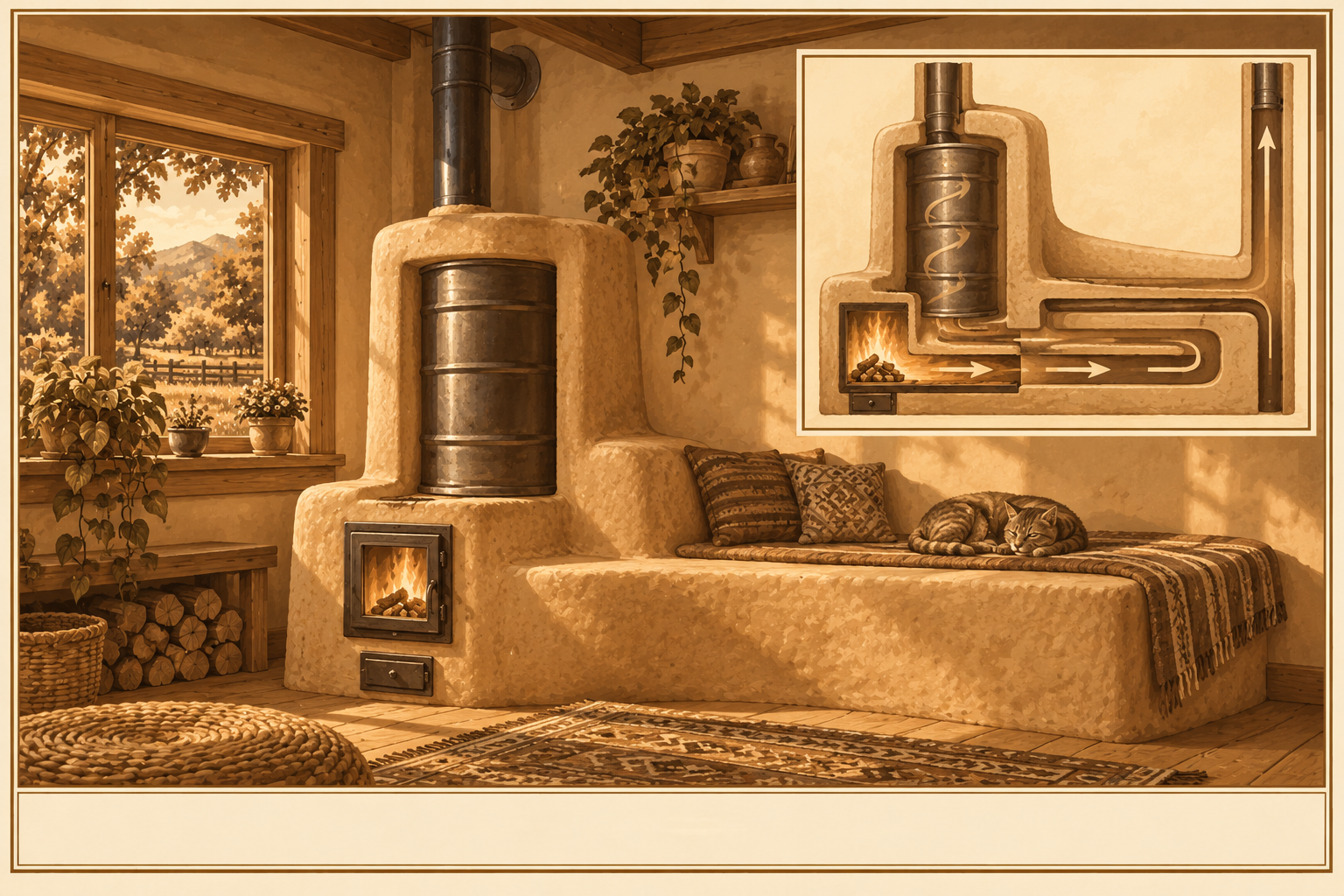
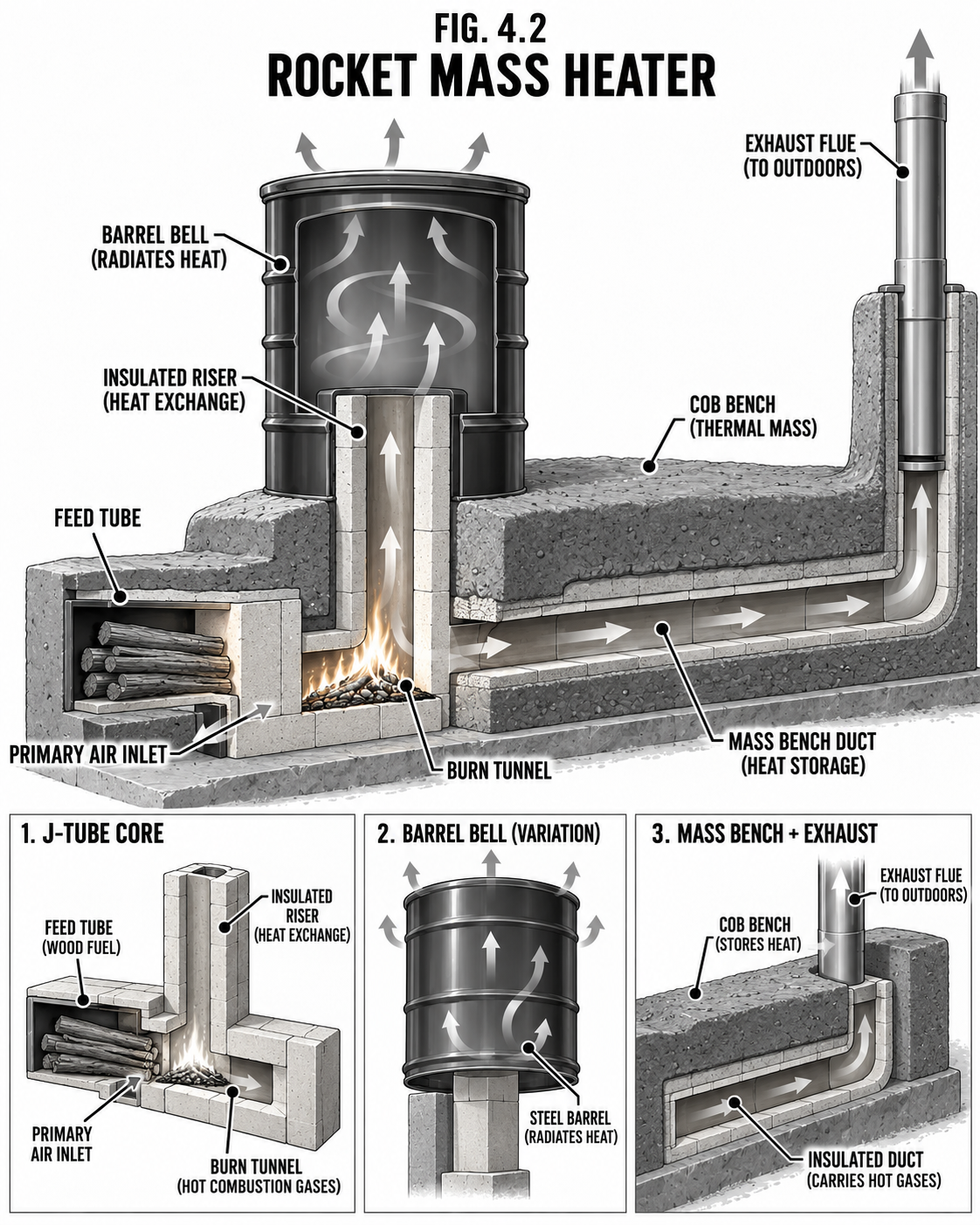
A rocket mass heater burns small-diameter wood in a super-hot, nearly smokeless J-shaped combustion core, then runs the hot exhaust through a long duct buried in a cob bench. The bench stores the heat and radiates it gently for hours after the fire is out. It sips wood compared to a stove.
Cap it with a metal barrel that radiates the first burst of heat.
Run the exhaust duct through a cob bench (the thermal mass) to a vertical chimney.
Seal everything airtight; test the draft before you cob it in.
Safety & code It still produces carbon monoxide, so vent it outdoors and keep a CO alarm nearby. A blocked or leaky duct backs smoke into the room. Many codes do not recognize site-built heaters, so check before you rely on it as your only heat.
Tips & variations Pairs perfectly with a cob or earthen home (Chapter 3); the bench becomes seating and a bed-warmer.
Heat · SpaceMasonry Heater & More
Masonry Heater, Rumford, Pellet & Hydronic
Four more ways to put heat into a room, each with its place.
DifficultyAdvanced
TimeVaries
CostMed-High
SkillsMasonry / plumbing
The options
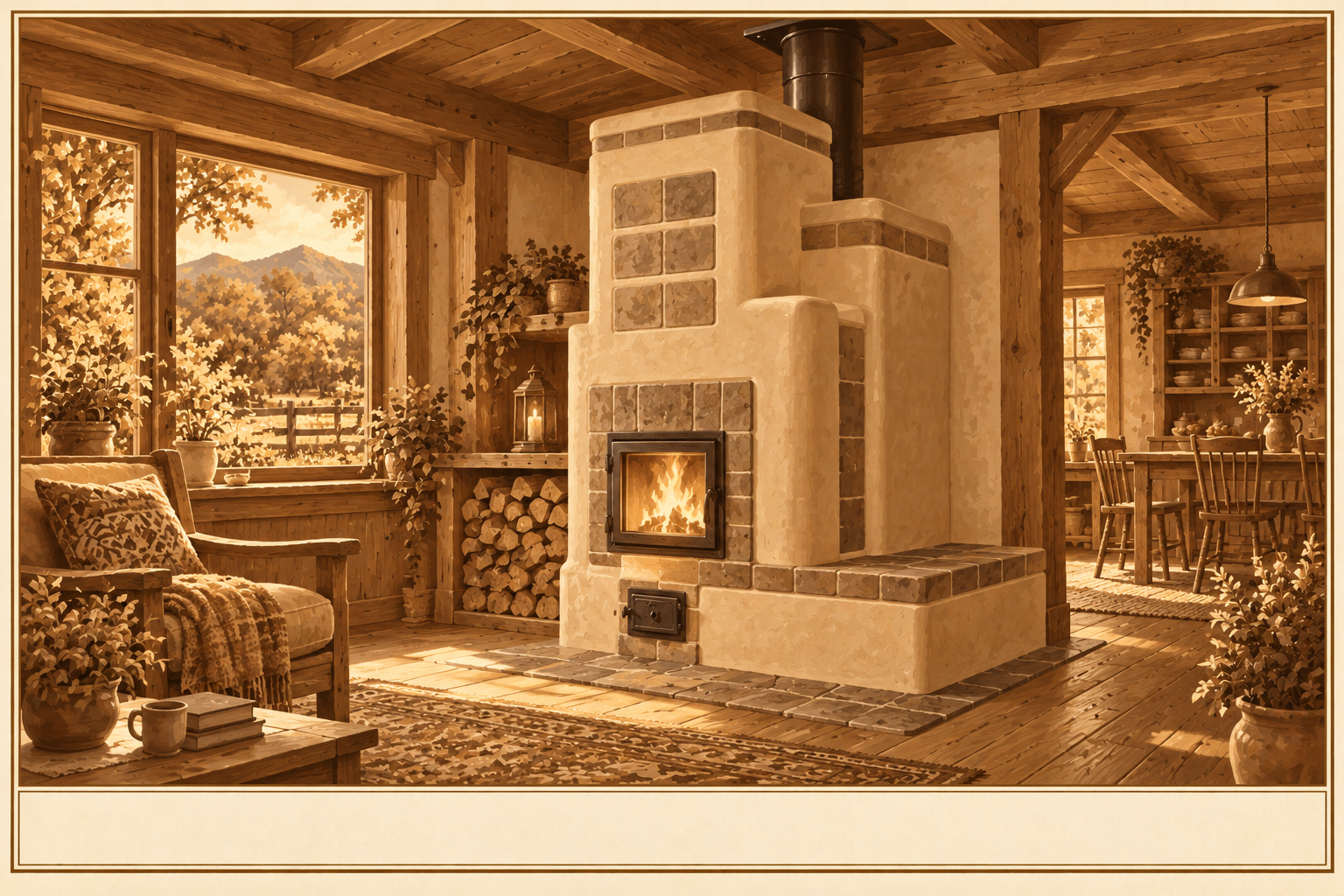
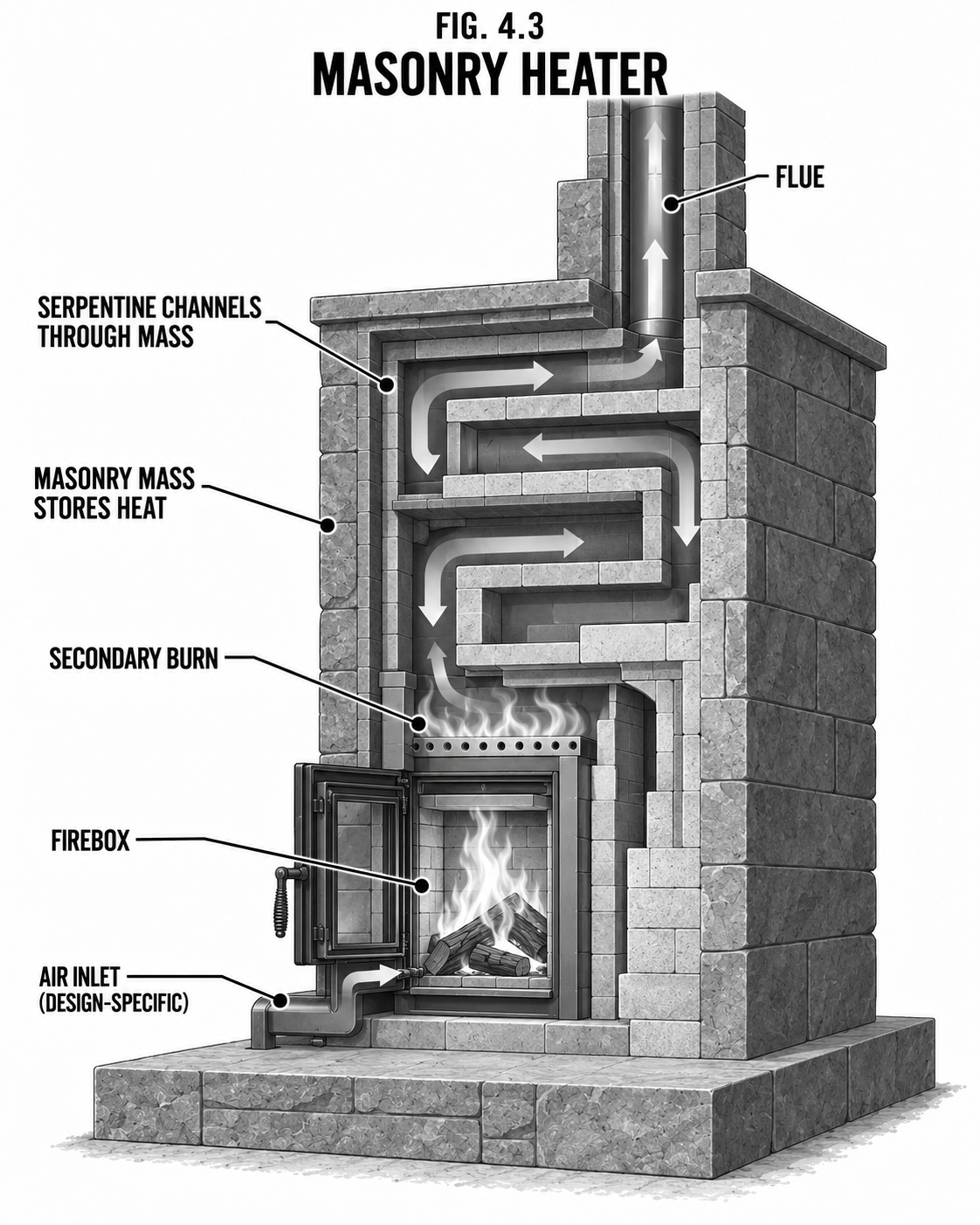
Masonry heater: a big brick mass with a hot fire that winds through internal channels, storing heat and releasing it slowly for a day on one or two burns. Beautiful, efficient, permanent, heavy.
Rumford fireplace: if you want an open fire, the tall, shallow Rumford radiates far more heat into the room than a normal fireplace and smokes less.
Pellet stove: clean and thermostatic, but it needs electricity to run the auger and fan, so it is only off-grid with a reliable power system.
Wood boiler + radiant floor: a boiler heats water pumped through tubing in the floor, warming the whole house evenly from the feet up. Needs a pump (power).
Safety & code Masonry heaters weigh tons and need their own footing. Anything with a pump or auger fails when the power does, so keep a non-electric backup (the wood stove). Vent every combustion appliance outdoors; CO alarms throughout.
Tips & variations A masonry heater plus passive solar (below) can carry a well-built home through winter on remarkably little wood.
Heat · CookingCook Stoves & Ovens
Cooking: Rocket Stove, Cookstove, Solar & Earth Oven
Four ways to cook without the grid, from a fast boil to a day of bread.
DifficultyBeginner-Intermediate
TimeVaries
CostLow
SkillsBasic
The options
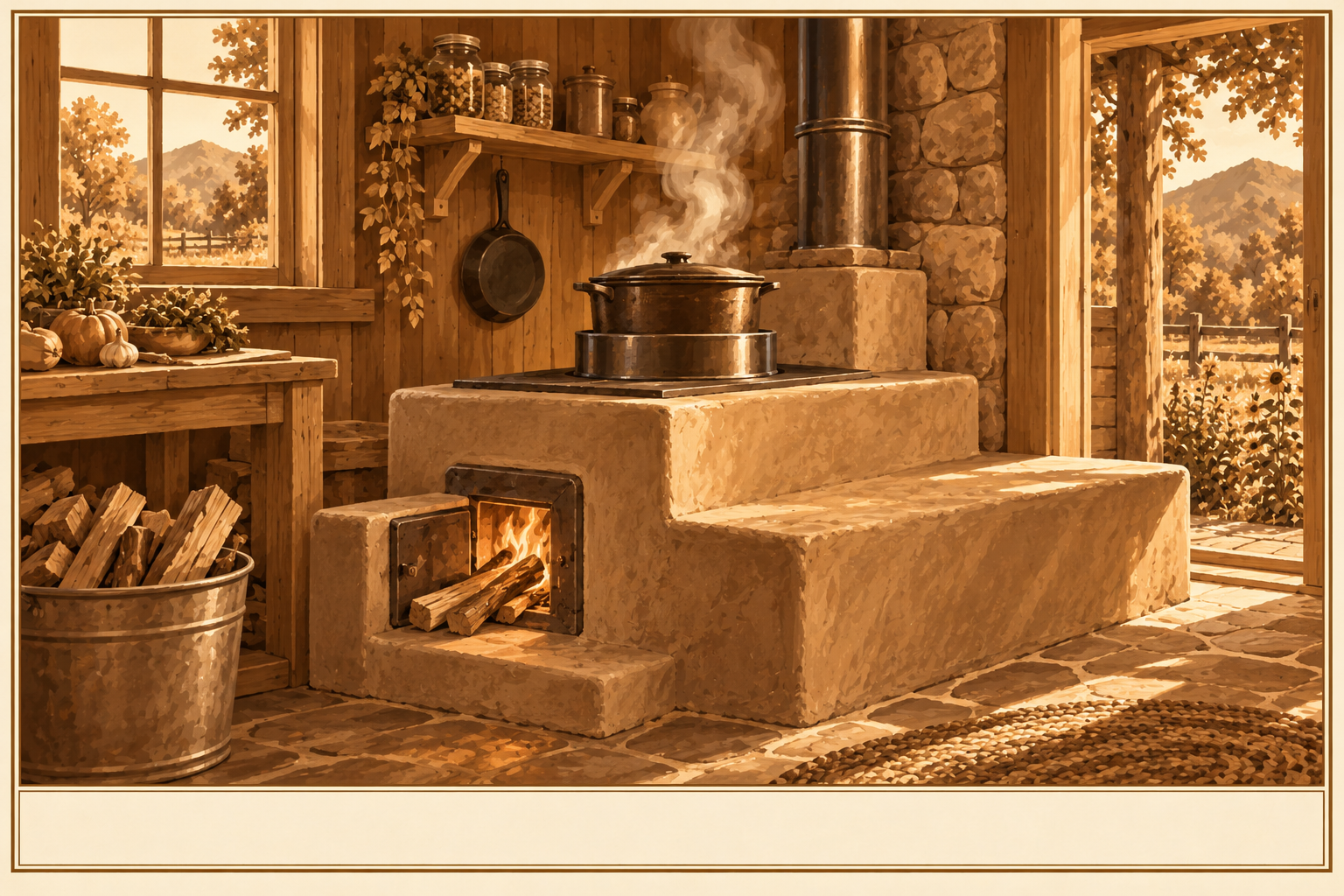
Rocket cook stove: a tiny L- or J-shaped burner that boils a pot fast on a handful of sticks. The cheapest, most fuel-efficient everyday cooker.
Wood cookstove (range): a cast-iron range with a firebox, cooktop, and oven; cooks and heats the kitchen at once, the homestead classic.
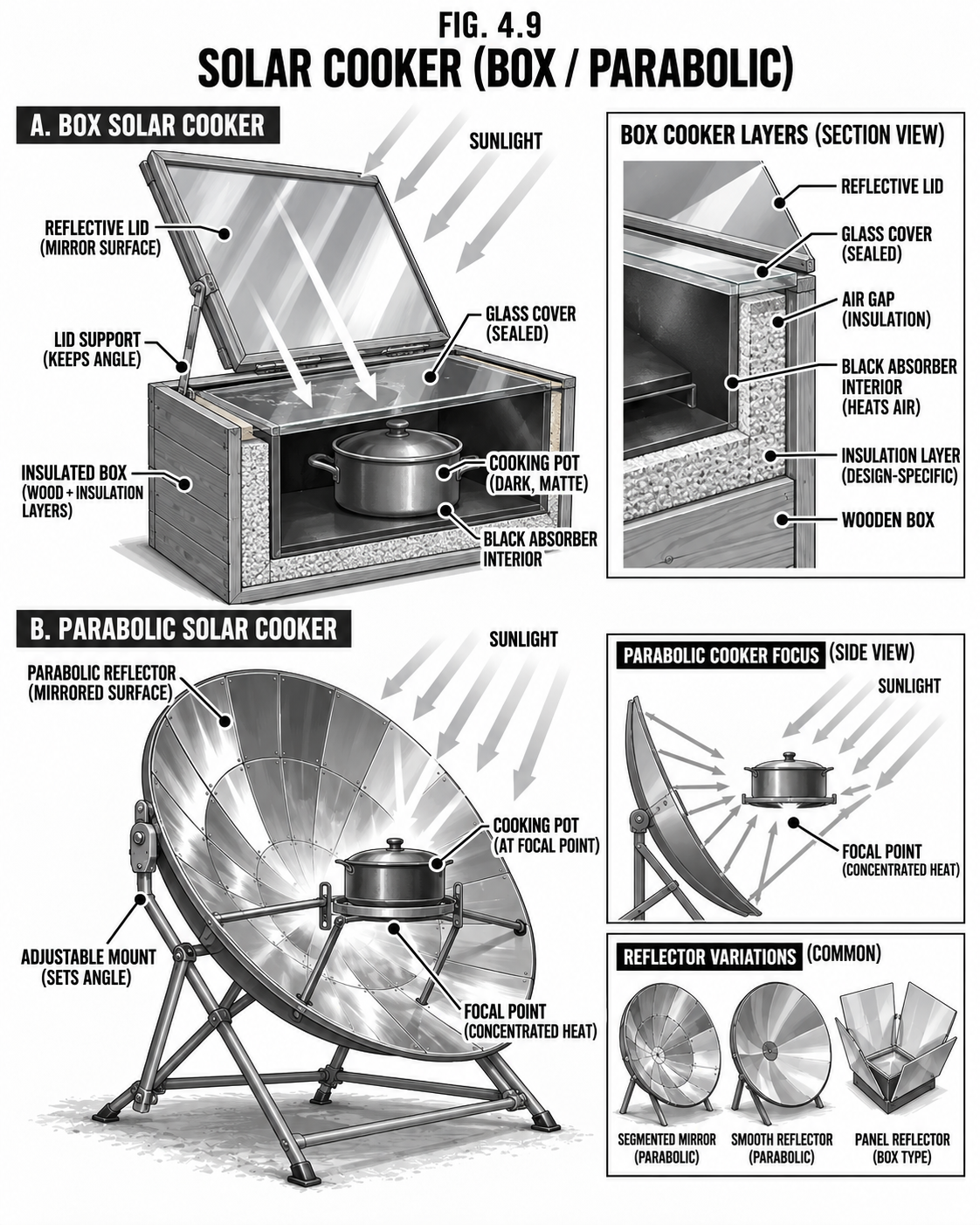
Solar cooker (box or parabolic): cooks and bakes with sunlight alone, no fuel. A box oven bakes low and slow; a parabolic reflector gets hot enough to fry.
Earth / cob oven: a dome of cob you fire hot, then rake out the coals and bake bread, pizza, and roasts on the stored heat for hours.
Safety & code Indoor wood cooking needs the same venting and CO care as any wood fire. Parabolic cookers concentrate real heat; they burn skin and eyes, so treat the focal point like a flame. Earth ovens get fiercely hot; keep kids clear.
Tips & variations A solar cooker on a sunny day saves your wood for the cold nights; bank the two together.
Heat · Hot WaterSolar Hot Water
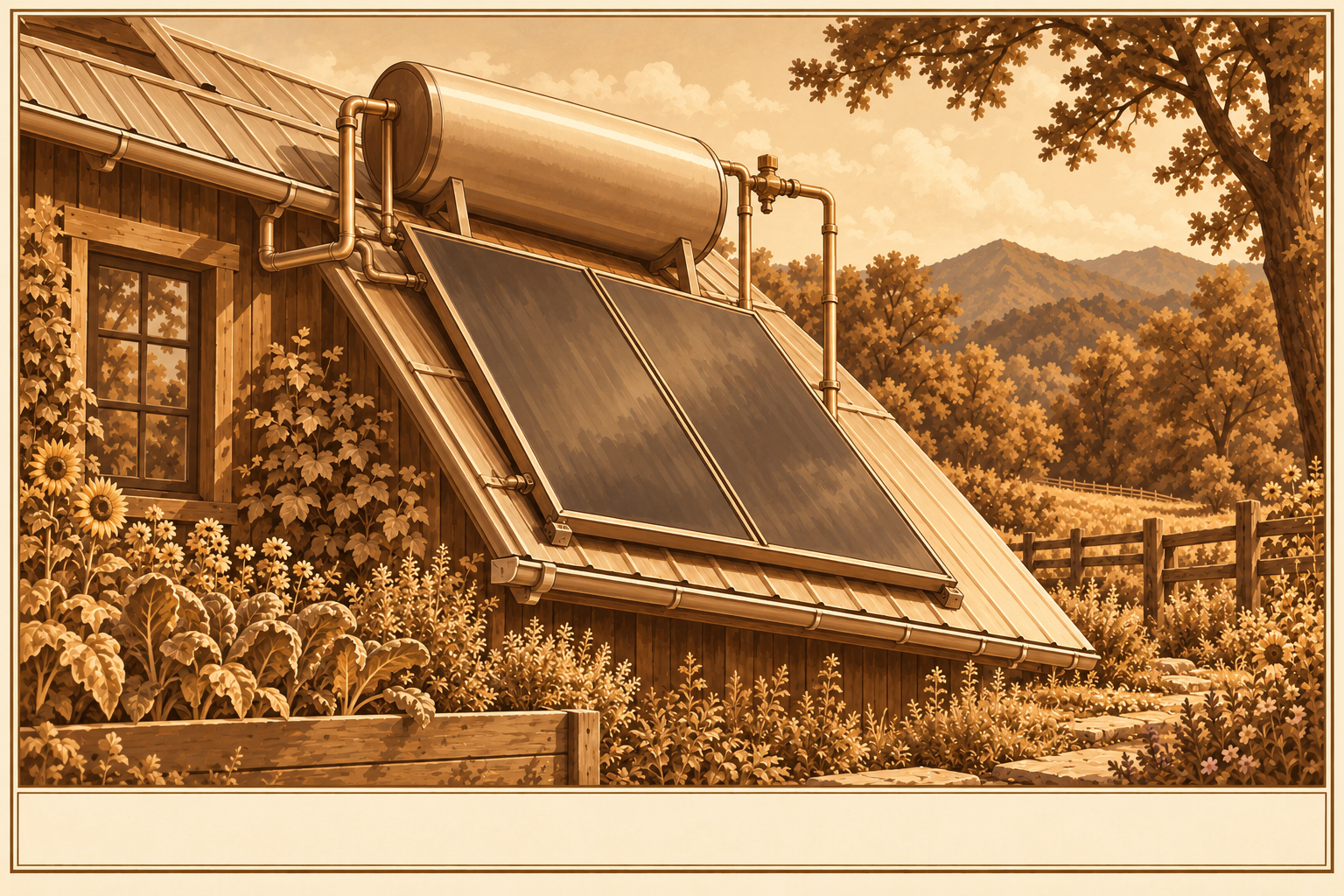
Solar Hot Water
Free hot water from the sun, three ways, from dead simple to year-round.
DifficultyIntermediate
TimeDays
CostLow-Med
SkillsPlumbing
The options
Batch (breadbox) heater: a black tank in a glazed, insulated box. The simplest: the sun heats the water right in the tank. Great for warm months.
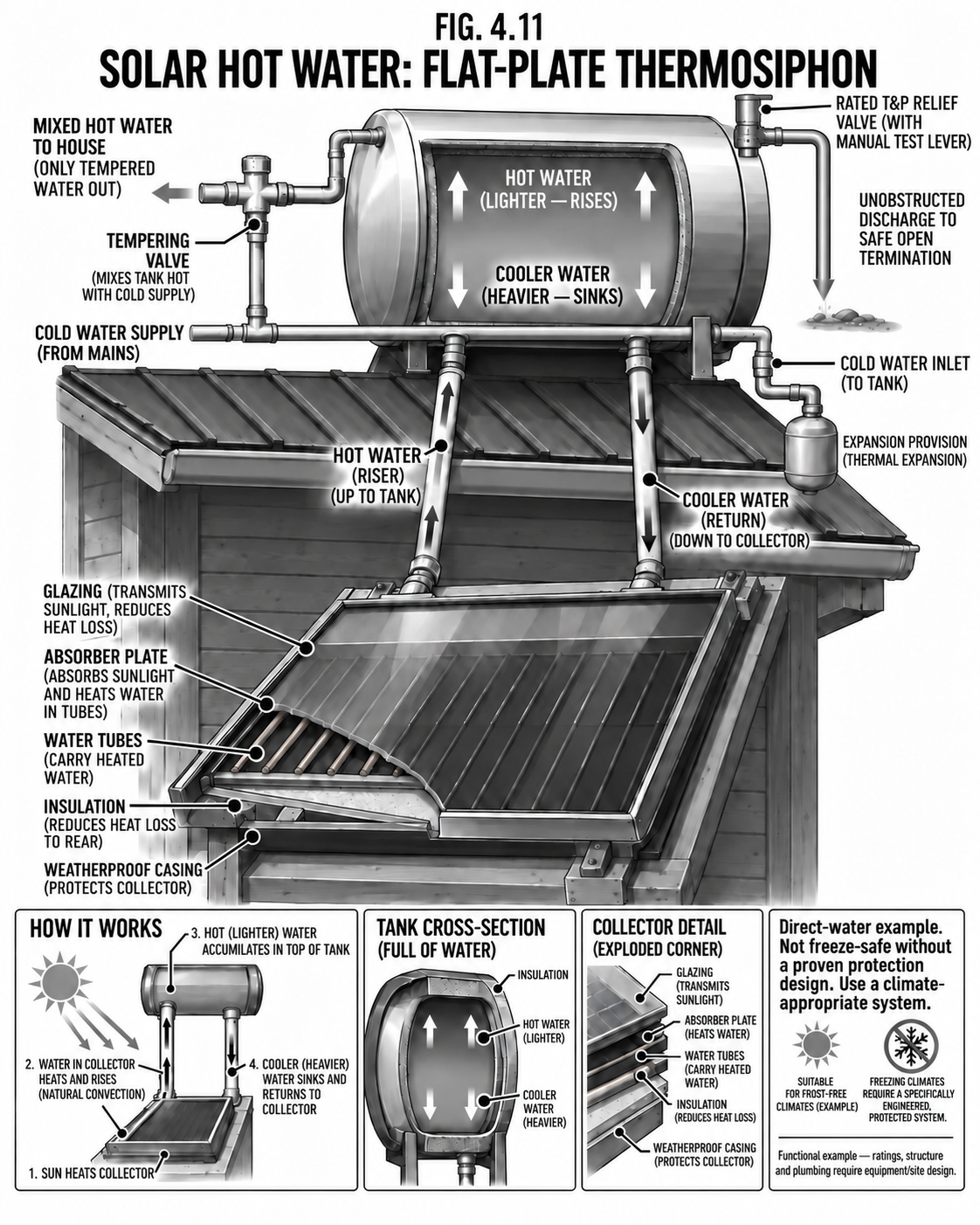
Flat-plate thermosiphon: a collector mounted below a tank; hot water rises into the tank on its own, no pump. Reliable, no power.
Evacuated tube: insulated glass tubes that pull heat even in cold, cloudy weather; the best cold-climate performer, usually pumped.
Build notes
For no-power operation, mount the storage tank above the collector (thermosiphon).
Add a tempering (mixing) valve so the tap water is never scalding.
In freezing country, use a drainback or antifreeze loop so the collector cannot freeze and burst.
Safety & code Any closed, heated tank needs a temperature-and-pressure relief valve or it can explode. Solar water gets scalding hot, so a mixing valve is not optional. Freeze protection is mandatory in the U.P., or the first hard night splits your collector.
Tips & variations A solar preheat tank feeding your regular water heater cuts fuel use even when the sun is weak.
Heat · Passive & FuelPassive Solar + Firewood
Passive Solar Design & Firewood
The best heat is the heat you never had to make, and the wood that is ready when you need it.
DifficultyDesign + labor
TimeOngoing
CostLow
SkillsPlanning, splitting
Passive solar
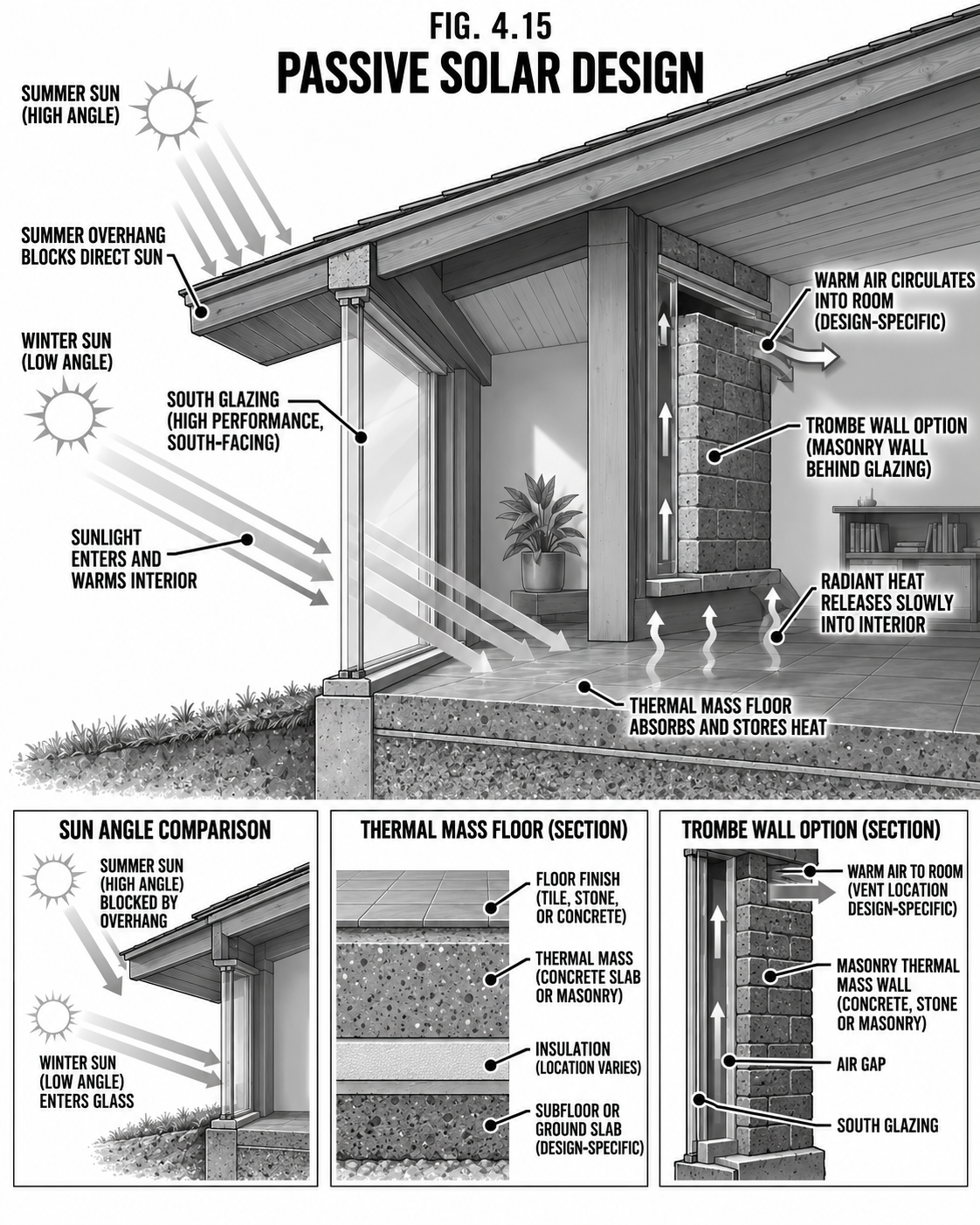
Orient the house so winter sun pours through south-facing glass onto a thermal-mass floor that soaks it up and releases it at night, while a summer overhang shades that same glass when the sun is high. A Trombe wall (mass behind glass) is a simple add. Done right, the sun does much of your heating for free, every clear day.
Firewood: cut, split, season, store
Cut and split in late winter/spring so it dries through summer.
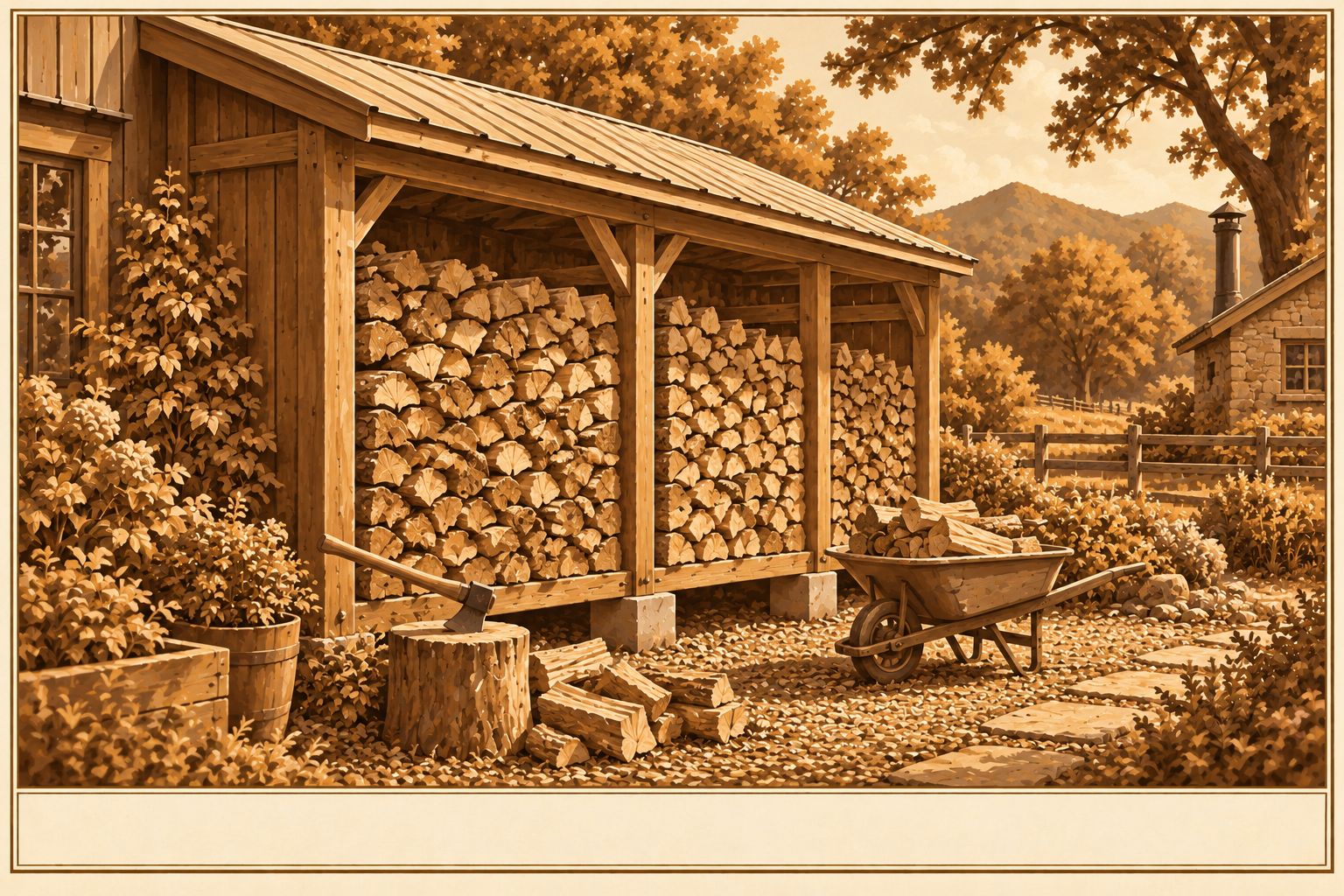
Stack off the ground, loose for airflow, in sun and wind, top covered but sides open.
Season hardwood 6 to 12 months to under 20% moisture before burning.
Keep a woodshed (Chapter 3) with a full season plus one, so you always burn well-seasoned wood.
Safety & code Wet or unseasoned wood is the main cause of creosote and chimney fires, so burn only wood under 20% moisture. Stack woodpiles stable and not head-high. Keep the woodpile back from the house (pests, fire).
Tips & variations A moisture meter is a few dollars and settles every argument about whether the wood is ready.